Why I Finally Stopped Hosting Christmas After Years of Doing It Alone
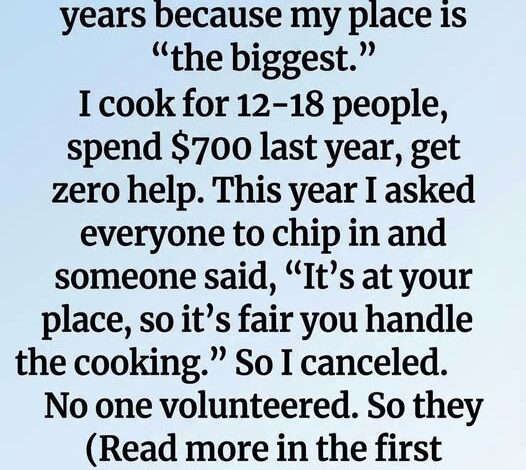
For years, hosting Christmas wasn’t something I volunteered for—it was something that quietly became assigned to me. My house was the biggest, centrally located, and apparently that single fact turned it into the default holiday headquarters. No one ever officially asked. It was simply assumed. Every December, the same unspoken expectation settled in: I would host, I would plan, I would pay, and I would manage the chaos so everyone else could relax and enjoy the holiday spirit.
At first, I told myself it was a privilege. I convinced myself that being the one who brought everyone together meant something. I rearranged furniture to fit extra tables and chairs. I built menus weeks in advance, carefully balancing traditions, dietary preferences, and family politics. I spent days navigating crowded grocery stores, carrying heavy bags, and coordinating timing so that everything would come out warm and perfect at the same time. I cleaned before people arrived and cleaned again long after they left.
By the end of each Christmas, I was drained. Not just tired in the normal sense, but depleted. Physically exhausted, emotionally numb, and financially stretched. Last year alone, I spent hundreds of dollars out of pocket on food, decorations, and supplies. I cooked nearly every dish myself. No one offered to split costs. No one stepped in to wash dishes without being asked. No one noticed how little I actually got to enjoy the day.
What made it harder was that everyone left happy. They packed leftovers, hugged goodbye, and told me how wonderful everything was. Compliments, however, don’t replenish energy. Praise doesn’t erase emotional labor. And over time, I began to realize that my effort had become invisible precisely because it was so consistent. When something is always provided, people stop seeing it as work.
This year, something shifted.
As the holidays approached, I felt a familiar knot forming in my chest, but this time I didn’t push it down. I paid attention to it. I noticed how resentful I felt before anything had even started. That’s when it hit me: I wasn’t angry about hosting. I was tired of carrying the entire load alone. I was tired of being the default solution instead of part of a shared tradition.
So, for the first time, I spoke up.
I didn’t make demands. I didn’t accuse anyone. I simply suggested that if we were going to continue gathering at my house, we should approach it more collaboratively. I proposed that people contribute dishes, help cover costs, or spend some time in the kitchen instead of treating the day like a catered event. I expected some awkwardness, maybe even relief. What I got instead was silence.
Then came a comment that changed everything.
Someone said that since the gathering was at my house, it was only fair that I handled the cooking.
That was the moment the truth became impossible to ignore. My effort wasn’t appreciated because it wasn’t seen. It had been absorbed into the assumption that hosting equals obligation. My home wasn’t viewed as a shared space for celebration; it was viewed as a resource. And I was expected to manage it without complaint.
I sat with that realization for days.
Eventually, I made a decision I never thought I would make. I told everyone I wouldn’t be hosting Christmas this year. I didn’t dramatize it. I didn’t explain myself endlessly. I simply said I was stepping back.
I braced myself for reactions. Questions. Pushback. Last-minute offers to help once people realized what they stood to lose. None of that happened. There was no outrage, but there was also no solution. No one volunteered to host. No one suggested a rotating plan. No one proposed a potluck or a shared expense model. Without me carrying the weight, the gathering simply disappeared.
At first, guilt hit hard. I felt like I had ruined something important. Like I had taken away a tradition that mattered to people. That feeling lingered until I noticed something else underneath it: relief. Real, physical relief. The kind that settles into your shoulders when you finally stop holding tension you didn’t realize you were carrying.
When Christmas arrived, it was quiet.
There was no overcrowded kitchen, no rigid schedule, no performance of perfection. I made a simple meal. I ate when I was hungry. I didn’t rush. I didn’t host. I didn’t apologize. I lit a candle, sat in stillness, and let the day exist without pressure.
It wasn’t lonely. It was peaceful.
And in that calm, something became very clear. Traditions are only meaningful when they are built on mutual care. When one person carries everything while everyone else benefits, that’s not tradition—that’s imbalance. That’s unpaid emotional labor disguised as generosity.
Stopping didn’t make me selfish. It made me honest.
We talk a lot about burnout, especially around the holidays. We talk about stress, mental health, and the pressure to perform happiness. But we rarely talk about how often that pressure falls on the same people year after year—the ones who host, organize, remember, plan, and absorb discomfort so others don’t have to.
Boundaries aren’t punishments. They’re information.
By stepping back, I learned something important: if something only exists because one person is sacrificing themselves for it, then it isn’t sustainable. And if people aren’t willing to adjust when that sacrifice ends, then what they valued wasn’t the togetherness—it was the convenience.
This Christmas didn’t look like the ones before it. It was smaller. Quieter. Simpler. But it was also mine. And that made all the difference.
Letting go of expectations created space for something healthier. Something honest. Sometimes, the most meaningful gift you can give yourself isn’t another effort—it’s permission to stop.