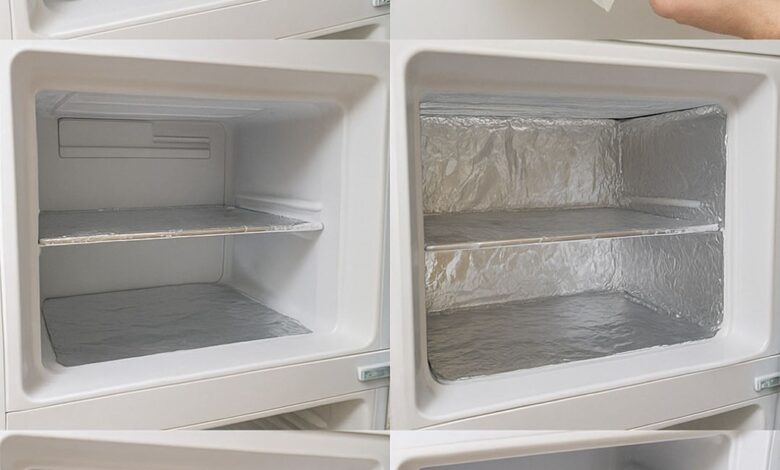
Aluminum foil in the freezer! a simple tip to save money
The battle against freezer frost is a universal domestic struggle, an silent creep of ice that slowly colonizes our storage space and complicates our daily routines. We have all experienced that moment of frustration: you open the freezer door to retrieve a bag of frozen vegetables or a tray of meat, only to find the drawers fused shut by a thick, stubborn layer of ice. What was meant to be a simple kitchen task turns into a physical struggle against the elements. Most homeowners view manual defrosting with a sense of dread, often postponing the chore until the frost is so invasive that the door barely latches. However, the secret to ending this cycle of frustration doesn’t lie in more frequent scrubbing or high-tech gadgets; instead, it involves a common kitchen staple—aluminum foil.
To understand why a simple sheet of foil can be a game-changer, we must first look at why frost is such a persistent adversary. Frost is not merely an aesthetic nuisance; it is a symptom of inefficiency. Every time you open the freezer door, warm, humid air from the kitchen rushes in. This moisture condenses on the cold internal surfaces and instantly freezes. Over time, these thin layers of ice build up into a dense, craggy mass. This accumulation does more than just take up valuable real estate where your groceries should be. It acts as an insulator, but in the worst way possible. The thick ice prevents the cooling coils from efficiently lowering the temperature of the air inside the cabin. As a result, the compressor must work significantly harder and run more frequently to maintain the desired level of cold. This leads to increased wear and tear on the appliance, a noticeably louder kitchen environment, and a spike in monthly electricity bills.
The traditional method of dealing with this problem is undeniably effective but notoriously labor-intensive. It requires a level of military-grade precision and planning that few people have the energy for on a weekend. You have to find a temporary home for all your frozen goods—often involving coolers and a race against the clock—turn off the appliance, and then wait for hours as the ice melts. The aftermath is usually a swampy mess of meltwater that must be mopped up before the freezer can be dried and restarted. It is a process that consumes an entire afternoon and leaves the kitchen in disarray. Because it is so unpleasant, most people wait until the frost is several inches thick before intervening, which only makes the eventual cleanup more difficult.
This is where the aluminum foil hack introduces a more strategic, proactive approach to home maintenance. By using foil, you are not necessarily stopping moisture from entering the freezer, but you are fundamentally changing how the resulting ice attaches to the appliance. The technique is remarkably straightforward: after you have performed one final, thorough manual defrost and dried the interior walls completely, you line the surfaces with a layer of heavy-duty aluminum foil. You should cover the back and side walls, ensuring the foil is as flat as possible against the plastic lining.
The science behind this trick is rooted in the physical properties of the foil itself. Aluminum is an excellent conductor of thermal energy, but its smooth, non-porous surface provides very little “grip” for ice crystals. When frost begins to form, it attaches to the foil rather than the permanent walls of the freezer. More importantly, because aluminum reflects heat and distributes cold evenly, it helps prevent the formation of “hot spots” where moisture is most likely to condense. The result is a layer of frost that is much thinner, more brittle, and far less likely to bond with the structural components of the freezer.
The real benefit of this method reveals itself months down the line when it is time to clean the appliance again. Instead of hacking away at thick sheets of ice with a plastic spatula or waiting hours for a meltdown, you simply reach in and peel away the aluminum foil. The frost comes off with the foil in large, manageable sheets, leaving the actual walls of the freezer clean and dry beneath. What used to be a four-hour ordeal is reduced to a five-minute task. You simply remove the old, icy foil, wipe down the walls with a quick sanitizing spray, and apply a fresh layer of foil. Your food never even has the chance to thaw.
Beyond the time-saving aspects, this small adjustment has a measurable impact on your household finances. A frost-free or “foil-protected” freezer is a highly efficient machine. By ensuring the cooling elements are not buried under an inch of insulating ice, the appliance can maintain its temperature with minimal effort. This consistency is also better for the quality of your food. Frequent temperature fluctuations caused by an overworked compressor are the primary cause of freezer burn. By stabilizing the internal environment, you are protecting the texture, flavor, and nutritional value of your expensive meats and produce.
Integrating this tip into your domestic routine reflects a broader shift toward “smart” home management. In an era where we are all looking for ways to reduce our environmental footprint and save money, optimizing the efficiency of our largest appliances is a logical step. The aluminum foil method is low-cost, requires no chemical cleaners, and extends the lifespan of the freezer. It transforms an invasive, “all-day” chore into a minor maintenance step that can be performed during a commercial break or while waiting for water to boil.
The psychology of a clean, organized freezer should not be underestimated either. There is a specific type of mental clutter that comes from a disorganized home, and a frost-choked freezer is a prime example. It represents a task left undone and a loss of control over one’s environment. When you open a freezer that is lined with clean, shimmering foil, where the drawers glide smoothly and every item is visible, it provides a small but genuine sense of satisfaction. It proves that with a bit of ingenuity and a few cents worth of kitchen supplies, even the most tedious household burdens can be conquered.
In conclusion, the aluminum foil hack is more than just a “life hack”; it is a lesson in proactive maintenance. It acknowledges that while we cannot change the laws of physics that lead to frost formation, we can certainly change how we interact with them. By creating a removable barrier between the moisture and the machine, we reclaim our time, protect our appliances, and keep more money in our pockets. The next time you find yourself staring at a wall of ice in your freezer, remember that the solution isn’t more effort—it’s just a better strategy. Laying down that first sheet of foil is a small investment that pays dividends in peace of mind and efficiency for years to come.