I Found My Missing Father 200 Miles Away On A Biker’s Harley Laughing
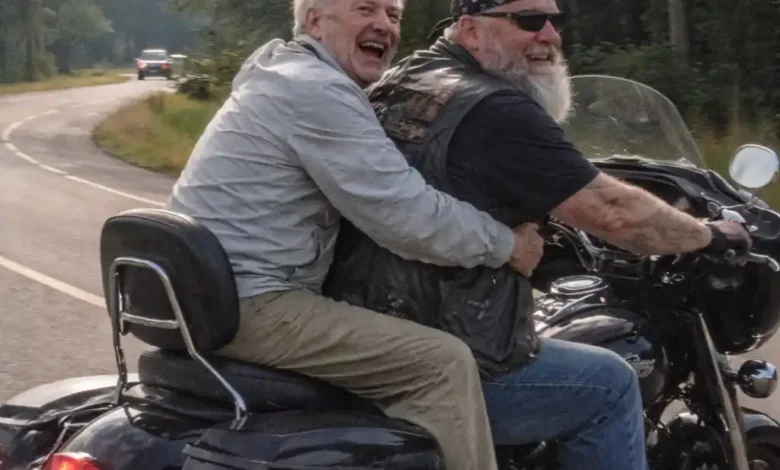
My father disappeared from his memory care facility at 5 AM on a Saturday morning. I found him twelve hours later on the back of a stranger’s motorcycle, laughing harder than he’d laughed in two years.
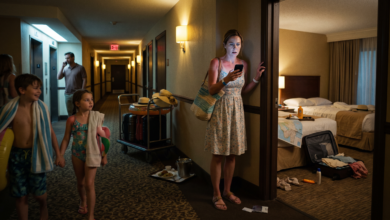
The nursing home called at six. Dad had wandered off during the night shift change. He was gone.
I knew what that meant. Dad had dementia. Advanced stage. He couldn’t remember my name half the time. Some days he thought my mother was still alive even though she’d been gone for six years.
The police said not to panic. Most dementia patients turn up within a few hours.
We searched all morning. Nothing.
By afternoon, I was terrified. It was hot. Dad hadn’t eaten. Hadn’t had his medications.
That’s when I got a call from a number I didn’t recognize.
“Is this Jennifer? Robert Patterson’s daughter?”
“Yes. Who is this?”
“Name’s Hank. I’m calling about your dad. He’s safe. He’s with me at a diner about 200 miles east of you.”
200 miles. That was impossible.
“How did he get there?”
“I gave him a ride. Found him walking on Route 40 this morning.”
I made the drive in just under three hours.
Inside the diner, I spotted them immediately. Three bikers in a corner booth. And sitting with them, eating pie and laughing, was my father.
He looked alive. His eyes were bright. He was smiling. Actually smiling.
I hadn’t seen him smile like that since before the diagnosis.
Hank stood up when he saw me. Tall guy, gray beard, leather vest covered in patches.
“You must be Jennifer.”
“I am. You’re Hank?”
“That’s right.” He shook my hand. “Your dad’s been great company.”
I looked at my father. He was laughing at something one of the other bikers said. He didn’t notice I was there.
“I don’t understand,” I said. “How did he get here? Why did you bring him?”
“It’s kind of a long story.”
“I have time.”
Hank gestured to the booth. “Sit down. Let me buy you some coffee.”
I slid in. My father finally noticed me. His face lit up.
“Jenny!” He hadn’t called me Jenny in a year. “Look who I met!”
“I see that, Dad.”
He turned back to the bikers. “This is my daughter. She’s a teacher. Makes me so proud.”
I was a teacher. Twenty years ago. But I didn’t correct him.
“Your dad’s quite a storyteller,” one of the other bikers said. His name tag read “Bear.” “Been telling us about meeting your mom.”
Dad’s face softened. “Best day of my life. Saw her at a dance. She wore a blue dress. Knew right then I was going to marry her.”
He remembered. For the first time in months, he remembered something true and beautiful.
“So what happened?” I asked Hank. “How did you find him?”
Hank poured me coffee from the pot on the table. “I was heading east on Route 40 around seven this morning. Middle of nowhere. And I see this old guy walking on the shoulder. Wearing slippers and a cardigan. No hat. It was already getting hot.”
“That’s Dad.”
“I pulled over. Asked if he needed help. He said he was fine. Said he was going home.”
“Home to the facility?”
“No. He gave me an address. Said his wife was waiting for him. Said he’d been at work and he needed to get back before dinner.”
My throat tightened. That was our old house. The one we’d sold fifteen years ago. The one where my mother died.
“I didn’t know he had dementia at first,” Hank continued. “He seemed fine. Little confused maybe, but fine. So I offered him a ride. Figured it wasn’t safe for him to be walking in that heat.”
“You put him on your motorcycle?”
“Had an extra helmet. He climbed right on. Seemed excited about it.”
The third biker spoke up. His vest said “Rabbit.” “Hank called us about twenty minutes in. Said he had a passenger who might need help. We met up at a rest stop.”
“That’s when I realized something was wrong,” Hank said. “Your dad kept asking where Margaret was. Said she’d be worried. Then he got upset because he couldn’t remember the house number.”
Dad was eating his pie, oblivious to our conversation.
“I checked his wallet,” Hank continued. “Found the memory care facility card. Called them. They said you’d been notified. Gave me your number.”
“But that was hours ago. Why didn’t you take him back?”
The three bikers exchanged looks.
“Because he was happy,” Bear said simply. “Happiest old man I’ve ever seen. Kept talking about the ride. About how he hadn’t been on a motorcycle in forty years. About how good the wind felt.”
“We stopped for lunch,” Rabbit added. “Your dad told us about his life. About meeting your mom. About you and your sister. About his job at the factory. He was sharp as a tack for about an hour. Like the fog lifted.”
“Then it would come back,” Hank said. “He’d forget where he was. Get confused. But then we’d start riding again and he’d settle down. So we just kept riding.”
“You rode around with my father for twelve hours?”
“We took him places,” Hank said. “Showed him things. Stopped at a lake. At a lookout point. At a old veteran’s memorial because he said he’d served in the Navy.”
“He did. Fifty years ago.”
“He told us. Told us stories about his ship. About being out at sea. About coming home and meeting Margaret at that dance.”
My father looked up. “Best dance of my life.”
“We know, Robert,” Bear said gently. “You told us.”
Dad smiled and went back to his pie.
“We called every couple hours,” Hank said. “Kept the facility updated. Kept you guys informed through Dale, the truck driver who’s been coordinating.”
“Why didn’t you just bring him back?”
Hank leaned forward. “Can I be honest with you?”
“Please.”
“Because he kept saying it. Every time we’d suggest turning around, he’d say ‘not yet.’ He’d say ‘just a little longer.’ Like he knew this was his last chance.”
“Last chance for what?”
“To be himself. To be Robert. Not Robert with dementia. Not the confused old man in the facility. Just Robert. The guy who loved motorcycles and his wife and open roads.”
I felt tears building. “He used to ride. Before I was born. He and my mom had a little Honda. They’d go all over the state.”
“He told us,” Rabbit said. “Told us about a trip to the mountains. About camping under the stars. About your mom holding on tight and laughing the whole way.”
“He remembers that?”
“He remembered it today.”
We sat in silence. Dad finished his pie and asked for more. Bear flagged down the waitress.
“I should be angry,” I said. “You took my father. Kept him away from his care.”
“You should be,” Hank agreed. “And if you are, I understand.”
“But I’m not. Because he’s smiling. And I haven’t seen him smile in two years.”
“The dementia’s bad?”
“Very bad. Most days he doesn’t know where he is. Doesn’t know who I am. He gets angry. Scared. Confused. The doctors say it’ll only get worse.”
“I’m sorry.”
“So am I.”
Dad was telling the waitress about my mother. About the blue dress. The waitress smiled and nodded like she had all the time in the world.
“He was so different today,” Hank said. “I’ve seen dementia before. My mom had it. But your dad, when he was on the bike, he was clear. Present. He’d point at things. Ask questions. Tell stories that made sense.”
“The movement helps sometimes,” I said. “The doctors mentioned it. Something about the stimulation. The sensory input.”
“Well, whatever it was, he loved it. Kept saying ‘faster.’ Kept laughing.”
“He laughed?”
“The whole way. Like a kid on a roller coaster.”
I tried to imagine my father, my confused, shuffling father, laughing on the back of a Harley at 70 miles per hour.
“Can I ask you something?” I said.
“Anything.”
“Why did you do this? You don’t know us. You could have just dropped him at a police station.”
Hank was quiet for a moment. “My mom died three years ago. Dementia. By the end, she didn’t know me. Didn’t know anyone. I kept wishing I’d done more. Given her more moments of joy. More chances to be herself.”
He looked at my father. “When your dad climbed on my bike this morning, I saw it in his eyes. That spark. That piece of him that was still in there. And I thought, what if I can give him one more good day? One more day where he’s Robert, not a patient?”
“So you did.”
“So we did. Me and the brothers. We gave him a day.”
Bear spoke up. “We took him to this little airfield. They had vintage planes. Your dad stood there for twenty minutes talking about how he’d wanted to be a pilot. How he’d taken flying lessons once.”
“He did?”
“When he was young. Before he met your mom. Never finished because the lessons were too expensive.”
I’d never heard this story.
“We took him to a lake,” Rabbit said. “He took his shoes off and walked in the water. Said it reminded him of being a kid.”
“We stopped at a music store,” Hank added. “They had a piano. Your dad sat down and played. Actually played. Said he hadn’t touched a piano in forty years but his hands remembered.”
I was crying now. “I didn’t know he could play piano.”
“He played ‘Moonlight Serenade.’ Said it was your mom’s favorite song.”
It was. We’d played it at her funeral.
“We stopped at a church,” Bear said. “Your dad wanted to light a candle. He lit one for Margaret. Stood there for a long time. We thought maybe he was praying. But when he came back out, he said ‘I told her I’m okay. I told her I’m coming soon.’”
I couldn’t stop the tears now.
“Every stop, he was different,” Hank said. “Sometimes confused. Sometimes clear. But always happy. Always grateful. He must have said thank you a hundred times.”
“He doesn’t usually say thank you anymore. He’s usually angry. Frustrated.”
“Not today. Today he was just Robert. Living.”
The waitress brought more pie. Dad dug in immediately.
“I should get him back,” I said. “It’s late. He needs his medications.”
“We know. But there’s one more thing.”
“What?”
Hank pulled out his phone. Scrolled through photos. Handed it to me.
It was my father. On the back of Hank’s motorcycle. Arms spread wide like he was flying. The biggest smile I’d ever seen on his face.
“We took pictures all day,” Hank said. “Figured you’d want them.”
I scrolled through. My father at the lake. At the airfield. At the piano. At the church. In every photo, he was smiling. Laughing. Alive.
“Can you send these to me?”
“Already did. Got your number from the facility.”
I looked at my father. He was scraping the last bits of pie off his plate.
“Dad?” I said.
He looked up. “Yes?”
“Did you have a good day?”
His face lit up. “Best day I’ve had in years. These guys, they’re good guys. Real good guys.”
“They are.”
“We went everywhere. We saw everything. It was just like the old days.”
“I’m glad.”
He reached across and took my hand. His grip was weak but warm. “Don’t be sad, Jenny. I’m okay. I had a good life. I had Margaret. I had you and your sister. I got to ride one more time. I’m okay.”
He knew. Somewhere in there, he knew what was happening to him. And he was telling me it was okay.
“I love you, Dad.”
“I love you too, sweetheart.”
Then the fog came back. His eyes got distant. He looked around confused.
“Where are we?” he asked.
“At a diner, Dad. With friends.”
“Oh. Okay.” He seemed satisfied with that answer.
We got him to my car around midnight. Hank and his brothers walked us out.
“Thank you,” I said. “I don’t know how to thank you.”
“You don’t have to.”
“Yes I do. You gave my father something I couldn’t give him. You gave him one more good day.”
“We gave him what he needed. What we’d want someone to give us.”
Bear handed me a card. “That’s our club information. If you ever need anything. Rides to appointments. Help with the facility. Anything. You call.”
“I will.”
Rabbit hugged me. “Your dad’s a good man. It was an honor riding with him.”
Hank walked me to the driver’s side. “The photos. I took a lot. There’s videos too. Him laughing. Telling stories. I wanted you to have them. For later. When he’s gone. So you can remember him like this.”
“Like what?”
“Happy. Free. Himself.”
I hugged him. This stranger who’d given my father a gift I never could.
“You’re good people,” I said.
“So are you. And so is he.”
I drove my father back to the facility. He slept the whole way. When we arrived, the staff was waiting. They’d been worried sick.
But when they saw him sleeping peacefully, saw the smile still on his face even in sleep, they understood.
I showed them the photos. The staff cried. Said they’d never seen him so happy.
Dad woke up as we were getting him to bed. He looked around confused.
“Where’s Hank?” he asked.
“He went home, Dad. But he’ll visit. I promise.”
“Good. I like Hank. He’s a good friend.”
“He is.”
Dad settled into bed. The nurse gave him his medications. He took them without fighting for once.
“Dad?” I said. “Do you remember today?”
He thought for a moment. The fog was heavy. But then something flickered.
“I rode a motorcycle,” he said.
“You did.”
“It was fast. And the wind was loud. And I wasn’t scared.”
“No?”
“No. I was free.” He smiled. “I was young again.”
“You were.”
He closed his eyes. “Tell Margaret I’ll be home soon.”
“I will, Dad.”
He fell asleep still smiling.
My father lived for eight more months after that day. The dementia got worse. He stopped talking. Stopped recognizing anyone. Stopped being able to feed himself.
But I had the photos. The videos. The stories Hank and his brothers told me.
I had proof that underneath the disease, underneath the confusion and anger and fear, my father was still in there. Still Robert. Still the man who’d loved my mother and raised me and played piano and wanted to fly.
Hank visited twice. Brought pictures of motorcycles. Sat with my dad even though Dad didn’t know who he was. Told him stories about their ride.
Once, during a visit, Hank started describing the lake they’d stopped at. My father’s eyes focused for just a second. He smiled. Just a flicker. Then it was gone.
But it was there. The memory. The joy. Still there.
When my father died, Hank and twelve members of his club showed up to the funeral. Full dress. Leather and patches and respect.
They did an honorary ride. Escorted my father to the cemetery. Stood at attention during the service.
Afterward, Hank handed me something. A small wooden box.
“What’s this?”
“Open it.”
Inside was a patch. The kind bikers wear on their vests. It had my father’s name embroidered on it. Robert Patterson. And underneath: Honorary Brother.
“We made him a member,” Hank said. “That day, when he rode with us, he became one of us. We wanted you to have this.”
I couldn’t speak.
“We also wanted you to have this.” He handed me a photo. It was the bikers and my father. All of them together. Everyone smiling.
On the back, someone had written: “Robert Patterson. Best riding partner we ever had.”
“Thank you,” I whispered.
“No. Thank you. For letting us give him that day. For trusting us.”
“You gave him more than a day. You gave him himself back. Even if it was just for a little while.”
“That’s what brothers do.”
It’s been three years now. I still have the photos on my phone. I look at them when I’m sad. When I miss him. When I need to remember that he had joy. That at the end, when everything was taken from him, he had one more perfect day.
I joined a dementia support group. Started telling his story. About the bikers who found him. Who gave him 200 miles of freedom. Who made him laugh again.
Other families cry when I tell it. Say they wish their loved ones could have that. One more good day. One more moment of clarity and joy.
I tell them to look for it. To find the Hanks of the world. The people who see past the disease. Who see the person underneath.
They’re out there. On motorcycles and in minivans. In grocery stores and churches and diners at midnight.
They’re the ones who stop. Who help. Who give dying men one more ride.
Last month, I got a call from Hank. He’d found something in his garage. An old GoPro from the ride. He’d forgotten to check it.
There was video. Twenty minutes of my father on the back of that Harley. Laughing. Pointing. Yelling “faster!” over the wind.
At the end of the video, they’d stopped at a red light. My father tapped Hank’s shoulder. Hank turned around.
“Thank you,” my father said. Clear as day. “Thank you for reminding me what it feels like to be alive.”
Then the light turned green and they rode off.
I’ve watched that video a hundred times. I’ll watch it a hundred more.
Because that’s how I want to remember him. Not confused. Not lost. Not the man who forgot my name.
But the man on the back of that Harley. Arms spread wide. Laughing into the wind. Free.
That was my father. That was Robert.
And for one perfect day, thanks to a stranger on a motorcycle, he got to be himself one more time.