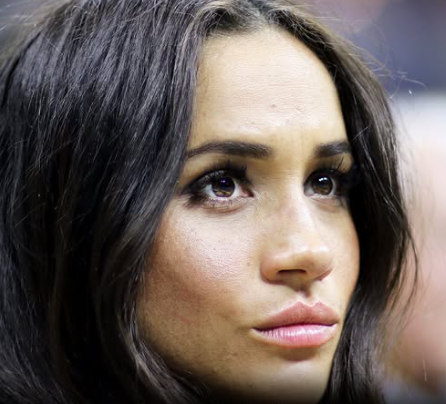
Meghan Markle says she has changed her famous last name!
Meghan Markle has sparked a fresh wave of headlines with a simple correction: she says her last name is no longer “Markle.” In casual settings and on camera, the Duchess of Sussex has been using “Sussex” as her family name—matching Prince Harry and their children, Archie and Lilibet—and the choice has reopened the familiar argument about royal titles, surnames, and what’s tradition versus what’s branding.
The moment that set off the latest round of debate happened on Meghan’s new Netflix series, With Love, Meghan. While speaking with Mindy Kaling, Kaling referred to her as “Meghan Markle.” Meghan smiled, but she didn’t let it slide. She pointed out, lightly but clearly, that she goes by “Sussex” now. The reason she gave was personal rather than political: motherhood changed the meaning of names for her. She described it as a quiet milestone—sharing the same name with her children—and said she hadn’t understood how much it would matter until she had them.
To Meghan, “Sussex” isn’t just a title attached to her marriage. It’s a label that, in her view, represents the household she and Harry built. She framed it as a family decision and, more than that, as a symbol of unity: one name for Archie, Lili, Harry, and herself. She’s echoed that idea outside the show as well, describing the name as something that holds emotional weight and feels tied to their relationship story.
The timing is part of why the change has landed so loudly. Meghan’s Netflix series is a lifestyle project—home, food, hosting, and the softer side of public image—and people are already scrutinizing it for what it “means” about her next phase. When she adds a name shift on top of a new show, it becomes instant fuel: some see it as a natural evolution, others see it as a calculated rebrand, and plenty of observers land somewhere in the middle.
It also doesn’t help that the public has been trained to treat royal names like a rulebook. In everyday life, a surname is usually a fixed thing: your legal name, your documents, your identity. In royal life, names can be fluid, situational, and sometimes strategic. Titles can function like surnames. Family names can be used or dropped depending on context. And the same person might be known by different names in different spaces—formal, professional, ceremonial, or private.
That’s exactly where the criticism comes in. Some royal watchers argue that “Sussex” is a courtesy title, not a true last name, and that Meghan’s legal surname should be “Mountbatten-Windsor.” They point out that “Sussex” is a county, not a conventional surname, and question the optics of adopting a place-based title as if it were a standard family name. Others take a more pointed angle, claiming she has little connection to Sussex as a place and therefore shouldn’t treat it as personal identity.
Online reactions have been sharp, and they tend to split into two familiar camps. One side says this is simple, normal, and common in royal circles—something that doesn’t deserve the outrage. The other side treats it like an overreach and insists it’s inaccurate or performative, especially when used in public conversation. The most cynical critiques claim she wouldn’t have “Sussex” on a California driver’s license and is using it selectively to create an image.
Even the way the name is spoken has become part of the story. Meghan has been introduced in at least one major talk-show setting as “Meghan Sussex,” which made the change feel more official to viewers, even if it was just a host following Meghan’s own preference. Hearing it out loud—rather than reading it in a headline—made it real in a way that immediately triggered more commentary. To supporters, it sounded clean and consistent. To critics, it sounded like a title being forced into a format it doesn’t belong in.
The situation is also tied up in the broader, never-ending tug-of-war over what Meghan “should” do. When she uses “Markle,” she’s accused of clinging to celebrity. When she uses “Sussex,” she’s accused of clinging to royalty. When she uses her title, she’s accused of hypocrisy. When she drops it, she’s accused of disrespect. The goalposts move because, for many people, the reaction isn’t really about the name. It’s about the person.
Adding another layer, Meghan’s father, Thomas Markle, has publicly criticized the decision. He has framed it as a rejection of the Markle family and suggested it would have hurt his late mother, who he says was proud of the name. He also used the moment to take a broader swipe at Meghan’s public persona, describing her as inauthentic and overly focused on presentation. Their relationship has been fractured for years, and his recurring media comments continue to be a source of controversy all by themselves, with some sympathizing and others arguing his public approach is exactly why distance exists.
Strip away the noise, and what’s left is a fairly straightforward reality: royals and royal-adjacent figures often use titles as surnames in practice. It’s not unheard of for princes and their families to use a territorial designation as a working name, especially in settings that require a last name but aren’t fully formal. Prince Harry did something similar earlier in life when he used a different title-based surname during his military service. Under that tradition, “Sussex” functions as a practical family identifier tied to the dukedom.
At the same time, it’s also true that formal naming conventions inside royal systems can be more complicated than what people use casually. Legal names, titles, styles, and surnames don’t always align neatly. That’s why this debate never fully dies: people are arguing from different definitions of what a “last name” even means in royal contexts—legal documentation, protocol, custom, or common usage.
What Meghan is doing appears to be a choice about identity and family cohesion, not a courtroom filing. She’s signaling what she wants to be called in daily life and public-facing conversation, especially when she’s speaking as a wife and mother rather than as a character in a royal drama. Whether the wider public and press follow her lead is another matter. Media outlets will likely keep using “Meghan Markle” because it’s the name most readers recognize instantly. Public habits change slowly, and names tied to fame change even slower.
For now, the name “Sussex” is doing what names often do in high-profile lives: it’s becoming a proxy fight. Not just over etiquette, but over loyalty, status, legitimacy, and what people think Meghan represents. And like most debates built on symbolism, it’s louder than it needs to be.