
This Innocent-Looking Little Boy Grew Up to Become One of the Most Evil Men in the World
This smiling little boy, captured in a black-and-white photo around 1945 at just three years old, looks like any ordinary, happy child. No one could have predicted that this seemingly harmless kid would grow up to become one of America’s most notorious serial killers: John Wayne Gacy, infamously known as the “Killer Clown.”
Born on March 17, 1942, in Chicago, Gacy grew up in a seemingly normal family. His father was an abusive alcoholic, often beating him, while his mother tried to protect him. As a child, he suffered head injuries that may have contributed to later health issues, but outwardly he appeared typical: cheerful, playful, and unremarkable.
As an adult, Gacy built a respectable life. He became a successful building contractor, a community member, and even performed as “Pogo the Clown” at children’s parties, charity events, and parades. He was photographed shaking hands with First Lady Rosalynn Carter in 1978 — the picture of a pillar of society.

Behind this facade hid a monster. Between 1972 and 1978, Gacy lured, tortured, raped, and murdered at least 33 young men and boys, most of them teenagers or runaways. He buried many of their bodies in the crawl space beneath his home in Norwood Park, Illinois — a gruesome secret that was only uncovered after his arrest in December 1978.
Gacy was convicted in 1980 and sentenced to death. He was executed by lethal injection on May 10, 1994. Even in prison, he showed no real remorse and continued painting self-portraits as a clown — artworks now infamous in the “murderabilia” market.
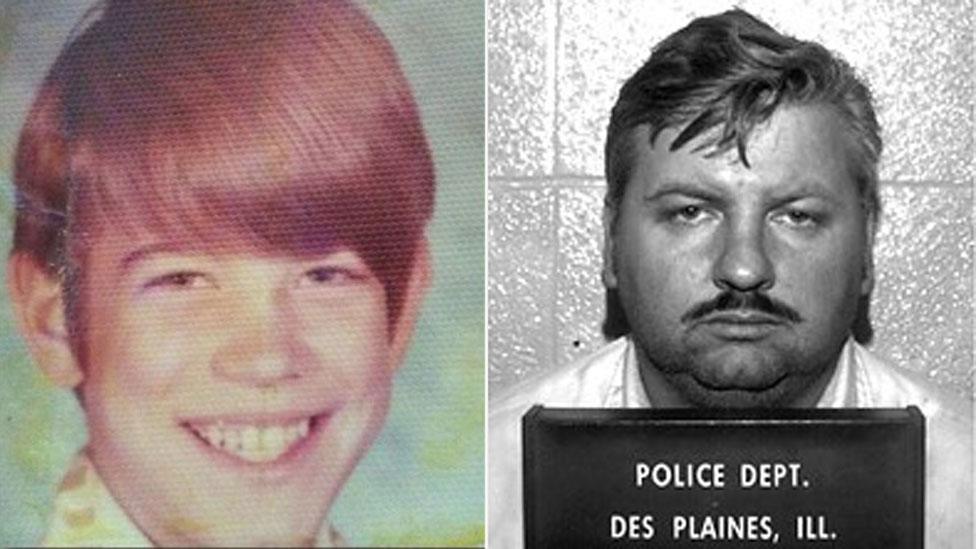
This chilling story reminds us of a terrifying truth: evil doesn’t always announce itself. Sometimes it starts as an innocent child, and something — trauma, mental illness, or inner darkness — twists it into unimaginable horror. The viral photo of young Gacy continues to shock people because the contrast is so stark: a beaming boy’s smile against a lifetime of unimaginable crimes.
Do you think childhood truly defines us, or can someone change — or become — completely different later in life?