Why the Sheriff Says No One Has Been Cleared in Nancy Guthrie’s Disappearance, Explaining Law Enforcement Protocol
What began as a routine clarification in an active investigation has unexpectedly become a source of confusion and controversy in the disappearance of Nancy Guthrie.
A single phrase—spoken with professional caution—has been repeatedly dissected, reframed, and misunderstood. When investigators said they would “not rule anyone out,” some online commentators treated the remark as an implied accusation rather than what it was: standard investigative language.
Law enforcement officials have stressed that this interpretation is misguided and potentially harmful. In cases where facts are still emerging, careful language is not evasive—it is ethical.
When Caution Is Misread as Suspicion
The controversy began during a press briefing, when Chris Nanos was asked whether family members had been cleared.
His response was measured. He explained that, at this stage, no one had been formally ruled out.
Within hours, that answer was reframed online as a sign of suspicion—particularly toward a relative who had appeared briefly in a family statement. Social media discussions escalated quickly, filling gaps in confirmed information with conjecture.
Investigators say this pattern is familiar—and damaging.
Speculation thrives where patience is thin.
And misunderstanding spreads faster than truth.
What “Not Ruling Out” Actually Means
In professional investigations, refusing to rule someone out does not mean accusing them.
It means something far more disciplined:
No one is cleared without evidence.
Former investigators explain that individuals are excluded only after:
Verified alibis
Corroborated witness accounts
Digital and location data
Elimination of opportunity and motive
Until that work is complete, all reasonable possibilities remain open.
This applies to everyone—family members, neighbors, strangers alike.
It is not suspicion.
It is procedure.
Why Families Are Always Reviewed
In missing-person cases, relatives are often examined early—not because they are presumed guilty, but because they hold critical information.
They know routines.
They know habits.
They know relationships.
They know what “normal” looks like.
Their insight is essential.
Review is not accusation.
Questioning is not blame.
Cooperation is not evidence of wrongdoing.
Authorities in this case have repeatedly stated that no family member has been named a suspect or linked to criminal evidence.
Yet speculation persists—fed by selective reading of official language rather than verified facts.
The Hidden Harm of Public Speculation
Law enforcement officials warn that misinterpreting cautious statements can cause lasting damage.
Once someone is framed publicly as “possibly suspicious,” even indirectly:
Reputations suffer
Families fracture
Emotional trauma deepens
Harassment increases
Witnesses hesitate
And none of this helps find the truth.
Investigators also avoid publicly “clearing” individuals too early, because doing so can:
Backfire if new evidence emerges
Discourage useful tips
Narrow investigative focus prematurely
Endanger innocent people
Restraint protects both justice and dignity.
Between Process and Patience
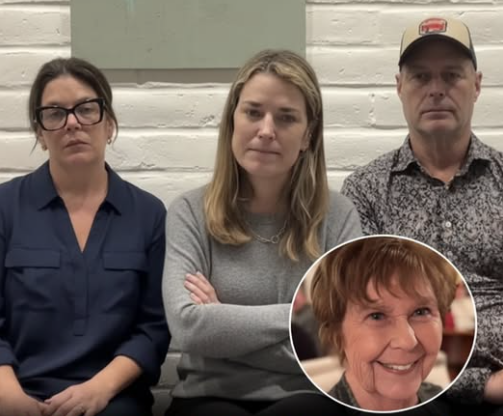
For Savannah Guthrie and her family, every delay is painful.
Waiting without answers is one of the hardest human tests.
Yet professionalism demands patience.
Justice cannot be rushed without being weakened.
Truth cannot be forced without being distorted.
Investigators must follow evidence—not pressure.
A Moral Responsibility in Public Discourse
This moment offers a quiet ethical lesson.
Not every unanswered question implies wrongdoing.
Not every careful word hides a secret.
Not every silence is suspicious.
Sometimes, it is simply responsibility.
In spiritual and moral tradition, restraint is a form of trust.
Trust in truth.
Trust in process.
Trust in time.
Conclusion
Nancy Guthrie remains missing.
Her family continues to wait.
Investigators continue their work.
Authorities urge the public to understand:
Caution is not accusation.
Restraint is not concealment.
Professionalism is not indifference.
When officials say they will not rule anyone out, they are not pointing fingers.
They are protecting the integrity of the search.
In cases like this, justice does not move through rumor.
It moves through patience, evidence, and quiet persistence.
And honoring that process is one of the most meaningful ways the public can help.