This Obscure ’80s Horror Story Left a Disturbing Legacy
The Forgotten Horror Film That Refuses to Die: Evil Town
At first glance, it looks like the kind of place you’d pass without a second thought.
Quiet streets. Familiar faces. Nothing out of place.
But in the world of cult horror, appearances are rarely what they seem.
Decades after its release, Evil Town continues to unsettle viewers, lingering like a half-remembered nightmare that refuses to fade. It never became a blockbuster. It never dominated box offices. Yet somehow, it survived—passed along through late-night screenings, whispered recommendations, and the memories of those who stumbled upon it by accident.
A Product of Fearless 1980s Horror
Released during the creatively bold era of 1980s horror, Evil Town emerged at a time when filmmakers were willing to take strange risks.
This was the age of:
Experimental storytelling
Low-budget creativity
Unfiltered imagination
Dark, uncomfortable themes
Rather than relying on flashy effects or famous stars, the film leaned into atmosphere and disturbing ideas. Its modest production values became part of its identity, giving it a raw, uneasy edge.
It wasn’t polished.
It wasn’t safe.
And that’s exactly why it endures.
A Small Town with a Terrible Secret
The story unfolds in what appears to be a peaceful, aging community.
Nearly everyone in town is elderly. Life moves slowly. Outsiders are rare. Nothing seems threatening.
Until the truth emerges.
The townspeople have discovered a horrifying method of extending their lives: a serum made from the cells of young travelers who wander into their community. These visitors are abducted, drained of their vitality, and discarded once they’ve served their purpose.
The premise taps into deep, uncomfortable fears:
Fear of aging
Fear of exploitation
Fear of losing control
Fear of being consumed by others’ survival
It asks a chilling question: What would people sacrifice to avoid death?
And the answer, in this town, is everything.
The Unmistakable 1980s Look
One of the film’s most memorable qualities is its visual identity.
Evil Town is soaked in 1980s style.
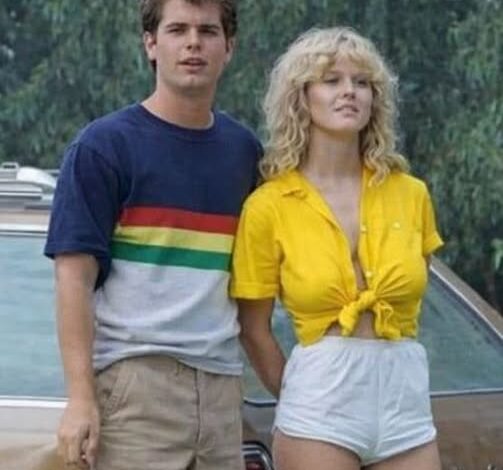
Fans often recall scenes featuring lead actress Lynda Wiesmeier and her co-star dressed in unmistakable era-defining fashion:
Bright red tied tops
High-waisted white shorts
Patterned sweatshirts
Short athletic shorts
These outfits feel like snapshots frozen in time—instantly nostalgic and slightly surreal.
The setting reinforces this feeling. An aging station wagon. Tall trees. Empty roads. Weathered houses.
Everything feels familiar—yet wrong.
The Town as a Living Character
In many horror films, monsters take center stage.
In Evil Town, the town itself is the monster.
It feels:
Watchful
Stagnant
Secretive
Complicit
Every building seems to hide something. Every resident appears to know more than they admit. The quiet becomes oppressive. Silence feels dangerous.
The community operates like a single organism, protecting its secret at all costs.
This subtle approach creates a creeping sense of inevitability. You know something terrible is coming—you just don’t know when.
Why It Still Works Today
By modern standards, Evil Town may seem restrained.
There are no massive explosions.
No digital monsters.
No nonstop jump scares.
Instead, it relies on:
Slow-building tension
Psychological discomfort
Moral unease
Implication over spectacle
This restraint is part of its lasting power.
The film trusts viewers to feel disturbed without being told exactly how to feel. It leaves room for imagination, which often makes horror more effective than explicit violence.
A Cult Classic Born from Obscurity
Because it never reached mainstream success, Evil Town found life in alternative spaces:
Late-night TV broadcasts
VHS collections
Horror conventions
Online cult forums
Fans discovered it accidentally, then shared it with others who appreciated its strange atmosphere and unsettling ideas.
Over time, this quiet circulation built its cult reputation.
It became one of those movies people say:
“You probably haven’t seen this… but you should.”
A Reflection of Its Era
The film also reflects deeper anxieties of its time.
During the 1980s, Western society was grappling with:
Fear of aging populations
Obsession with youth
Medical experimentation
Ethical boundaries
Evil Town channels these worries into horror.
Its story isn’t just about monsters—it’s about what happens when fear of death overrides morality.
Conclusion: A Relic That Still Haunts
Often overlooked but never truly forgotten, Evil Town remains a haunting relic of 1980s horror.
Its disturbing premise, eerie stillness, and unmistakable retro aesthetic ensure that it continues to linger in the minds of those who encounter it.
It proves that:
Big budgets aren’t required for lasting impact
Atmosphere can outlive special effects
Strange ideas age better than safe ones
Some films fade away.
Others, like Evil Town, stay buried just beneath the surface—quietly waiting for the next curious viewer to wander in and discover why they were never meant to leave.