It is with heavy hearts that we announce the passing of this legendary actor who gave us so much!
The passing of Ed Bernard marks the end of a long, steady career defined not by flash or spectacle, but by consistency, depth, and quiet impact. At 86, his death on January 23 in Northridge, California, closes a chapter in television history that many viewers may not have fully recognized while it was being written—but felt all the same.
For those who watched television in the 1970s and beyond, Bernard was a familiar presence. He wasn’t always the loudest character in a scene, nor the one chasing attention. Instead, he brought something more enduring—credibility, restraint, and a sense that the characters he portrayed existed beyond the script. Whether he was playing undercover detective Joe Styles on Police Woman or the grounded and authoritative principal Jim Willis on The White Shadow, his performances carried a kind of quiet authenticity that made them stick.
Behind those roles, however, was a man whose life extended far beyond the screen. His family described him not as a star first, but as a father, a grandfather, and someone deeply engaged with the world around him. They spoke of his curiosity, his appreciation for good food, his commitment to learning, and his faith—details that paint a fuller picture of someone who lived with intention, not just profession.
Born on July 4, 1939, in Philadelphia, Bernard’s path into acting didn’t begin in front of a camera. Like many actors of his generation, he started on stage, building his craft in a more immediate, demanding environment. One of his early appearances came in the off-Broadway production Five on the Black Hand Side in 1969. That experience shaped his approach, grounding his performances in something more disciplined and deliberate, which would later define his work in film and television.
His transition to the screen came soon after. He made his film debut in Shaft, followed by roles in Across 110th Street and The Hot Rock. These early projects gave him exposure and demonstrated his range, but it was television that ultimately gave him a lasting place in American households.
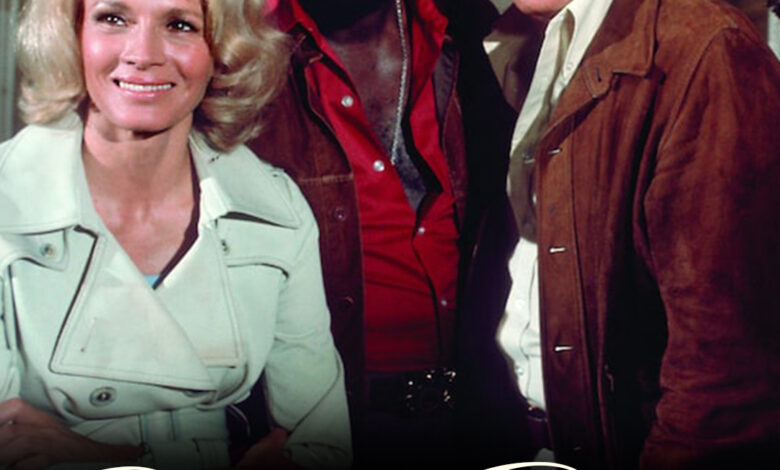
His breakthrough arrived through Police Story, particularly an episode titled “The Gamble,” which later served as the foundation for the spin-off series Police Woman. When that series launched, Bernard took on the role of Detective Joe Styles, working alongside Angie Dickinson’s Sgt. Pepper Anderson. From 1974 to 1978, the show ran for four seasons, with Bernard appearing in 90 episodes.
Police Woman itself was significant for its time, featuring a female lead in a genre that had been largely dominated by male characters. Bernard’s role helped balance the dynamic, offering a steady, grounded counterpart that added depth to the storytelling. He didn’t overpower the narrative—he supported it, strengthened it, and made it more believable.
Not long after, he stepped into another defining role, portraying Principal Jim Willis on The White Shadow. The series, centered around a former professional basketball player turned high school coach, used sports as a lens to explore broader social issues. Bernard’s character served as a stabilizing force within that environment—a figure of authority who wasn’t one-dimensional, but thoughtful, measured, and human.
He remained on the show for its first two seasons before his character moved on to a position with the Oakland Board of Education. Even that transition reflected the tone of the series—realistic, grounded, and attentive to the way lives evolve beyond a single setting.
Throughout the decades that followed, Bernard continued to work steadily. His career didn’t rely on a single defining moment but on a long list of appearances across well-known television series. He appeared in shows like Kojak, Mannix, What’s Happening!!, T.J. Hooker, NYPD Blue, ER, JAG, Becker, and Cold Case. In the 1980s, he held a recurring role in Hardcastle and McCormick and also appeared in the film Blue Thunder.
This kind of career—consistent, wide-ranging, and enduring—is often overlooked in an industry that tends to focus on headline-making performances. But it’s precisely this type of work that builds the foundation of television as a medium. Bernard was part of that foundation.
His final on-screen role came in 2005, a year that also brought personal loss with the passing of his wife, Shirley, after 44 years of marriage. That period marked a quiet closing of his professional life, though not of his legacy.
In later years, his contributions were recognized by the Academy of Motion Picture Arts and Sciences through inclusion in their annual In Memoriam tribute. It wasn’t a loud acknowledgment, but it was meaningful—a reflection of the respect he had earned over decades of work.
What makes Bernard’s career stand out isn’t just the number of roles he played, but the way he approached them. There was no excess, no need to dominate a scene. Instead, he brought a level of authenticity that made his characters feel real. That kind of presence doesn’t demand attention—it earns it, slowly and consistently.
With his passing, he becomes the last of the core cast of Police Woman to go, leaving Angie Dickinson as the only surviving main star of the series. It’s a reminder of how much time has passed, and how the people who shaped an era of television are gradually leaving behind only their work as a record.
He is survived by his sons, Edward and Mark, and his four grandchildren—Liz, Joshua, Samantha, and Alexandra. For them, his legacy is not just tied to the roles audiences remember, but to the life he lived away from the camera.
In many ways, Ed Bernard’s story reflects a kind of success that doesn’t always draw headlines but leaves a lasting mark. He didn’t chase the spotlight beyond what his work required. He showed up, delivered consistently, and built a career rooted in craft rather than attention.
And in doing so, he became part of something larger—a body of work that quietly shaped television over decades, leaving behind performances that still feel grounded, human, and real.