“You’ll never be a father.” That’s what the doctors told my dad. They looked at his condition and the limits they thought would define his life, and decided for him.
“You’ll never be a father.” That’s what the doctors told my dad. They looked at his condition and the limits they thought would define his life, and decided for him.
My dad’s name is Michael. He grew up in a small Ohio town, the youngest of three, already labeled “different” before he ever had the chance to show who he was. People whispered about what he wouldn’t do, wouldn’t achieve, and wouldn’t become.
When my mom found out she was pregnant with me, the doubt returned. “He won’t be able to handle raising a child,” they said.
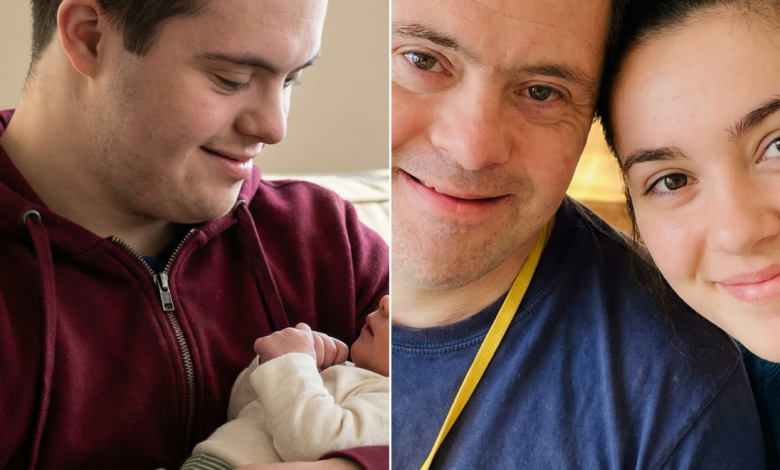
But the day I was born, my dad held me in his arms and made a promise no diagnosis could erase: “I’ll always take care of you.”
He didn’t have a big salary or a fancy title. He worked simple jobs, the kind that leave your back aching and your hands rough. He saved coins in a jar on the kitchen counter. That jar became my school supplies, my field trips, my future.
Every morning, he knelt to tie my shoes, sometimes fumbling with the laces, always smiling like it was the most important job in the world. He walked me to school in every kind of weather. He sat through every parent-teacher meeting, nodding proudly, asking questions, writing things down like he was studying for a test of his own.
Some neighbors doubted him. They watched quietly. Judged quietly.
Years later, those same neighbors stood and clapped as he cheered louder than anyone at my graduation. I saw tears in his eyes that day, not because he had proven the doctors wrong, but because he had kept his promise.
Now I stand in a classroom of my own, teaching children who are still learning who they are. And when they say something is impossible, I tell them about my dad.
A man the world underestimated.
A man who was told what he could never be.
A man who became the greatest father I could have ever asked for.
My dad didn’t just give me love. He gave me proof that limits are often just someone else’s fear written in ink. And nothing is impossible.
Over 6 to 7 million people are living with Down Syndrome in the world right now. People with Down Syndrome have the ability to show us a different way of parenting that might feel more connected, more interested, and even more bonding to the child than how we are taught to raise our children. It is important to understand that we all have something unique and beautiful to contribute to this world.