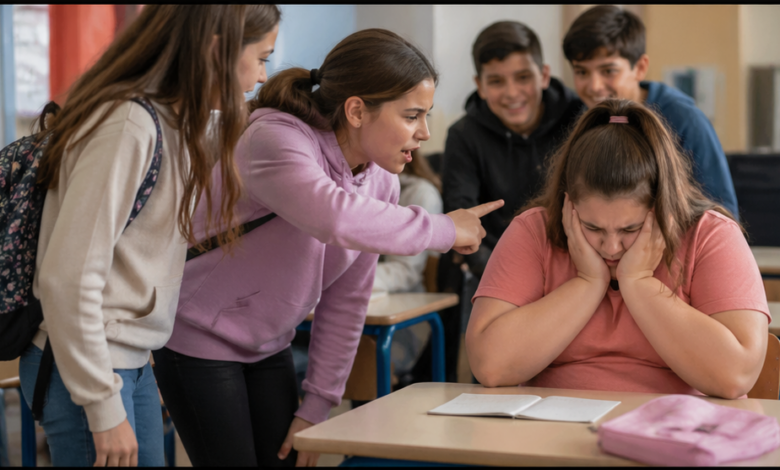
Sara Started Hating Mornings
Sara was 13 when mornings stopped feeling normal.
Her alarm would ring at 7:00, but she was already awake. Not because she had slept well — but because sleep had become something shallow, something fragile. Every night, her thoughts would circle the same place, over and over again, until exhaustion finally forced her eyes shut.
And every morning, the feeling came back before she even opened them.
A quiet panic.
A heaviness in her chest she didn’t have words for.
She would lie still, staring at the ceiling, counting seconds, hoping for something — anything — that would give her a reason not to go.
A fever.
A headache.
An excuse.
But her body never failed her.
So she got up.
She moved slowly, like every step required effort.
Her school uniform hung the same way it always did. Her bag sat by the door, already packed from the night before — not out of motivation, but habit. Sara had become very good at doing things automatically.
At breakfast, everything looked normal.
Her mom talked.
The TV was on.
The world moved.
“Eat something.”
“Don’t be late.”
Sara nodded.
She always nodded.
Because explaining it would mean finding the words… and she didn’t have them.
How do you tell someone that the place you’re supposed to feel safe in… is the place you feel the smallest?
The walk to school felt shorter every day.
Not because the distance changed — but because she spent it lost in thought, already preparing herself.
Don’t say too much.
Don’t look up too often.
Don’t give them a reason.
By the time she reached the gate, her chest was tight again.
And then it started.
It was never obvious.
That was the worst part.
No shouting.
No pushing.
Nothing that would make a teacher step in.
Just looks.
Whispers that ended in laughter.
Voices low enough to avoid consequences, but sharp enough to reach her.
“Why is she like that?”
“She thinks she’s better than everyone…”
“She’s so weird.”
Sometimes they said her name.
Sometimes they didn’t have to.
Sara always knew.
In class, she sat in the same seat every day.
Second row. Near the window.
She kept her head down, her hands folded neatly, her voice almost invisible.
Once, she tried to answer a question.
Just once.
Her voice came out small, unsure — but it was still her voice.
And then someone laughed.
Not loudly. Not dramatically.
Just enough.
Enough to make the rest join in.
Enough to make her stop mid-sentence.
The teacher moved on like nothing happened.
And Sara never raised her hand again.
Break time was a different kind of silence.
The loud kind.
The kind where everyone else belonged somewhere.
Groups formed quickly. Naturally. Effortlessly.
People had places to go. People to stand next to. People who noticed when they weren’t there.
Sara stood still for a moment, holding her phone like a shield.
Pretending to scroll.
Pretending to text.
Pretending she had a reason to be alone.
But pretending doesn’t make the feeling go away.
So she sat.
Same bench. Same spot. Every day.
Watching people laugh like it was easy.
Like it didn’t hurt.
Days turned into weeks.
Weeks turned into something heavier.
Sara stopped trying.
She stopped speaking unless she had to.
Stopped making eye contact.
Stopped expecting anything to change.
Because nothing ever did.
The teachers described her as “quiet.”
“Very well-behaved.”
“No issues.”
But silence can be misleading.
Silence can mean someone has learned that speaking only makes things worse.
At home, things were different — or at least, they looked different.
Her mom would ask, “How was school?”
Sara would say, “Fine.”
Every time.
Because “fine” was easier than breaking down.
Easier than explaining why she felt tired all the time.
Not the kind of tired sleep could fix.
The kind that sits in your chest and follows you everywhere.
Sometimes, she would go to her room and close the door quietly.
She didn’t slam it.
She didn’t want attention.
She would sit on her bed, still wearing her uniform, staring at nothing.
Replaying moments.
The laughs.
The whispers.
The feeling of being seen — but not in the right way.
Sometimes she cried.
Not loudly.
Just enough to let it out without anyone hearing.
And sometimes… she didn’t cry at all.
Which felt worse.
She started to wonder things.
Is it me?
Did I do something?
Why am I like this?
Questions with no answers.
Just silence.
And the mornings kept coming.
Every single one of them.
Unstoppable.
Unchanging.
One morning, she looked at herself in the mirror a little longer than usual.
Not fixing anything.
Not adjusting her hair.
Just… looking.
Like she was trying to recognize someone she didn’t fully know anymore.
And then, like always…
she picked up her bag,
walked out the door,
and went back to the place that made her feel invisible.
💬 Ending (very strong)
The scariest part about bullying isn’t always what people say.
It’s what it slowly makes you believe about yourself.