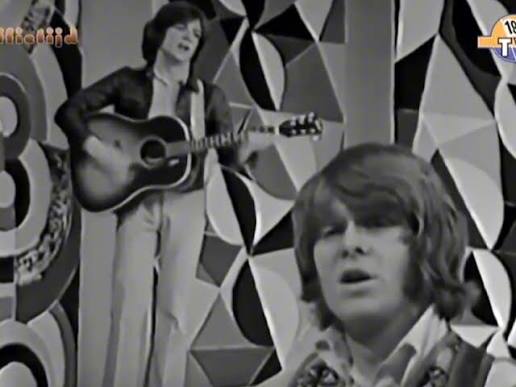
“The Forgotten Masterpiece of 1968: How The Marbles’ ‘Only One Woman’ Became One of the Most Beautiful Love Songs Ever Recorded”
In the late 1960s, when the music world was being transformed by psychedelic rock, experimental sounds, and the growing dominance of legendary bands such as The Beatles and The Bee Gees, a relatively unknown duo emerged with a song so powerful and emotionally rich that it would become one of the most memorable ballads of its era. That duo was The Marbles, and their signature hit, Only One Woman, remains a hidden gem that continues to captivate listeners decades after its release.
The Marbles consisted of Graham Bonnet and Trevor Gordon, two talented singers whose remarkable vocal abilities helped distinguish them from countless other acts competing for attention during the golden age of pop music. Although the duo never achieved the worldwide fame enjoyed by some of their contemporaries, they possessed a unique sound built around strong harmonies, emotional delivery, and sophisticated songwriting. Their biggest opportunity arrived when they caught the attention of the Bee Gees, who were among the most successful songwriting teams of the decade. Recognizing the duo’s potential, Bee Gees members Barry Gibb, Robin Gibb, and Maurice Gibb wrote and produced material for The Marbles, including what would become their defining recording.
Released in 1968, “Only One Woman” immediately stood out because of its dramatic orchestration, haunting melody, and deeply emotional lyrics. The song tells the story of overwhelming devotion, portraying a love so powerful that no other person could ever replace the one who holds the singer’s heart. While many love songs of the era celebrated romance in simple terms, “Only One Woman” explored longing, obsession, vulnerability, and emotional dependence with a maturity that gave the song lasting appeal. The combination of lush arrangements and heartfelt storytelling created an atmosphere that was both grand and intimate, allowing listeners to connect with the song on a deeply personal level.
One of the most remarkable aspects of the recording is Graham Bonnet’s extraordinary vocal performance. Long before he became known to rock audiences through his later work with bands such as Rainbow and Alcatrazz, Bonnet displayed a voice capable of extraordinary power and emotional nuance. His delivery on “Only One Woman” elevates the song beyond a typical pop ballad, transforming it into a dramatic declaration of love and heartbreak. Every line is sung with conviction, making the listener feel the intensity of the emotions behind the lyrics. Combined with Trevor Gordon’s contributions and the Bee Gees’ impeccable production, the result was a recording that sounded both timeless and modern.
Commercially, the song proved to be a significant success, reaching high positions on the British charts and earning The Marbles their greatest moment in the spotlight. Critics praised the quality of the songwriting and the strength of the vocal performances, while audiences embraced its romantic themes and unforgettable melody. For a brief period, it appeared that The Marbles might become one of the major vocal acts of the late 1960s. However, the music industry is often unpredictable, and despite the success of “Only One Woman,” the duo struggled to maintain the same level of commercial momentum with subsequent releases.
As the years passed, The Marbles gradually faded from mainstream attention, overshadowed by larger acts and changing musical trends. Yet the song itself refused to disappear. Music enthusiasts, collectors, and fans of classic pop continued to rediscover “Only One Woman,” appreciating its craftsmanship and emotional depth. Today, many regard it as one of the finest examples of late-1960s orchestral pop, a record that perfectly captures the sophistication and ambition of that era’s best songwriting.
The enduring appeal of “Only One Woman” lies in its sincerity. Unlike many modern recordings that rely heavily on production tricks or fleeting trends, the song is built upon timeless foundations: a beautiful melody, meaningful lyrics, exceptional vocals, and genuine emotion. These qualities allow it to transcend generations, speaking to anyone who has ever experienced profound love, longing, or heartbreak. It is the kind of song that feels as relevant today as it did when it first emerged from the speakers of radios in 1968.
Although The Marbles may not enjoy the same level of recognition as many of their contemporaries, their greatest hit remains a testament to the power of great songwriting and unforgettable performance. More than half a century after its release, “Only One Woman” continues to stand as a masterpiece of romantic pop music, proving that sometimes the most beautiful songs are not always the most famous. For those willing to look beyond the biggest names of the era, The Marbles offer a reminder that hidden among the giants of the 1960s were artists capable of creating music every bit as moving, memorable, and emotionally powerful as the classics that dominate history books today.