Justice Denied? A Mother’s Final, Desperate Plea for Mercy in the Face of a Brutal Murder Verdict
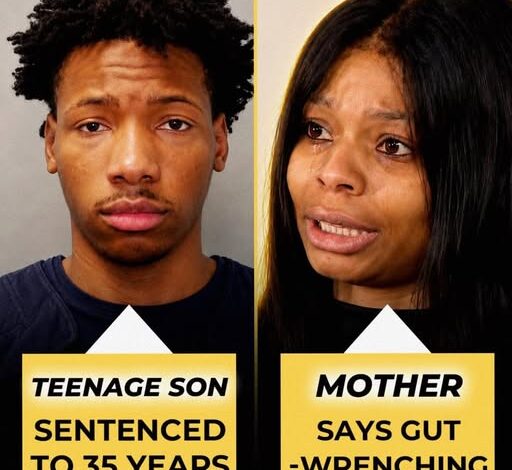
The courtroom air in Collin County was thick with the suffocating weight of finality when the jury delivered the devastating news that would tear two families apart forever. Nineteen-year-old Karmelo Anthony, once a teenager with his whole life ahead of him, was officially branded a murderer. As the verdict echoed through the silent chamber, his mother, Kayla Hayes, stood on the precipice of a nightmare she had spent over a year praying to avoid. With tears streaming down her face and her voice trembling with raw, unfiltered agony, she issued a heart-wrenching three-word plea for mercy that left the entire courtroom breathless.
The trial, which concluded on June 9, 2026, brought a tragic end to a saga that began on a sunny April morning at a Frisco high school track meet. What should have been a celebration of athletic spirit and community turned into a blood-soaked crime scene in less than thirty seconds. Austin Metcalf, a seventeen-year-old junior, lost his life in a senseless confrontation that witnesses described as an unprovoked escalation. The legal proceedings that followed did more than just determine the fate of a young man; they sparked a national dialogue about the boundaries of self-defense, the reality of impulsive violence, and the ultimate search for accountability in the eyes of the law.
The incident unfolded on April 2, 2025, inside the Memorial High School athletes’ tent at Kuykendall Stadium. According to testimony from numerous students and coaches, the confrontation was sparked by a simple territorial dispute. Karmelo Anthony, a student from a rival school, had taken a seat in the wrong tent. When Austin Metcalf politely asked him to move, the situation quickly spiraled into a hostile encounter. Witnesses reported that Karmelo refused to leave, eventually taunting Austin with a chilling warning: “Touch me and see what happens.” With his hand buried deep inside his backpack, Karmelo hinted at a hidden threat, creating an environment of palpable fear.
As tensions reached a breaking point, Austin—frustrated and feeling threatened by the older boy’s behavior—gave Karmelo a shove to the shoulder. It was a brief, physical reaction that was met with a lethal response. Karmelo stood up and plunged a knife into Austin’s chest. The aftermath was a scene of frantic chaos as coaches and athletic trainers scrambled to provide life-saving CPR. Tragically, it was too late. Austin was pronounced dead shortly after arriving at a local hospital. His twin brother, Hunter, who witnessed the entire ordeal, was left to carry the horrific memory of holding his brother’s hand while his life slipped away.
During the subsequent trial, the defense mounted a spirited argument for self-defense, painting the incident as a split-second reaction to fear. Attorney Mike Howard urged the jury to consider what was going through Karmelo’s mind in those final moments, arguing that he felt cornered and believed he was protecting himself. However, the prosecution countered with a starker reality. They argued that Karmelo had come to the track meet armed, that he had intentionally provoked the confrontation, and that he had utilized a “sneak attack” to ensure he came out on top. The jury, tasked with navigating these competing narratives, rejected the claim of self-defense and the assertion that the killing was committed under “sudden passion.”
The sentencing phase provided an intimate glimpse into the shattered lives left behind by this tragedy. Kayla Hayes, taking the stand, offered a plea that resonated with anyone who has ever loved a child. She spoke of the Karmelo she knew—the son who regretted his choices—and begged the jury to spare him the harshest possible outcome. Across the aisle, the Metcalf family offered a stark contrast. Hunter Metcalf, in a victim impact statement that served as the trial’s emotional anchor, stared directly at Karmelo and spoke of the devastating loss of his best friend, his brother, and the future they would never share. He spoke for a family that had spent over a year learning to live in the shadow of an empty chair.
The jury returned their final decision at 7:30 p.m., sentencing Karmelo Anthony to 35 years in state prison. Under Texas law, he will be required to serve at least half of that sentence before he is eligible for parole. The courtroom scene that followed was one of quiet devastation. While Karmelo was being led away in custody, he mouthed a final, whispered “I’m sorry” to his parents—a small, insufficient gesture in the face of such overwhelming loss. The judge’s gavel marked the end of the legal process, but for the families of both Karmelo and Austin, the healing process is only just beginning.
This case stands as a sobering reminder of how a few moments of unchecked aggression can permanently alter the trajectory of multiple lives. It serves as an indictment of the “touch me and see” mentality that often precedes violence in adolescent disputes. As the community of Frisco attempts to move forward, the memory of Austin Metcalf lives on in the hearts of those who knew him, while the haunting consequences of Karmelo Anthony’s actions serve as a dark cautionary tale. The legal system has rendered its verdict, but the scars left by that afternoon at the track meet will remain long after the 35-year sentence has been served. Justice has been delivered, yet there are no winners in a story that stripped two families of their futures in the blink of an eye.