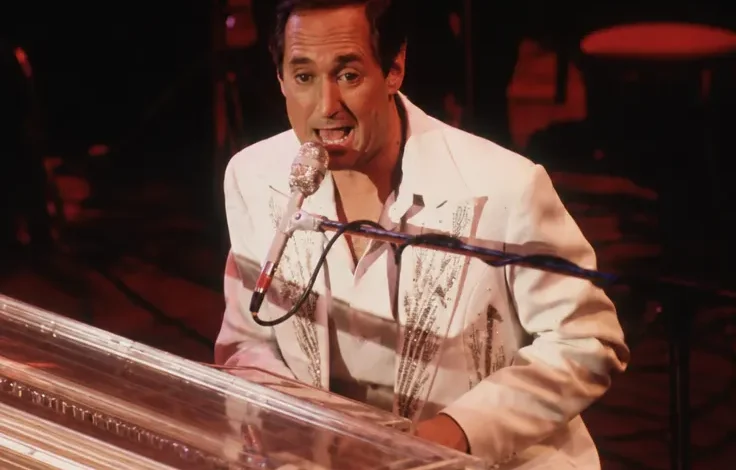
The Love Song That Made Millions Smile Through The Rain
When Neil Sedaka released “Laughter In The Rain” in 1974, he was doing something many people thought was impossible. Just a decade earlier, he had been one of the biggest pop stars in America, filling radio stations with hits and becoming a household name. But by the early 1970s, musical tastes had changed dramatically. Rock bands dominated the charts, singer-songwriters were everywhere, and many believed Sedaka’s best years were behind him. What happened next became one of the greatest comeback stories in music history.
Born in Brooklyn, New York, Neil Sedaka displayed musical talent from an early age. He studied classical piano and quickly developed a gift for melody that would later help him write some of the most memorable songs of the twentieth century. During the late 1950s and early 1960s, he became a major star with hits like “Calendar Girl,” “Breaking Up Is Hard To Do,” and “Happy Birthday Sweet Sixteen.” His songs captured the innocence and optimism of the era, making him one of the defining voices of early pop music.
But the arrival of The Beatles and the British Invasion changed everything. Like many American artists of his generation, Sedaka suddenly found himself struggling to compete in a rapidly changing music industry. Hit records became harder to find, radio stations shifted their attention elsewhere, and many observers assumed his career had peaked.
Instead of giving up, Sedaka continued writing, recording, and refining his craft. Throughout the late 1960s and early 1970s, he quietly rebuilt his career, determined to prove he still had something meaningful to say. That determination eventually led to the creation of “Laughter In The Rain.”
The song was written by Sedaka and lyricist Phil Cody. Unlike many love songs of the era, it focused on a simple but powerful image: two people finding happiness together during a rainstorm. There were no dramatic declarations or complicated stories. Just a moment of pure joy shared between two people who genuinely enjoyed each other’s company.
That simplicity became the song’s greatest strength.
The lyrics capture a feeling almost everyone understands. Sometimes the most meaningful memories aren’t grand events. They are small moments. A walk in the rain. A shared laugh. A quiet evening with someone you love. “Laughter In The Rain” celebrates those simple experiences and reminds listeners that happiness often appears when we least expect it.
Musically, the song reflected the polished sophistication of 1970s pop. Gentle piano, lush orchestration, and Sedaka’s warm vocal performance created an atmosphere that felt both intimate and uplifting. The arrangement gradually builds throughout the song, growing richer and more emotional without ever becoming overwhelming. Every note serves the song’s central message of joy and connection.
When the record was released, audiences responded immediately.
“Laughter In The Rain” climbed the charts and eventually reached number one on the Billboard Hot 100. For Sedaka, it represented far more than another hit single. It was proof that his music still mattered. It was proof that talent, perseverance, and great songwriting could overcome changing trends and industry expectations.
The success of the song sparked a remarkable career revival. Suddenly, Sedaka was back at the top of the charts, introducing himself to a new generation of listeners while reconnecting with longtime fans who had followed him since the beginning. Few artists have managed such a successful comeback, making the achievement even more impressive.
Over the decades, “Laughter In The Rain” has become one of the defining love songs of the 1970s. It regularly appears on oldies stations, nostalgic playlists, and collections celebrating the greatest romantic songs ever recorded. Its popularity has endured because the emotions at its core remain timeless.
Many listeners associate the song with specific memories from their own lives. First dates. High school romances. Summer evenings. Road trips. Anniversaries. The song seems to attach itself to personal moments, becoming part of people’s stories in ways that few recordings ever achieve.
Perhaps that is why it continues resonating with audiences more than fifty years after its release. The world has changed dramatically since 1974. Technology has transformed communication. Musical styles have evolved countless times. Yet the simple pleasure of sharing a happy moment with someone special remains exactly the same.
Today, “Laughter In The Rain” stands as one of Neil Sedaka’s greatest achievements and one of the most beloved love songs of its era. It reminds us that sometimes the most powerful songs are not about heartbreak, drama, or loss.
Sometimes they’re simply about happiness.
And sometimes that’s exactly what people need.
More than fifty years later, one rainy melody continues bringing smiles to millions of listeners around the world. That’s the mark of a truly timeless song.
Listen to the full song here:
Credits:OceanKingNY