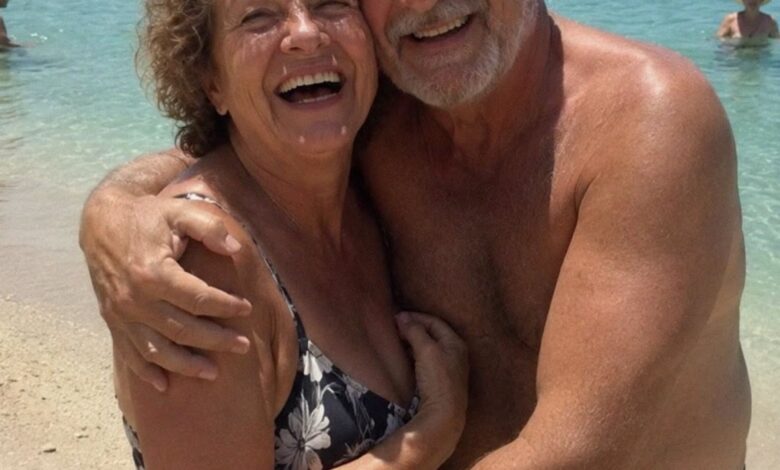
At 67, I Took My First Vacation to Malta and Decided to Say ‘Yes’ to Everything – I Never Expected to Find Love Again
At 67, I took my first solo trip to Malta and promised to say yes to everything. Then I followed the man I was falling for — and overheard why meeting me was never an accident.
I took one more step toward the courtyard.
David stood under a string of yellow lights with his back to me.
Across from him was a woman in her 40s.
She had his gray-blue eyes.
“You have to tell her tonight,” the woman said.
“I know.”
“You should have told her the moment you recognized her.”
My hand tightened around the stone doorway.
Recognized me?
David lowered his voice.
“I didn’t expect to fall in love with her.”
The woman folded her arms.
“That doesn’t make the lie smaller.”
I stopped breathing.
David looked toward the restaurant.
“She leaves tomorrow.”
“Exactly.”
“If I tell her now, she’ll think every moment between us was planned.”
“Wasn’t it?”
He did not answer.
That silence told me more than any confession could have.
I stepped into the courtyard.
“Planned?”
David turned.
The color left his face.
“Eleanor.”
The woman closed her eyes.
For one terrible second, none of us moved.
Then I looked at David.
“Who is she?”
“My daughter. Clara.”
Clara gave me a small, unhappy smile.
“I’m sorry we met this way.”
I barely heard her.
My chest felt tight.
“What did you recognize me from?”
David took a step closer.
I moved back.
“Don’t.”
He stopped immediately.
The restaurant noise drifted through the open kitchen door behind us. Glasses clinking. People laughing. A waiter calling for another bottle of wine.
Five minutes earlier, I had been sitting at a table overlooking the harbor, believing I had found something I thought life had taken from me forever. Now I was standing in a courtyard with a man who had admitted our meeting was not an accident.
“Tell me the truth,” I said.
David glanced at Clara.
She shook her head.
“No more help from me, Dad. You tell her.”
He looked older than he had that morning.
Not 70. Ancient.
“My wife knew your husband.”
I stared at him.
“What?”
“Ruth knew Michael.”
The sound of my husband’s name in David’s voice made my stomach drop.
Michael had been dead for four years.
We had been married for 39.
He had never mentioned anyone named Ruth.
“How?”
David looked toward an empty table in the corner of the courtyard.
“They met here.”
“In Malta?”
“Yes.”
“When?”
“Thirty-two years ago.”
I laughed once, but there was no humor in it.
“Michael never came to Malta.”
David said nothing.
That silence again.
I thought about all the stories Michael had told me over the years.
His business trips.
Conferences.
Delayed flights.
The two weeks he spent traveling through Europe for work when our daughter was nine.
He had brought home a glass dolphin for her and a silver bracelet for me.
I still owned the bracelet.
“Sit down,” David said.
“No.”
“Eleanor, please.”
“You told me you had never been to this restaurant.”
“I know.”
“The waiter knew your name.”
“I’ve been here several times.”
“How many?”
“Seven.”
My throat tightened.
“Why?”
He reached inside his jacket.
I stepped back again.
“It’s only an envelope.”
He placed it on the table instead of handing it to me.
My name was written across the front.
Not in David’s handwriting.
In Michael’s.
I knew every curve.
Every impatient stroke.
He always made the final letter of my name too large.
Eleanor.
My husband had written that envelope.
My knees weakened.
Clara pulled out a chair.
This time, I sat.
“Where did you get that?”
David lowered himself across from me.
“After Ruth died, I found a box hidden behind the lining of an old suitcase.”
“Your wife died six years ago.”
“Yes.”
“And you found this then?”
“Not immediately. I donated most of her clothes, but I kept the suitcase. I found the letters last year.”
“What letters?”
“More than 40.”
The courtyard seemed to tilt.
Clara quietly went inside, leaving David and me alone.
I looked at the envelope.
“Michael wrote to your wife?”
“For years.”
“How many years?”
David’s eyes filled.
“Almost 11.”
I pushed the envelope away.
“No.”
“I wish I were wrong.”
“No. Michael was not unfaithful to me for 11 years.”
David did not argue.
That made me hate him for a moment.
I wanted him to defend my husband.
I wanted him to say the letters had been misunderstood.
That Ruth and Michael had been old friends.
That whatever this was, it had not touched my marriage.
Instead, he said, “They met at a conference in Valletta.”
The trip came back to me.
Michael had worked for a shipping company at the time.
He traveled often.
I stayed home with our daughter, Rebecca, who had just started school.
He called every night.
At least, I thought he did.
David continued.
“Ruth was here visiting her sister. She and Michael met in this restaurant.”
I looked around the courtyard.
The old stone walls.
The flowering vines.
The harbor visible through an archway.
This was where my husband had met another man’s wife.
“They saw each other again?” I asked.
“Several times.”
“Here?”
“Here. London. Paris. Once in Boston.”
Boston.
I remembered Boston.
Michael came home with a red scarf and said he bought it during a layover because he missed me.
I wore it for 20 years.
I pressed both hands against my mouth.
David looked away.
“Did they love each other?”
“I don’t know.”
“Don’t lie to me again.”
His eyes returned to mine.
“Yes.”
The answer broke something.
Not loudly.
There was no dramatic crack.
Just a quiet collapse inside a life I thought had already ended.
Michael had died beside me.
Cancer took him slowly.
I fed him soup when he could no longer hold a spoon.
I washed his hair.
Changed his sheets.
Slept in a chair beside his hospice bed.
On his final morning, he squeezed my hand and said, “You were the best part of my life.”
I believed him.
Maybe I still did.
That was the cruelest part.
“Why did it end?” I asked.
“Ruth said they chose their families.”
“How noble.”
David flinched.
“They ended the affair 21 years ago.”
“But kept writing?”
“For a while. The last letters were apologies.”
“To each other?”
“Mostly.”
I looked at the envelope again.
“And that?”
“Michael wrote it to you.”
“Why didn’t he give it to me?”
“I think he gave it to Ruth because he was afraid.”
“Afraid of me?”
“Afraid of losing you.”
I laughed bitterly.
“He risked losing me for 11 years.”
“I know.”
“No, David. You know what your wife did. You do not know what my husband did to me.”
He accepted that without defending himself.
It made my anger harder to hold in one shape.
“Did Ruth know Michael died?”
“Yes.”
“How?”
“She kept track of your family online.”
A chill moved through me.
“Is that how you recognized me?”
David nodded.
“There were photographs in the box. One of you and Michael at your daughter’s wedding. Another from an anniversary dinner.”
I stood.
“You saw me wandering around Valletta with my map upside down, and you knew exactly who I was.”
“Yes.”
“You laughed and asked if it was my first time in Malta.”
“Yes.”
“You pretended we were strangers.”
“I was going to introduce myself and give you the envelope.”
“But you didn’t.”
“No.”
“Why?”
He looked toward the harbor.
“Because you smiled at me.”
I waited.
“That sounds foolish now,” he said. “But you looked lost, then started laughing at yourself. I had spent months imagining you as a name on an envelope. Suddenly you were a person.”
“So you took me for coffee.”
“I told myself it was only coffee.”
“Then breakfast.”
“Yes.”
“Gozo.”
“Yes.”
“My final dinner.”
His voice dropped.
“Yes.”
Every memory changed as he admitted it.
The coffee that had felt spontaneous.
The ferry ride where he held my hand when the deck shifted.
The afternoon he bought me lemon ice and wiped sugar from my thumb.
The quiet moment beside the sea when he said he was glad I had said yes.
I had thought life brought us together.
David had recognized me.
Followed me.
Chose not to tell me why.
“You used me,” I said.
“At first, I wanted answers.”
“What answers?”
“I wanted to know whether Michael had ruined your life the way Ruth’s secret ruined mine.”
I stared at him.
“Did I look ruined?”
“No.”
“Did that disappoint you?”
His face twisted.
“At first? Maybe.”
The honesty was ugly.
I appreciated it anyway.
David had spent six years believing his marriage to Ruth was honest.
Then, after her death, he found another life hidden inside it.
He came to Malta because this was where it began.
The first time, he sat at the restaurant for three hours and never ordered food.
He returned the following year.
Then again.
When he found Michael’s envelope addressed to me, he searched for a way to contact me.
Before he could decide what to do, Clara saw my daughter post about my trip online.
“Rebecca posted about Malta?”
“She wrote that she was proud of you for finally traveling alone.”
I closed my eyes.
That was how David knew where I would be.
“I didn’t know your hotel,” he said. “I didn’t know your schedule. Seeing you in that street truly was chance.”
“A convenient chance.”
“Yes.”
“Did Clara come here to stop you?”
“She came because I called her.”
“Why?”
“Because I was afraid I would ask you to stay.”
The words hurt in a different way.
I sat down again.
David took a breath.
“I have a small house outside Valletta. Ruth inherited it from her sister. I planned to sell it after this trip.”
“You live in England.”
“Part of the year. I started spending winters here after Ruth died.”
“So even that was a lie.”
“I told you I was visiting for the first time this year. I let you hear what you expected.”
“You said, ‘First time in Malta?’ as if it was your first time too.”
“I know.”
I reached for the envelope.
My fingers trembled.
“Have you read it?”
“No.”
“How do I know that?”
“You don’t.”
That answer was the first thing he said all evening that made me trust him a little.
I opened the envelope.
The letter inside was only two pages.
Michael had written it 20 years earlier.
He told me about Ruth.
Not every detail.
Enough.
He wrote that he had confused escape with love.
That Ruth made him feel like a man without bills, routines, or responsibilities.
He said he ended it because he realized the life he wanted to escape was also the life he would choose if forced to lose it.
Near the end, he wrote:
“Eleanor, I don’t know whether telling you would free you or only move my guilt into your hands.”
I stopped reading.
That was exactly what he had done.
He kept the truth to protect himself, then dressed the silence as concern for me.
I read the final paragraph.
“If you ever learn this, you may decide the life we built was false. I can only tell you that my failure was real, but so was every morning I woke grateful that you were beside me.”
I folded the letter.
For 39 years, I had believed fidelity was one of the pillars of my marriage.
Now I had to decide whether one hidden room meant the entire house had never been real.
David watched me carefully.
“Do you hate him?” he asked.
“Not yet.”
It was the truth.
Grief is strange.
It does not protect the dead from anger.
It only makes anger lonelier.
“Do you hate Ruth?” I asked.
“I did.”
“And now?”
“I hate what she did. I miss who she was.”
I understood that immediately.
Maybe that was why he had found me.
Not because our spouses had loved each other.
Because we were the only two people who could understand how betrayal and love could survive in the same memory.
I placed the letter in my bag.
“I’m leaving.”
David nodded.
“I’ll walk you back.”
“No.”
“Eleanor, it’s late.”
“I said yes to everything this week.”
His face tightened.
I continued.
“That does not mean you get to decide what I say yes to now.”
He stepped back.
“You’re right.”
I left him in the courtyard.
At the hotel, I packed until sunrise.
I cried while folding clothes I had bought for a week that no longer felt like mine.
Then I stopped.
David had lied.
Michael had lied.
But the boat ride had still happened.
The sea had still been blue.
I had eaten octopus despite being terrified of it.
I had danced badly in a square while strangers clapped.
Those moments belonged to me.
No man had created them.
At the airport, I found David sitting near the check-in desks.
He did not approach.
A small paper bag rested beside him.
When I walked closer, he stood.
“I brought your book,” he said.
I had left it at the restaurant.
“Thank you.”
He handed it to me.
No flowers.
No speech.
No demand for forgiveness.
“Clara said I should let you go.”
“She’s sensible.”
“Painfully.”
I placed the book in my bag.
“My flight boards in an hour.”
“I know.”
He looked at me.
“I am sorry I met you through a lie.”
“So am I.”
“But I am not sorry I met you.”
I hated how much I understood that.
“I can’t trust what happened this week,” I said.
“I know.”
“And I cannot become a consolation prize for what our spouses did.”
“You aren’t.”
“You don’t get to decide that.”
He nodded.
“You’re right.”
Again.
No defense.
No argument.
He handed me a card with his address and phone number.
“If you never contact me, I will understand.”
I took it.
Not as a promise.
Not even as hope.
Just a choice I could make later.
Then I boarded my flight home.
For three months, I did not contact him.
I told Rebecca everything.
Not immediately.
First, I told her about Malta.
The food.
The water.
The terrible map.
Then I gave her Michael’s letter.
My daughter cried.
Then she became angry.
Then she asked whether I wished I had never gone.
“No,” I said.
That surprised both of us.
I started therapy.
I joined a walking group.
I took a cooking class and ruined an entire tray of pastries.
I said yes to things that had nothing to do with David.
That mattered.
On the ninety-third day after Malta, I wrote him a letter.
Not an email.
A real letter.
I told him I had not forgiven the way he approached me.
I told him I understood why he wanted answers.
I told him understanding was not the same as excusing.
Then I asked one question.
“If we met again, could you do it without already knowing who I am?”
His reply arrived two weeks later.
“No. But I could spend the rest of my life learning who you are instead of assuming I know.”
I read that line many times.
Then I called him.
We spoke for 20 minutes.
The next week, 40.
Three months later, David flew to see me.
He stayed in a hotel.
Rebecca met him before I did.
She questioned him like a detective.
He loved her immediately.
I did not trust him all at once.
Trust returned in pieces.
He told me when he was afraid.
I told him when I was angry.
We stopped protecting each other from uncomfortable truths.
A year later, I returned to Malta.
David waited at the airport.
This time, he did not pretend our meeting was chance.
He held up a sign that read:
ELEANOR, AGE 68. STILL SAYING YES?
I laughed.
Then I changed the sign with a pen from my purse.
SOMETIMES.
David read it and smiled.
“That’s better.”
Last night, we ate at the same harbor restaurant.
The waiter greeted David by name.
I did not feel afraid.
Clara joined us for dessert.
Before we left, David led me into the courtyard.
For one second, I remembered overhearing him there.
The lie.
The envelope.
The feeling that love had made a fool of me again.
Then he took my hand.
“No surprises,” he said.
“Good.”
“No hidden plans.”
“Better.”
“I would like to spend whatever time we have left traveling between your home and mine.”
I looked at him.
“Is that a proposal?”
“It’s a question.”
That difference mattered.
I said yes.
Not because I had promised to say yes to everything.
That promise belonged to a frightened woman who believed courage meant never refusing an experience.
I know better now.
Sometimes courage is leaving the courtyard.
Sometimes it is getting on the plane.
Sometimes it is making a man earn the right to ask again.
At 67, I went to Malta because my daughter asked when I had last done something that made me happy.
I thought happiness would be a beautiful place.
Then I thought it was David.
It was neither.
Happiness was discovering that even after grief, betrayal, and fear, my life still belonged to me.
David did not give me that life.
He only met me after I finally began living it.
And when love found me again, I did not say yes because I was lonely.
I said yes because, this time, I knew I was also allowed to say no.