The Gray File Behind a Widow’s Perfect Version of the Entire Truth-quinn
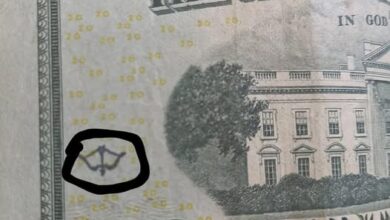
The tattoo belonged to Peter Hale, Victoria’s older brother.
Brandon had seen the black compass around Peter’s wrist hundreds of times, usually when Peter reached across a conference table to correct someone else’s numbers.
He knew.Two nights earlier, Peter had been in the room when Victoria placed the bitter coffee beside Brandon’s hand.
When Brandon refused it, Peter laughed, lifted the mug, and drank twice to prove there was nothing wrong with it.
Sometime later, Peter began slurring his words.
Victoria did not call an ambulance.
She ordered Frank to bring the company car around, then told Peter to sit down and stop frightening everyone.
Frank had found Brandon near the service entrance less than an hour after that, bleeding and barely awake, but he had never seen Peter leave.
I slid the thumb drive into my old laptop while the kitchen fan clicked above us.
The screen stayed black long enough for Brandon to press his palm against his ribs.
Then a folder appeared under Arthur’s name.
Inside it was a recorded message, copies of the firm’s original access rules, and an emergency code Arthur had created before his death.
The code could suspend every executive account for ninety minutes, but only if Brandon confirmed his identity on camera.
Victoria controlled his office phone, his company email, and the authentication device kept in his Chicago desk.
Arthur had built another door.
Brandon wiped rain-dried blood from the corner of his mouth, opened the laptop camera, and recorded twelve seconds.
“My name is Brandon Hale. I am alive. Victoria Hale has falsely reported my death. Stop the cremation, preserve every company record, and meet me at four eighteen.”
He sent the video to every director, the clinic administrator, and the firm’s internal counsel.
Then he entered Arthur’s code.
Victoria’s access disappeared from the system.
The action could not be withdrawn.
Frank drove us toward Chicago in the company’s oldest delivery van because Victoria knew the plates on Brandon’s car and mine.
I sat in the back beside my son with the gray file across my knees and the thumb drive inside my coat pocket.
The van smelled of wet cardboard and the peppermint gum Frank chewed when he was nervous.
Brandon had not eaten since the previous afternoon.
At a red light, I offered him half a granola bar from my purse.
He took one bite.
That was all.
Frank kept checking the mirror.
“Victoria won’t come herself,” he said. “She never does.”
No one answered him.
The private clinic occupied two floors of a narrow brick building between an accounting office and a shop that sold medical uniforms.
A white transport van waited behind it with its rear doors open.
The time was a little after four.
Inside, the air felt cold enough to tighten the skin on my arms, and a bowl of wrapped lemon candies sat untouched beneath the reception window.
A fly circled the bowl once, landed on the counter, and disappeared.
I placed the glossy photograph in front of the receptionist.
“My son is standing beside me,” I said. “The man in your mortuary room is not Brandon Hale.”
The receptionist looked at Brandon’s bandaged chest, then at the photograph, but she did not reach for the phone.
“Mrs. Hale provided identification and a signed authorization,” she said. “We cannot discuss a patient or decedent with unauthorized visitors.”
Brandon leaned against the counter.
“I am the person she identified.”
The receptionist swallowed.
Behind her, a printer began producing pages no one had requested.
She called the clinic administrator, a narrow woman named Denise Ward who wore blue reading glasses on a chain.
Denise asked Brandon for identification.
His wallet had been taken with his shoes, but the copy of his driver’s license in the gray file matched the face in front of her.
She still hesitated.
Victoria had supplied a death certificate worksheet, a direct-cremation request, Peter’s body under Brandon’s name, and a letter from a physician who claimed Brandon had suffered a fatal cardiac event at home.
There was no hospital record.
There was no ambulance report.
There was only paper.
Denise stopped the transport crew from moving the body, but she would not release it or let us enter the room until her counsel responded.
For nine minutes, we had control.
Then Victoria arrived.
She entered through the rear corridor in a pale blouse with her hair tied low at her neck, carrying Brandon’s phone and a leather document case.
Her face changed when she saw him, but only once.
After that, she looked concerned.
“Brandon,” she said softly. “Your mother should not have brought you here in this condition.”
He moved away from the counter.
“You told her I was dead.”
Victoria glanced at Denise as though they were both managing the same difficult patient.
“He has been confused since he stopped taking his medication,” she said. “He becomes frightened, then suspicious, and his mother encourages it because she does not understand his treatment.”
She opened her case and produced a physician’s letter describing Brandon as unstable, dependent on sedatives, and vulnerable to paranoid episodes.
The letter was dated six days earlier.
Brandon had never met the doctor who signed it.
Victoria placed his phone beside the letter.
“I kept this safe for you,” she told him. “You left without it.”
The screen showed missed calls from me, Frank, and two directors.
It also showed photographs of Brandon’s medication arranged beside his breakfast cup.
The images made her story look organized.
Brandon reached for the phone.
Victoria pulled it back.
“Not until someone examines you.”
His knees bent.
I caught his arm before he hit the counter, but the sudden weight pulled at his cracked rib and he made a sound through his teeth.
Denise called for a wheelchair.
Victoria used the moment.
She told the clinic staff that Brandon had overdosed, attacked Peter, and fled before Peter died.
She said the false identification had been a temporary measure to protect the company from public panic while the family determined what had happened.
Her voice stayed low.
“Please don’t let his mother turn a medical crisis into a spectacle.”
The clinic doors were locked.
The transport crew stepped away from the body, but two staff members moved between Brandon and the exit.
We had stopped the cremation and lost control of my son again.
I opened the gray file on the reception counter.
The account records showed transfers totaling $4.7 million to a consulting vendor Peter managed through another company.
The insurance notices listed Victoria as beneficiary on policies Brandon had never approved.
One audio clip contained Peter telling someone that the certificate had to be issued before five.
Victoria did not look at the pages.
She looked at the file itself.
“Those were sent to Eleanor because Brandon was unwell,” she said. “He hides documents when he is frightened.”
I picked up Brandon’s phone from beside her physician’s letter.
Victoria closed her hand around my wrist.
Her fingers were cool.
“You are exhausted,” she said. “Let me take you somewhere quiet.”
I left the phone on the counter and removed her hand one finger at a time.
Then I called Miriam Cole from the clinic’s desk phone.
Miriam had worked with Arthur before Brandon took over the firm, and she chaired the board because she was the only director who could tell both men no without raising her voice.
She had received Brandon’s video.
She had also received a message from Victoria claiming the video was fabricated during a psychotic episode.
“Put him where I can see him,” Miriam said.
Denise turned a computer monitor toward Brandon.
Miriam studied his bruised jaw, asked him three questions about contracts signed that month, and listened while he answered each one without help.
Then she looked at Victoria.
“The board meeting is still at four eighteen.”
Victoria smiled as though Miriam had made a sensible medical choice.
“Of course,” she said. “We all want what is safest for him.”
The meeting began on the clinic computer because Brandon could not stand long enough to reach the office.
Four directors appeared on-screen from the firm’s conference room.
Miriam sat at the head of the table with an empty chair beside her and a stack of printed messages near one hand.
A paper cup had left a wet ring on the polished wood.
Victoria stood behind Brandon’s wheelchair and rested her palm on its handle.
I moved the chair forward until she had to let go.
Brandon described the coffee, the locked bedroom, Peter’s collapse, and Frank’s escape route.
He did not mention the insurance first.
He spoke about his phone.
For almost a year, every call had passed through an account Victoria administered.
Meeting invitations disappeared before he saw them.
Messages from employees were answered in his name.
Medication reminders appeared at the same time each morning, and Victoria watched until he swallowed what she placed beside his coffee.
Miriam asked Victoria whether she had controlled the account.
“I assisted my husband,” Victoria replied. “Successful people often need protection from interruptions.”
One director nodded.
Another looked down.
I pushed the gray file across the counter until it rested beneath the clinic camera.
The directors watched me turn each page.
Transfer notices.
Policy statements.
Copies of authorizations Brandon denied signing.
A list of company devices registered to Victoria’s private administrator profile.
Miriam stopped me at the device list.
She asked the firm’s internal counsel to compare it with the system log Arthur’s emergency code had exposed.
The comparison took several minutes.
During that time, Frank folded a gum wrapper into a narrow strip and tucked it under his watchband.
Brandon breathed shallowly.
Victoria rubbed his shoulder once.
He moved away from her hand.
The counsel returned with a finding that changed the room.
Victoria’s account had opened Brandon’s mailbox, approved two insurance notices, and downloaded the company’s succession documents on the night he escaped.
Her account had also scheduled a server deletion for six that evening.
Miriam removed her glasses.
“Victoria, your authority is suspended pending review.”
The director who had nodded earlier changed his vote.
The board ordered the accounts preserved, the deletion canceled, and every transfer connected to Peter’s vendor frozen.
Denise unlocked the clinic doors.
The body would remain where it was.
Victoria stepped away from the wheelchair.
For a few seconds, no one spoke.
Then she changed the subject.
“Ask Brandon what happened to Peter.”
She placed her document case on the counter and removed a printed image from a security camera at her house.
It showed Brandon leaving through the service entrance while Peter lay on the kitchen floor behind him.
The image had no sound and no visible time stamp, but it was enough to create another story.
Victoria said Brandon had poisoned himself, become violent, and struck Peter when Peter tried to help.
Frank, she said, had removed Brandon before anyone could call for assistance.
The dispute moved from Brandon’s death to Peter’s.
The danger did not become larger.
It changed direction.
Miriam delayed the suspension order while counsel reviewed the image.
Victoria immediately invoked the company’s medical-incapacity clause and produced signed statements from two directors who were not on the call.
With those votes, Brandon could be removed from operational control until examined by a physician selected under the company plan.
The emergency freeze remained, but his authority vanished with hers.
We lost the company after winning it back.
Brandon shut his eyes.
I straightened six pens beside the clinic keyboard, arranging them by color even though none belonged to me.
It accomplished nothing.
Then I called Arthur’s old office extension from the desk phone.
A recorded voice said the number had been disconnected.
That accomplished nothing too.
When I returned to the laptop, the thumb drive was still in my coat.
Arthur’s folder contained more than the emergency code and the first recording, but my kitchen computer had displayed the files by date and hidden several items inside an archive Brandon’s software could open.
He inserted the drive into the clinic computer.
Victoria took one step toward him.
Denise blocked the counter with her body.
The archive held copies of the firm’s original bylaws, Arthur’s private notes, and a recording made in his office several months before his heart attack.
We did not play it yet.
First, Brandon opened a photograph stored beside it.
The photograph showed the company kitchen on the morning Peter drank from Brandon’s cup.
Arthur had installed a small internal camera after medications disappeared from his desk years earlier, and the system still saved images whenever an executive access badge opened the cabinet beside the coffee station.
Victoria’s badge had opened that cabinet shortly before Brandon’s coffee was prepared.
Peter’s badge had opened it again after he became ill.
The access record did not prove what had been placed in the cup, but it proved Victoria’s account of a private overdose was incomplete.
Miriam reinstated the suspension.
This time, every director supported it.
The clinic’s counsel called Denise and instructed her to preserve Peter’s body for examination.
The cremation van closed its doors and left empty.
Victoria’s server deletion remained canceled, her transfers remained frozen, and Brandon’s medical removal could no longer give her access.
It looked finished.
Brandon drank water from a paper cup while the clinic printer cooled beside us.
Someone in the rear hall peeled the label from a bottle and rolled it between two fingers.
The refrigerator under the reception counter made a low knocking sound.
Nothing happened for almost a minute.
Then Arthur’s recording began to play.
His voice sounded tired, not frightened.
Victoria’s voice followed.
She was asking him to sign an emergency succession authorization that would allow her to act for Brandon during any medical absence.
Arthur refused.
Victoria reminded him that his heart condition made conflict dangerous.
Peter entered the office sometime during the recording and asked whether Brandon had approved the insurance changes.
Victoria said he would approve whatever was placed in front of him once his dosage was correct.
Arthur asked what dosage she meant.
No one answered for several seconds.
Then Victoria told Peter that if Arthur would not sign, they would wait until the old man was gone and use Brandon’s credentials afterward.
The recording ended with Arthur closing his office door and saying he was making a copy.
Brandon stared at the dark screen.
My husband had given me the drive three weeks before his heart attack because he knew Victoria had already built a way into our son’s life.
He had not known how little time he had left.
Victoria reached for the thumb drive.
Brandon covered it with his hand.
“Please,” she said. “Your father was angry and confused. Don’t let your mother use his illness against the family.”
I said nothing.
Miriam asked the internal counsel to preserve the recording and deliver copies of the full archive to the clinic’s counsel and state authorities.
The counsel confirmed each transfer while the board watched.
Victoria’s phone rang on the counter.
The screen displayed the cremation service.
She reached for it, but Brandon picked it up first.
“This is Brandon Hale,” he said. “The person you were hired to cremate is alive. Preserve every instruction Victoria Hale sent you.”
He ended the call and placed the phone beside the gray file.
Victoria told him he was destroying everything Arthur had built.
Brandon looked at Miriam on the screen.
“Remove her from every company system.”
The board voted again.
The action passed.
By early evening, Victoria no longer controlled Brandon’s phone, email, calendar, accounts, medication records, or the firm’s succession system.
The gray file went into a sealed evidence sleeve.
Peter’s body remained at the clinic, and testing later found the same sedative listed in Brandon’s medication records, combined with another substance that had never been prescribed to either man.
The security image Victoria produced was preserved with the rest of the records rather than accepted as the whole event.
Frank gave a statement about the service entrance, the locked doors, and Brandon’s condition when he found him.
Denise supplied the false death paperwork and the cremation instructions.
Miriam supplied the access logs and the canceled deletion order.
The process moved slowly after that.
Victoria was charged months later with offenses connected to the false death report, the attempted cremation, the company transfers, and what had been placed in Brandon’s coffee.
Arthur’s death was reviewed separately.
I was not promised an answer about my husband, and I did not pretend the recording supplied one.
It only proved that his warning had been real.
Brandon stayed with me while his ribs healed.
For the first week, he slept in the chair near my kitchen because lying flat hurt too much.
He woke before sunrise and checked the locks, then apologized for making noise.
I told him the ceiling fan made more.
One morning, he found the embroidered napkins stacked beside the sugar bowl and asked why I still kept things no one used.
I poured coffee into two mugs.
“You came home,” I said.
He looked at the cup for a long time before drinking.
Later, Miriam returned the gray file after the records had been copied.
Brandon did not put it back beneath my napkins.
He carried it to his office, placed it in his own locked drawer, and gave me the spare key.
His phone remained beside his hand.