I Adopted My Three Baby Sisters After Our Mother Left Us – 20 Years Later, They Handed Me a Letter from Her I Was Never Meant to See
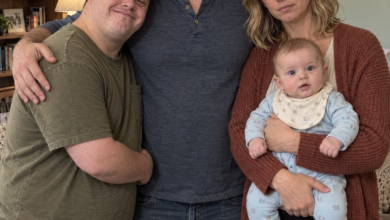
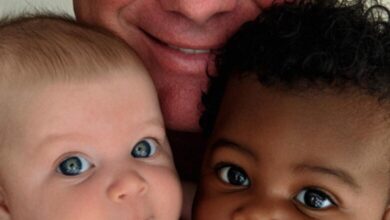
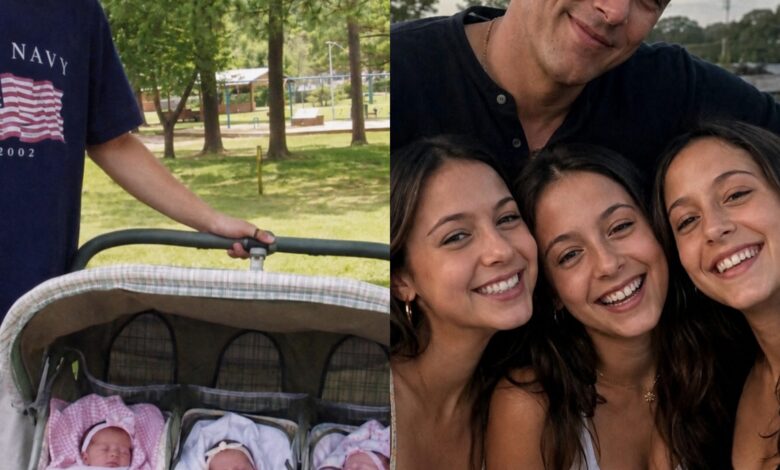
I was 23 when Mom walked out and left me with three baby sisters to raise. Twenty years later, my girls came to my birthday carrying a letter she’d secretly sent them at 18. They’d hidden it from me for two years. Then they told me why Mom had made sure I was never supposed to read it.
The first time one of my sisters called me Dad, I locked myself in the bathroom and cried.
I was 23 when Mom walked out and left me with three baby sisters to raise.
Emma was barely two.
I had been sitting on the living-room floor surrounded by plastic blocks, three sippy cups, and enough crushed cereal to feed a small country.
Grace was asleep against the couch.
Sophie had somehow removed one sock and hidden it somewhere I wouldn’t find until three weeks later.
Emma climbed into my lap, shoved a wooden cow into my hand, and said, “Daddy, moo.”
I stopped breathing.
“What?”
She slapped the cow against my chest.
“Moo, Daddy.”
Grace woke up.
Sophie toddled over.
Within seconds, all three were yelling some variation of Dad while demanding farm-animal noises.
I handed Emma the cow.
“One second.”
Then I walked calmly into the bathroom.
Closed the door.
Sat on the toilet lid.
And cried into both hands.
A tiny finger appeared beneath the door.
Then another.
Then a third.
“Daddy?”
I laughed while crying harder.
“You three are supposed to be asleep.”
They weren’t my daughters.
Not technically.
They were my sisters.
But life had stopped caring about technicalities a long time before that.
Two years earlier, I had come home carrying news that was supposed to change my life.
Chicago.
A real job.
Good salary.
Benefits.
My first apartment that wasn’t shared with three other college guys and a refrigerator that smelled permanently like onions.
I’d called that morning to tell Mom I was coming by, but I hadn’t told her why.
She had been having a terrible year.
Dad had died only weeks after Emma, Grace, and Sophie were born.
I knew Mom was struggling.
I didn’t know she was leaving.
***
I heard her before I reached the bedroom.
Not crying.
Swearing.
Drawers slamming.
A suitcase zipper fighting for its life.
Down the hall, all three babies were screaming.
“Mom?”
She didn’t turn.
She shoved clothes into a suitcase.
“Mom… what are you doing?”
“I can’t do this anymore, Aaron.”
I laughed nervously.
“Okay. Then don’t do whatever this is.”
She stopped packing long enough to look at me.
Her cheeks were dry, her glare sharp as flint.
That scared me more.
“I’ve already spent my life raising a child.”
I dragged a hand down my face.
“What?”
“I’m not starting over with three more,” she said.
From the nursery came another burst of crying.
Mom grabbed a sweater.
“I want to live while I still can.”
I stared at her.
“Those are your daughters, Mom. They’re three months old.”
“I know.”
“Then stop packing.”
She zipped the suitcase.
I followed her downstairs.
“Mom, you’re exhausted. Sleep. I’ll take tonight.”
“No.”
“One night.”
“Aaron.”
“One day, then,” I begged. “We’ll call somebody tomorrow. We’ll figure it out.”
She reached the front door.
I stepped in front of it.
“Mom, please… they need you.”
Her hand tightened around the suitcase handle.
For one strange second, she stopped.
She looked toward the staircase.
Then at me.
I remember thinking she was about to change her mind.
For 20 years, I remembered that pause as the last piece of my mother that almost stayed.
Then she looked away.
“I’m sorry.”
She walked out.
I stood in the doorway until her car disappeared.
Behind me, three babies kept crying.
***
Chicago stopped mattering before I even closed the door.
The next morning, I called the company.
The woman from human resources sounded stunned.
“You haven’t even started.”
“I know.”
“We can delay your date.”
“I can’t move.”
“Is there some emergency?”
I looked toward the living room.
Three bassinets.
Three bottles cooling on the counter.
One baby screaming because apparently the other two had taken a suspiciously long break.
“Yeah.” I swallowed. “There is.”
That was the end of Chicago.
People loved the phrase “gave up.”
They said it constantly.
Nothing about becoming a parent happened neatly.
There were social workers.
Temporary arrangements.
Background checks.
Court dates.
One woman asked gently, “Aaron, do you understand what raising three infants will require?”
Behind her, Grace spit formula down my shirt.
Emma started crying.
Sophie joined in out of solidarity.
I looked at the woman.
“They have me.”
Eventually, temporary became permanent.
Brother became guardian.
Guardian became legal parent.
And somehow I became a father.
***
One baby tucked against my chest while I fed another.
Bottles lined up by initials.
Medication charts taped to the refrigerator whenever somebody got sick because triplets apparently believed germs were communal property.
Money stretched until it screamed.
Dating became complicated.
“What do you mean you have three kids?”
“They’re technically my sisters,” I’d say.
That sentence never improved anything.
One woman made it through three dates before asking, “So when do you get your own life back?”
I went home that night.
Emma had a fever.
Grace was asleep wearing my baseball cap.
Sophie had drawn a purple horse directly onto the refrigerator.
I cleaned the marker for 20 minutes.
Changed Emma’s sheets.
Took the cap off Grace.
Then called the woman and told her we weren’t going to work.
She had talked about the girls as though they were something happening to me.
By then, they weren’t.
They were mine.
***
Our mother, Reese, never came back.
Not for birthdays.
Not for Christmas.
Not when Emma broke her arm at nine.
Not when Grace won a statewide essay contest.
Not when Sophie graduated valedictorian and pretended she wasn’t looking for me in the crowd until she saw me standing.
***
Twenty years passed.
Then came my 43rd birthday.
Sophie usually showed up 20 minutes late with candles nobody needed.
That evening, they arrived together.
Quietly.
That was the first warning.
During dinner, Emma barely ate.
Grace’s eyes looked swollen.
Sophie wouldn’t meet mine.
I put down my fork.
“Okay. What happened?”
Nobody answered.
Grace’s face crumpled.
Emma reached under her chair and pulled out an old envelope.
Sophie whispered, “We should’ve given you this two years ago.”
My heart raced.
“What is that?”
Grace started crying.
“Mom sent it when we turned 18.”
The word Mom sounded strange in her mouth.
“Mom?”
Emma nodded.
“She sent us a package. This was inside.”
I stared at the envelope.
“Why would she send you a letter addressed to me?”
Sophie finally looked up.
She was terrified.
“She said she’d written it years ago but never had the courage to send it.”
“Then why give it to you?”
Grace wiped her cheek.
“She wanted us to know what really happened.”
Emma looked down.
“But she made us promise we’d never give the letter to you.”
I stared at all three of them.
“Why?”
Sophie’s voice broke.
“Because she said if you knew the truth, you might look at us differently. Maybe you wouldn’t want us anymore.”
I almost laughed.
“What truth could possibly do that?”
Nobody answered.
Emma pushed the envelope toward me.
My mother’s handwriting was on the front.
Older.
Shakier.
But unmistakable.
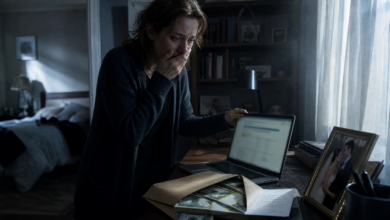
I opened it.
The paper inside smelled faintly stale, like it had spent years waiting in a drawer.
The first line hit like a slap.
“My dear son, I left because I learned what none of you were ever supposed to know…”
I stopped.
Grace covered her mouth.
I kept reading.
Mom wrote that she’d waited until the girls were adults because she couldn’t carry the truth to her grave, but still couldn’t bring herself to tell me herself.
She wrote about Dad.
About the weeks before his death.
About how frightened he had become watching her unravel under three newborns and almost no sleep.
Then I reached one sentence that made me look up.
“Your father had already made arrangements in case I couldn’t manage the girls alone.”
“What arrangements?”
Emma’s eyes filled.
“Keep reading.”
I did.
Dad had spoken privately with a couple we had known for years.
Older than him.
Married.
People I remembered from childhood Christmas parties.
They had wanted children for a long time.
Couldn’t have any.
And according to Mom, they loved the triplets.
After Dad died, Mom told them she’d decided to keep the girls herself. She never told them she was planning to leave.
My hands began shaking.
The next paragraph was worse.
“After your father died, I was drowning. With no job and no money, the fear of handling everything alone almost broke me. That’s when the couple reached out again, offering to take all three girls together, right then.”
I stared at the page.
Grace whispered, “Dad…”
I barely heard her.
There had been someone.
Not a magical solution.
Not a guaranteed adoption.
But an actual home.
An immediate option.
Someone prepared to take all three babies while adults figured out what came next.
And Mom knew.
I looked at my girls.
“She said no?”
Sophie nodded.
“Why?” I blurted out.
Nobody answered.
I turned back to the letter.
The next line was underlined in Mom’s shaky handwriting.
“I refused them because I knew you were coming home.”
I read that sentence twice.
Then came the lines that finally explained why my mother had paused in that doorway 20 years earlier.
“I knew you, Aaron. I knew if I left those babies in your arms, you would never let them go.
And if you took them, I could leave knowing they were with someone I trusted without having to stay long enough to arrange it myself.
I told myself I only needed time to get through my grief. Then months passed, I met someone, and starting over became easier than admitting what I’d done to all of you.”
I stopped reading.
For 20 years, I’d believed Mom had walked away because grief and three newborns had finally broken her.
Now I understood something uglier.
She hadn’t merely walked away from the triplets.
She had chosen who would replace her.
And she had made sure I never knew I had another choice.
***
For a long moment, nobody moved.
I kept staring at Mom’s sentence.
*I knew you, Aaron. I knew if I left those babies in your arms, you would never let them go.*
Emma’s voice cracked.
“Dad?”
I folded the letter carefully.
Grace was crying openly now.
Sophie looked terrified.
“There were people who would’ve taken us,” she whispered.
“You could’ve gone to Chicago,” Emma added.
She suddenly stood.
Her chair scraped hard against the floor.
“You lost your whole life because of us.”
I looked at her.
“No.”
“But you could’ve had everything.”
“What exactly is everything?”
Silence.
I grabbed my keys.
“Come on.”
Grace wiped her face.
“Where are we going?”
“I need you three to see something.”
***
The old apartment was smaller than I remembered.
I pointed toward the upstairs window.
“Three cribs didn’t fit in the bedroom, so I slept in the living room.”
Sophie covered her mouth.
“You never told us that.”
“You never asked.”
Emma looked guilty.
I nudged her shoulder.
“That’s not an accusation.”
Then I pointed toward the building entrance.
“Grace screamed every night for three months.”
Grace frowned.
“I did not.”
“You absolutely did.”
Sophie snorted.
Emma laughed despite herself.
For one minute, Mom’s letter disappeared.
We were just us.
Again.
***
Our second stop was the grocery store where I’d once worked nights.
An older employee recognized me immediately.
Then she saw the girls.
“No.”
I smiled.
“Yep.”
“The babies?”
Emma groaned.
“Apparently we’ll always be babies.”
The woman chuckled as she brought up my three plastic laundry baskets, the ones marked E, G, and S that I dragged everywhere.
They held diapers, clothes, snacks, and essentially emergency everything.
I’d kept those ridiculous baskets long after the girls outgrew them.
Sophie apparently used to climb into hers.
Grace hid crackers in hers.
Emma once fell asleep inside one during a move.
The woman smiled at me.
“Your brother worked himself half to death.”
I corrected her automatically.
“Dad.”
Silence.
The girls looked at me.
I hadn’t even noticed I’d said it.
***
We ended up at the old playground where I’d spent hundreds of Sundays because free entertainment was the only kind I could reliably afford.
Emma sat beside me.
“Dad… Mom was right.”
I waited.
“You had another choice,” she muttered.
“That part is true,” I admitted.
Grace whispered, “Do you wish you’d known?”
I looked at all three of them.
“I wish she’d told me.”
Sophie’s face crumpled.
“You deserved the choice.”
“So did you.”
They went quiet.
I continued.
“I could’ve gone to Chicago.”
Emma started crying again.
“I could’ve let somebody else raise you.”
Grace looked away.
“But that’s not the same thing as wishing I had.”
All three looked at me.
I leaned forward.
“Don’t confuse wanting the choice with wanting a different answer.”
Sophie broke first.
She grabbed me.
Grace followed.
Emma lasted another three seconds before throwing herself into the pile.
I laughed into somebody’s hair.
“You three are crushing me.”
“Good,” Emma muttered.
Apparently revenge had finally arrived.
***
Back home, Mom’s letter remained on the kitchen counter.
I’d read every word.
I still didn’t have to give her the last one.
The girls disappeared into the spare room.
Then came crashing sounds.
“What are you doing?”
“No questions!” Sophie yelled.
A minute later, they marched back carrying three ugly plastic laundry baskets.
Faded marker still showed beneath the handles.
E.
G.
S.
Emma grinned.
“Apparently Dad is a hoarder.”
Grace dropped my old baseball cap into hers.
Sophie found one tiny sock and held it up triumphantly.
I started laughing.
Mom had believed those three girls would cost me my future.
Twenty years later, they were sitting on my living-room floor arguing over who used to climb into which basket.
Grace patted the carpet beside her.
“Come sit down, Dad.”
I looked once toward Mom’s letter.
Then walked past it.
And sat between my daughters.