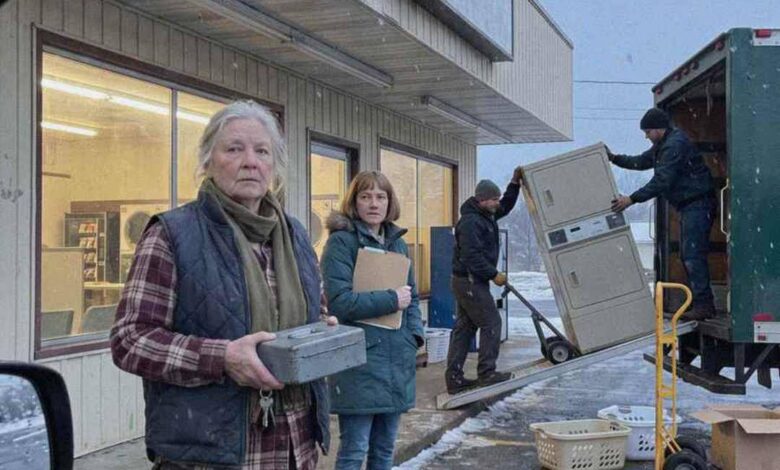
After 23 years of paying her rent on time, my mom was told her monthly bill would jump from $1,800 to $3,600
Her landlord assumed moving would be too expensive for her to consider. What he forgot was exactly what she had brought into his building.
My mom, Ruth, ran the same neighborhood laundromat for 23 years.
Six days a week, she unlocked the doors at seven.
On Sundays, her helper, Rosa, opened so Mom could go to church and spend half the afternoon insisting she wasn’t thinking about work.
She always was.
“Did Rosa remember the lint filters?”
“Yes, Mom.”
“The big dryer gets funny if you slam it.”
“She knows.”
“I should call.”
The place had fourteen washers, twelve dryers, and three plastic chairs Dad bought at a restaurant auction.
One chair wobbled.
Mom kept it because Dad had fixed it twice.
Apparently, that made it an heirloom.
She knew her customers by their laundry.
Work uniforms.
Baby blankets.
The enormous comforter a man named Walter brought in every November, announcing that it “probably didn’t need washing yet.”
She helped people fold fitted sheets.
Kept lost socks in a basket for months.
And occasionally forgot to charge someone who looked like they were having a difficult week.
It was a small business in every sense.
Some months, after expenses, Mom took home less than $2,000.
But it paid her bills.
And after Dad died, it gave her somewhere to go where people expected to see her.
Then Dennis brought in the envelope.
Dennis owned the building.
Mom owned the laundromat business and rented the space from him.
Her rent had risen gradually over the years, eventually reaching $1,800 a month.
Three months before her current lease expired, Dennis arrived with new terms.
$3,600 a month.
Mom sat behind the counter and looked at the letter.
“Is this a mistake?”
“No.”
“That’s twice what I’m paying.”
“The neighborhood’s changing.”
She looked out the window.
Across the street, the same man who had been selling used vacuum cleaners for fifteen years was wrestling a vacuum cleaner out of his trunk.
“Not that much.”
Dennis didn’t laugh.
He told her he could get more money for the space.
Mom asked whether he would consider $2,200.
That would already mean cutting what she paid herself.
He shook his head.
“Thirty-six hundred. Otherwise, you leave when the lease ends.”
“Moving a laundromat isn’t like moving a desk.”
“Exactly.”
Then he said the part she repeated to me that evening.
“Ruth, moving would cost you a fortune. At your age, where else are you going?”
Mom was 64.
She told me this while peeling potatoes.
I put my phone down.
“He said that?”
She nodded.
“Give me his number.”
“No.”
“Mom.”
“I need the blue box upstairs.”
The blue box weighed about thirty pounds.
Dad used to handle their paperwork.
After he died, Mom took over with the determination of someone who had once spent four hours looking for a missing warranty.
There were folders inside folders.
Invoices clipped to bank statements.
Receipts so old the ink was disappearing.
She found the original equipment purchase first.
$47,600.
Fourteen used commercial washers and twelve dryers, bought from a laundry that had closed in the next county.
Mom and Dad had financed most of it.
It took them seven years to pay it off.
Then came the invoices for replacement machines.
A pair of washers: $8,400.
Three dryers purchased several years later: $11,250.
Every machine currently in the shop had a purchase record.
Then Mom found the lease and the equipment schedule attached to it.
She put on her reading glasses.
Read a paragraph.
And tapped the page.
“There you are.”
The equipment schedule identified the washers and dryers as hers. The lease addressed removing her equipment at the end of the tenancy and making good any damage.
There were conditions.
Notice.
Proper disconnection.
Repairs where necessary.
But the machines hadn’t become Dennis’s property just because they had been sitting inside his building.
“Does he remember this?” I asked.
“I don’t know.”
“Should you tell him?”
“I’m going to have someone check it first.”
She paid a local attorney $350 to review the lease and help her put her notice in writing.
Then she started looking for somewhere to go.
The answer was eight blocks away.
There was a former laundromat beside a grocery store.
It had been empty for almost a year.
The previous operator had retired and sold off the equipment.
The room looked miserable.
Faded paint.
An empty vending-machine nook.
A handwritten telephone number taped inside the window.
But the building still had laundry hookups.
Mom called the number.
The owner, Elaine, met us there the next morning.
Her asking rent was $2,100 a month.
Mom walked slowly through the room.
Counted connections.
Measured the aisle.
Asked about the drains, the electrical service, and the dryer vents.
She didn’t sign anything that day.
She brought in people who knew what they were looking at.
A plumber.
An electrician.
The machinery-moving company.
The existing setup helped, but it wasn’t ready without work.
By the time Mom had written estimates, the move, connections, and necessary repairs came to $11,800.
Paint, signs, and a few other things would bring her budget to $13,200.
I stared at the figure on her kitchen table.
“That’s a lot of money.”
“Yes.”
“Can you do it?”
She took out another sheet.
Staying with Dennis would cost an extra $1,800 every month.
Moving meant paying $300 more than her current rent.
The difference between the two places was $1,500 a month.
“I’m spending money either way,” she said. “At least this way I get a lease I can plan around.”
Elaine offered a five-year agreement with the future increases written out.
She also agreed to a setup period before rent began.
Mom had $9,200 she could put toward the move without emptying the business account.
I lent her the remaining $4,000.
She made me sign a repayment agreement.
“You’re my daughter,” she said. “That’s no reason to have bad paperwork.”
Dennis received her written notice seven weeks before she left.
It stated that she would not renew.
It also said her equipment would be professionally removed and the premises handed back according to the lease.
He replied with one sentence.
“Leave the unit clean and return all keys.”
Then he started showing the place.
Mom worked around the viewings.
She heard him pointing out the passing traffic.
The nearby apartments.
The convenience of opening in an established laundry location.
Then Rosa found the listing.
“FULLY EQUIPPED. TURNKEY OPPORTUNITY.”
$3,900 a month.
She showed Mom on her phone.
Mom sent Dennis an email that afternoon.
She reminded him that the machines belonged to her and would be leaving with her.
She attached the equipment schedule.
He didn’t answer.
Two days later, he brought another prospective tenant through.
Mom was helping Walter load his comforter.
Dennis gestured toward the machines.
“You can see the setup.”
Mom straightened.
“Just so there’s no confusion, the washers and dryers aren’t included. They belong to my business.”
The prospective tenant looked at Dennis.
Dennis smiled tightly.
“We’ll discuss the details.”
After they left, he called Mom.
“You don’t need to interrupt my showings.”
“Then please stop making me.”
He hung up.
Mom’s customers had questions, too.
The biggest one wasn’t about Dennis.
It was whether they could get to the new place.
Mom printed maps with the bus stops marked.
She put them on the folding tables.
Rosa helped update the business page.
I changed the address on the website and ordered signs.
For three weeks, Mom tucked a little notice into every customer’s hand.
“Same machines,” she told Walter. “Different windows.”
“Same prices?”
“For now.”
“Same terrible chair?”
“Unfortunately.”
The last Friday evening, we emptied the change machine and took down the clock.
Mom stood in front of the doorway where Dad had marked her height once as a joke.
He had written, “Still short.”
She took a picture.
Then she switched off the lights.
The moving crew arrived at eight the next morning.
The utilities had been prepared for the removal by the contractors.
The movers brought the equipment they needed.
Mom brought coffee and a folder containing copies of everything.
Dennis arrived as the first washer was being loaded.
He parked crookedly.
Got out.
And stared.
“What the hell are you doing?”
Mom was standing beside the truck.
“Moving.”
“You’re taking the machines?”
“Yes.”
“All of them?”
“All of mine.”
He looked through the open door.
Two more washers were already on moving equipment.
“Ruth, I advertised this place fully equipped.”
“I emailed you about that.”
“These have been here for twenty years.”
“Some of them. I replaced the others.”
“This is a laundromat.”
“It’s the space I rented for my laundromat.”
He held out his hand.
“Where does it say you can do this?”
Mom opened the folder.
First, she handed him the original $47,600 invoice.
Then the equipment schedule.
Then the lease page her attorney had marked.
Dennis looked at the documents.
He flipped back to the invoice.
“This is from when you opened.”
“Yes.”
“You bought all these?”
“Frank and I did.”
He looked at me as though I might provide a different answer.
I didn’t.
Then he asked the question he should have asked weeks earlier.
“What would you take to leave them?”
Mom shook her head.
“They’re going into my new location.”
“You found somewhere?”
“On Bell Street.”
“That old laundry?”
“Yes.”
“It’s smaller.”
“A little.”
He watched the movers bring out another machine.
“What are you paying?”
Mom closed the folder.
“I’m happy with the agreement.”
Dennis stepped closer.
“Look. Maybe we moved too fast on the rent.”
Mom said nothing.
“What if I do twenty-four hundred?”
I looked at her.
A month earlier, she would have been relieved to hear that number.
Now she had a signed lease, contractors waiting, a paid moving deposit, and customers expecting her to reopen on Monday.
“I’ve already committed.”
“You’d spend thousands moving over six hundred dollars a month?”
“You asked for thirty-six hundred.”
“I’m offering twenty-four now.”
“Now my washers are on a truck.”
A mover approached and asked Mom to check a serial number against his inventory.
She went with him.
Dennis waited by the door.
For once, he was the person waiting for an answer.
She didn’t leave him a wreck.
That mattered to Mom.
The contractors finished their work.
The openings were dealt with properly.
We cleaned behind places nobody had seen in years.
Mom photographed the empty room and arranged the final walkthrough.
Without the machines, the folding tables, the laundry carts, the signs, and the rows of detergent behind the counter, the place looked surprisingly ordinary.
Dennis stood in the middle of it.
“I have someone who wanted to open next month.”
Mom held her keys in her hand.
“Then I’m glad they know what’s included now.”
He didn’t answer.
She handed him the keys.
And we left.
The new place opened forty minutes late.
One dryer needed another adjustment.
The card reader wouldn’t connect.
I put the opening-hours sticker on the glass crookedly.
Mom looked at it for a full ten seconds.
“We’ll fix it later.”
That was how I knew she was nervous.
Walter was the first customer.
He came through the door carrying a bag of towels.
Behind him were Rosa’s sister, a young dad with two enormous laundry bags, and three customers from the old place.
Nobody applauded.
They wanted change.
They wanted to know which dryers ran hottest.
Walter wanted to know why she had brought the bad chair.
Within an hour, Mom was explaining to someone that too much detergent would not make their clothes cleaner.
She sounded like herself again.
The move still hurt financially.
There were extra expenses.
A slow first week.
Long evenings.
It took her eight months to repay my $4,000.
Every payment arrived with the amount still owed written in the memo.
But she didn’t miss one.
By the third month, most of her regular customers had followed her. Some people from the grocery store next door had started coming in, too.
Dennis’s listing changed.
“Fully equipped” disappeared first.
Then “turnkey.”
Eventually, it read, “Commercial space. Suitable for various uses.”
I showed Mom.
She glanced at it and handed back my phone.
“Hopefully he finds somebody.”
“You’re nicer than I am.”
“I don’t need it to stay empty. I need this place to work.”
Then she asked me to help fold a comforter.
A few weeks later, a woman from the apartments near the old shop came in for the first time.
She looked around.
“Oh, good. You brought everything.”
Mom was counting change.
“Almost.”
“What did you leave?”
Mom thought for a moment.
“The clock. It belonged to the building.”
The woman laughed and wheeled her laundry toward the washers.
I watched Mom return to the register.
Dennis had calculated how much it would cost her to leave.
Mom had calculated how much it would cost her to stay.
She was the only one who bothered to work out both numbers.