I Was Declared Dead in 1990. Then, at 32, I Discovered the Shocking Truth About My Real Identity!!
**I Was Declared Dead in 1990—Then, at 32, I Discovered the Shocking Truth About My Real Identity**
### Part 3
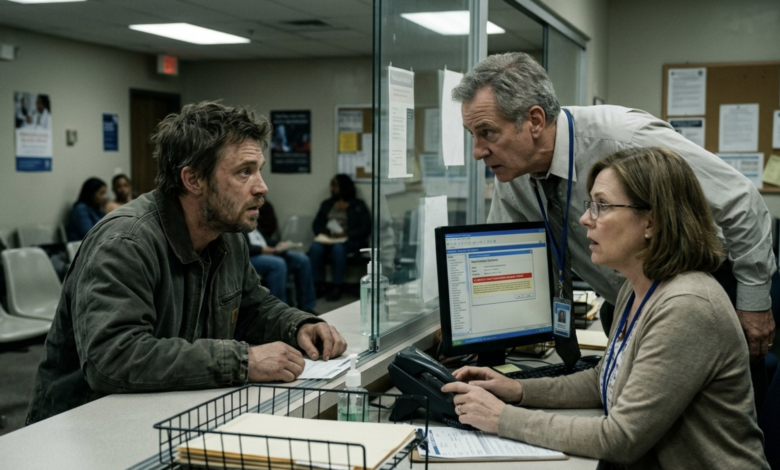
Then he turned to me.
“Mr. Miller, I need you to come with me. I promise you that I will explain everything I can.”
“Everything you can?”
The words came out sharper than I intended.
“I came here because I need medical insurance. I didn’t rob a bank. I didn’t use someone else’s identity. I’ve had this Social Security number since I was a kid. I’ve paid taxes with it. I’ve worked under it. I’ve used it to rent apartments, open bank accounts, and buy a truck that I can barely afford to keep running.”
I pointed toward the computer.
“Now you’re telling me I’m dead, and you’re asking me to follow you into a private room. You’d better give me a good reason.”
For the first time, something resembling respect crossed Marcus’s face.
“You’re right,” he said quietly. “You deserve an explanation.”
He paused.
“But the explanation may change everything you believe about your life.”
I wanted to tell him that nothing could surprise me anymore.
I had spent fifteen years being the unwanted child, the young man who had to leave home on his eighteenth birthday, the employee who worked overtime because he couldn’t afford to lose a single paycheck. I had learned to expect disappointment. I had learned not to trust promises.
But I had never imagined that the government might have buried my identity while I was still alive.
I followed Marcus down a narrow hallway.
The private office contained a desk, three chairs, a filing cabinet, and a small American flag standing beside a window. The blinds were closed.
Marcus asked the security guard to wait outside and motioned for me to sit.
I remained standing.
“Start talking.”
He nodded slowly.
“My name is Marcus Cole. I’m the regional compliance director for this benefits administration office. Part of my responsibility is investigating identity discrepancies involving federal records.”
“Fine.”
“What appeared on that screen isn’t an ordinary discrepancy. Your Social Security number is connected to a restricted historical case involving a child who disappeared in 1990.”
I stared at him.
“Disappeared? The clerk said the child died.”
“That is what the original record states.”
“Then why are you looking at me like you’ve seen a ghost?”
Marcus rubbed his forehead.
“Because I knew the people who investigated that case.”
My anger faltered.
“Who?”
He looked toward the closed door before answering.
“Your father.”
The room seemed to grow smaller.
“My father died in 1997.”
“That is the date you’ve always been given.”
“It’s the date on his death certificate.”
Marcus nodded, but there was something painful in his expression.
“Mr. Miller, I need you to understand something. A death certificate is an official record, but an official record can contain false information, mistaken information, or information that someone deliberately placed there.”
I felt my stomach tighten.
“Are you telling me my father didn’t die?”
“I’m telling you that the records connected to your family contradict one another. I cannot responsibly tell you what happened until we examine the original documents.”
I finally sat down.
For several seconds, neither of us spoke.
My father had been the one person in my childhood who made me feel wanted.
At least, that was what I remembered.
I remembered his broad hands lifting me onto his shoulders. I remembered the smell of motor oil on his work jacket. I remembered him bringing home a little red toy truck and telling me that someday he would teach me to drive a real one.
Then there was the funeral.
A dark suit that itched around my neck. My mother’s swollen eyes. Gary Dawson standing behind her with one hand resting on her shoulder.
I remembered a closed casket.
I remembered asking why I couldn’t see my father one last time.
I remembered Gary bending down and saying, “Sometimes dead people don’t look the way we remember them.”
At six years old, I had accepted that answer.
Now, at thirty-two, I wondered whether the man who raised me had been teaching me to believe a lie.
“Why would my father be connected to a missing child case from 1990?” I asked.
Marcus leaned forward.
“Because the child in that case was named Ethan James Miller.”
My throat went dry.
“Me?”
“That is what we need to establish.”
“I was born in 1988.”
Marcus went completely still.
“What did you say?”
“I was born in November 1988. My mother told me that. It’s on my birth certificate.”
He reached for a notepad and wrote something down.
“November of 1988,” he repeated.
Then he asked, “Do you know where you were born?”
“Charleston, West Virginia. At a hospital that doesn’t exist under the same name anymore.”
“Do you have the original birth certificate?”
“No. I have a photocopy somewhere in a box. Why?”
Marcus didn’t answer.
Instead, he picked up the office phone and dialed a number from memory.
“This is Marcus Cole. I need the archived Miller case pulled immediately. Yes, the 1990 disappearance. The entire file, including the original photographs and the chain-of-custody records.”
He listened.
“No, I don’t want a summary. I want the actual file.”
Another pause.
“And contact the federal liaison. Tell them we may have located a living person associated with the case.”
He hung up.
I stood so quickly that my chair scraped across the floor.
“Absolutely not.”
Marcus looked up.
“I beg your pardon?”
“You don’t get to call federal agents about me without explaining why. I’m not a criminal, and I’m not going to sit here while strangers decide what happens to my life.”
“You are not under arrest.”
“Then let me leave.”
He studied me for a moment.
“If you walk out, you are free to do so. But I strongly recommend that you stay long enough to hear what the records say. If your identity has been compromised, leaving without understanding the situation could make things more difficult for you.”
I looked at the door.
Every instinct told me to leave.
I had spent my entire life trying to escape situations where someone else held power over me. Gary had controlled the roof over my head. Employers had controlled my paychecks. Doctors had controlled whether I could afford treatment.
I wasn’t going to let another stranger take control of my life.
But then Marcus said something that stopped me.
“Your father spent the final months before his disappearance trying to find someone.”
I turned around.
“Who?”
Marcus’s expression softened.
“His son.”
For the first time that morning, I felt something stronger than anger.
Hope.
It was a dangerous feeling. I had learned that hope could make a person foolish. It could persuade you to believe a stranger, forgive an unforgivable act, or reopen a wound that had taken years to close.
Still, I sat down again.
“Tell me about the case.”
Marcus opened a drawer and took out a yellow legal pad.
“I can’t tell you everything yet. But I can tell you what I remember.”
He took a slow breath.
“In 1990, a three-year-old boy named Ethan James Miller disappeared after a traffic incident outside Charleston. The initial report described a collision involving a commercial truck and a passenger vehicle. The child’s father was identified as Richard Miller.”
I frowned.
“My father drove commercial trucks.”
Marcus nodded.
“The first report stated that the father and child had both died. But within days, the case was reclassified. Certain details didn’t match the physical evidence. The truck involved couldn’t be properly identified. Witness statements contradicted the official timeline. And the child’s remains were never conclusively identified in the way the investigators expected.”
I felt a chill move through me.
“Then how did they declare him dead?”
“That is one of the questions the archived investigation raised.”
“Did they find my father?”
Marcus looked down at his notes.
“His status was never properly resolved in the surviving records.”
I swallowed.
“So he might have survived?”
“He might have. I won’t pretend that possibility proves anything.”
I stared at the desk.
A memory stirred somewhere deep inside me.
A hospital room.
A man with a bandage around his head.
A woman’s voice saying, “Don’t tell him yet.”
Then darkness.
I pressed my fingers against my temples.
Marcus noticed.
“What is it?”
“I don’t know.”
“Take your time.”
“I think I remember a hospital.”
He stopped writing.
“How old were you?”
“I don’t know. Three, maybe four. I remember a window with rain running down it. I remember a man asking me to say my name.”
Marcus’s face changed.
“What did you tell him?”
“I don’t remember.”
I closed my eyes, trying to force the image into focus.
There was a white ceiling. The smell of disinfectant. A toy truck resting on a bedside table.
And someone crying.
I opened my eyes.
“Why does that matter?”
Marcus didn’t answer immediately.
Then he said, “Because the original case file contains a witness statement describing a child in a hospital who repeatedly asked for his father.”
I stared at him.
“What happened to the child?”
“The file says he was transferred to another facility.”
“Which facility?”
“That page is missing from the electronic record.”
I laughed bitterly.
“Of course it is.”
Marcus didn’t take offense.
“I know how this sounds.”
“No, you don’t.”
My voice cracked.
“You have a job, a house, and probably a family waiting for you somewhere. I have fifty-two dollars, a shoulder that barely works, and a stepfather who told me I wasn’t worth keeping. I’ve spent fifteen years believing that my father died and my mother let me go because she didn’t love me enough to fight for me.”
I stood and paced toward the window.
“And now you’re telling me there might be another story? What am I supposed to do with that?”
Marcus remained quiet until I turned back.
“Find out the truth.”
I wanted to hate him for making it sound so simple.
Instead, I found myself asking the question I had avoided for years.
“Do you think my mother knew?”
Marcus’s eyes held mine.
“I don’t know.”
“Do you think Gary knew?”
“I don’t know that either.”
I clenched my fists.
“But I intend to find out.”
The archived file arrived forty-three minutes later.
A woman in a gray suit carried a sealed document envelope into the office. Marcus signed for it, checked the security seal, and waited until she had left before opening it.
Inside were photocopied reports, handwritten notes, several photographs, and a small envelope marked with a case number.
Marcus placed everything on the desk.
I leaned forward.
The first photograph showed a damaged truck beside a rain-soaked highway. The front of the vehicle had been crushed. An ambulance stood nearby.
The second showed a man sitting on the edge of a hospital bed.
He had dark hair, a narrow scar above his left eyebrow, and a face that made my heart stop.
My father.
Older than I remembered him, but unmistakable.
I reached for the photograph.
My fingers shook so badly that the paper slipped.
Marcus caught it before it fell.
“Are you all right?”
I couldn’t answer.
I remembered that scar.
My father had told me he got it when a metal toolbox fell from a shelf in his father’s garage. He used to let me trace the line with my finger while we sat together on the couch.
I had not thought about that scar in years.
But there it was.
The photograph was dated October 1990.
The report beneath it contained a short handwritten note.
*Male adult, identity disputed. Patient refuses to confirm family details. Requests information regarding minor child.*
I read the sentence twice.
Then a third time.
“He was alive.”
Marcus spoke carefully.
“At least at the time this photograph was taken.”
I pressed my hand against my mouth.
My father had been alive in 1990.
Seven years before the funeral I remembered.
Seven years before Gary told me that my father was gone forever.
I looked at the next document.
It was a report from a hospital in another state. Much of it had been redacted, but one line remained visible.
*Minor male, approximately three years old. Identity uncertain. Transferred under emergency protective authorization.*
Beside the sentence was a signature.
I recognized the surname immediately.
Dawson.
My stomach turned.
“Gary.”
Marcus leaned closer.
“What?”
“Gary Dawson. My stepfather.”
The signature was only partially legible, but the surname was clear.
For a moment, I felt as though the room had become airless.
“Why would my stepfather be signing a document about a child in a hospital seven years before he married my mother?”
Marcus studied the page.
“That is an excellent question.”
“Can you find out?”
“We can try.”
I pulled the document closer.
At the bottom was a date: October 18, 1990.
And beneath it, a handwritten note.
*Child released to authorized guardian. Identity to remain restricted pending further review.*
I stared at the words.
“Authorized guardian.”
Marcus nodded.
“That designation usually means someone was formally permitted to take responsibility for the child.”
“Who?”
He turned the page.
The next sheet was a transfer authorization with several names blacked out. One had not been fully obscured.
Carol Porter.
My mother’s maiden name.
I sat back so abruptly that the chair struck the wall.
“No.”
Marcus didn’t speak.
“No, that doesn’t make sense. My mother told me she met Gary in 1996. She married him in 1997.”
I looked at the date again.
“Why would they both be connected to this case in 1990?”
Marcus folded his hands.
“Either the records concern different people with similar names, or your family history contains information you were never given.”
I shook my head.
“My mother wouldn’t do this.”
I wasn’t sure whether I was defending her or begging the universe to leave me with one person I could still trust.
Marcus slid another photograph toward me.
It showed a woman standing outside a hospital entrance.
Her hair was shorter than I remembered, but I recognized her face immediately.
My mother.
She was holding a small boy’s hand.
The child’s face was turned away from the camera.
On the back, someone had written:
*October 21, 1990. Mother and child reunited temporarily. Further instructions pending.*
I couldn’t breathe.
The woman in the photograph looked younger, frightened, and exhausted.
But she was unmistakably my mother.
I turned the picture over again, hoping the words would change.
They didn’t.
“Why would she tell me my father died in 1997 if she had seen him in 1990?”
Marcus didn’t pretend to know.
“Perhaps she believed he was dead by then. Perhaps something happened between those dates. Or perhaps the records were deliberately manipulated.”
“Stop saying perhaps!”
My voice echoed through the office.
I pushed away from the desk.
“Someone knows what happened. Someone made decisions about my life. And everyone expects me to sit here calmly while they explain it like a clerical error.”
Marcus rose slowly.
“You have every right to be angry.”
“Angry?”
I laughed, but the sound came out broken.
“I don’t even know what to call this.”
For years, I had thought my childhood was a simple story.
My father died.
My mother struggled.
Gary married her and resented the child who came with the marriage.
Then, at eighteen, Gary threw me out, and my mother let me go.
It was a cruel story, but at least it was understandable.
Now the foundation of my entire life was cracking.
I looked down at the photograph of my mother and the child.
“Who is that boy?”
Marcus studied the image.
“The case notes identify him as Ethan James Miller.”
“Then that’s me.”
“Possibly.”
I glared at him.
“Why do you keep saying that?”
“Because your identity has been attached to a case involving a child reported dead decades ago. We need independent confirmation before drawing conclusions.”
He paused.
“Your Social Security number may have been assigned to you through a legitimate record, transferred incorrectly, or connected to an identity that was deliberately concealed. We need the original documents.”
I looked at the photograph again.
For the first time, a thought occurred to me that was even more frightening than the possibility that my parents had lied.
“What if I wasn’t the child who died?”
Marcus said nothing.
“What if someone took my identity and used it to declare another child dead?”
“That is also a possibility.”
I felt cold.
“Then who was the child in the casket at my father’s funeral?”
Marcus’s expression became grave.
“That is something we need to investigate.”
I sat down again.
My father might have been alive after the date I remembered his death.
My mother might have been involved in a case she had never mentioned.
And my stepfather’s name was appearing in records from years before he supposedly entered our lives.
I had come to ask the government to help pay for a doctor’s visit.
Instead, I was beginning to suspect that the people who had raised me had built my life on a lie.
Then Marcus reached into the envelope and removed one final document.
Unlike the others, this one was not a report.
It was a letter.
The paper had yellowed with age, and the envelope was stamped with a hospital’s name. Someone had written *For Carol Miller Only* across the front.
Marcus examined the seal.
“It appears to have been preserved with the original file.”
“Open it.”
He hesitated.
“It’s addressed to your mother.”
“She isn’t here.”
“I understand, but I need to make sure we handle this properly.”
I almost shouted at him again, but something in his voice stopped me.
He wasn’t trying to protect the people who had hurt me.
He was trying to keep the truth from being damaged by another careless decision.
I nodded.
Marcus carefully opened the envelope.
Inside was a single page, written in blue ink.
He read the first few lines silently.
Then his expression changed.
“What?” I asked.
He looked at me.
“This letter was written by Richard Miller.”
My father’s name seemed to fill the room.
“Read it.”
Marcus lowered his eyes to the page.
Then, slowly, he began.
*Carol,*
*If you’re reading this, then something has gone terribly wrong.*
*They told me the boy was dead. They told me there was nothing left to search for. But I saw him with my own eyes, and I know what I saw.*
*The child they showed me was not my son.*
I grabbed the edge of the desk.
Marcus continued.
*Someone has made a decision about our family, and I no longer know whom to trust. I have tried to reach you, but every time I get close, someone tells me you’ve moved or that you don’t wish to see me.*
*I don’t believe you would abandon our child.*
My eyes burned.
*If Ethan is with you, keep him safe. Do not trust the man who says he can solve everything. He knows more than he admits.*
The next line had been underlined twice.
*And if Gary Dawson comes looking for the boy, do not let him take him.*
Marcus stopped reading.
The room fell silent.
I stared at the page.
Gary Dawson.
My stepfather.
The man who had packed my bags on my eighteenth birthday.
The man who had looked me in the eyes and told me I wasn’t his blood.
I had spent fifteen years believing he hated me because I wasn’t his biological son.
Now I wondered whether he had known something far worse.
“Keep reading,” I whispered.
Marcus continued.
*I have made copies of the records. One is hidden where you will find it if you remember the place we promised never to forget.*
*If I disappear, find the man who witnessed the accident. His name is Thomas Reed. He knows what happened on that road.*
*Tell Ethan that I never stopped looking for him.*
The letter ended with a sentence written in a different hand, darker and more hurried than the rest.
*If the boy is already with Gary, then the wrong child has been saved.*
I couldn’t move.
Marcus lowered the letter.
“Ethan?”
I looked up at him.
“What does that mean?”
He didn’t answer immediately.
Instead, he turned the paper over.
There was something written on the back, almost hidden beneath the crease.
A date.
September 14, 1997.
The date of my father’s supposed death.
And below it, four words.
*He knows who you are.*
I stood so quickly that the chair toppled behind me.
“I’m going to find Gary.”
Marcus rose with me.
“Not alone.”
I turned toward him.
“You don’t get to tell me what to do.”
“No,” he said calmly. “I don’t. But if your stepfather is connected to a decades-old identity case, confronting him without understanding the evidence could put you in danger.”
I looked at the letter.
Then at the photograph of my father.
For fifteen years, I had told myself that Gary Dawson was just a cruel man who never wanted another man’s child in his home.
Now I could no longer be certain that cruelty had been his only motive.
I had spent years trying to forget him.
But suddenly, every memory of him felt different.
The way he watched me whenever my mother mentioned my father.
The way he insisted that I had no right to ask questions about the accident.
The way he destroyed the few photographs I had kept from childhood, claiming they were taking up space.
And the night he threw me out.