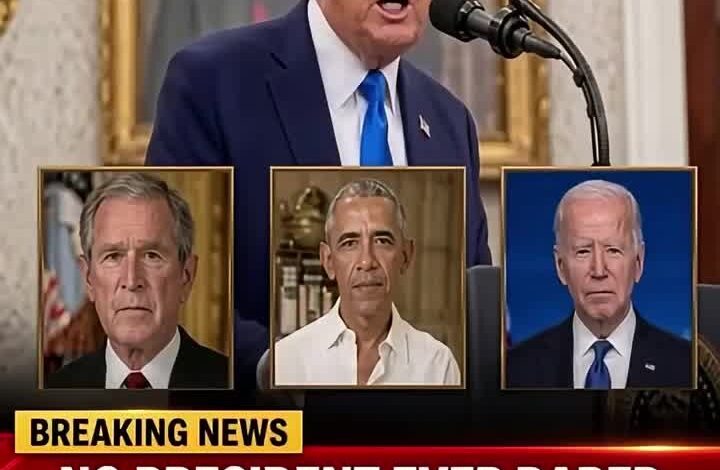
EXECUTIVE SUMMARY Former President Donald Trump warned journalists that institutional press rules are going to change, alarming First Amendment advocates and media watchdogs.
EXECUTIVE SUMMARY Former President Donald Trump warned journalists that institutional press rules are going to change, alarming First Amendment advocates and media watchdogs.
Former President Donald Trump warned journalists during a recent briefing that the institutional rules governing the news media are going to change, sparking intense debate over press freedom and executive overreach. The unvarnished declaration went beyond routine political disputes by directly targeting the legal protections, operational norms, and institutional access that have shielded independent journalism for generations.
First Amendment scholars and press freedom advocates immediately flagged the statement as a deliberate escalation. Rather than ordinary political posturing, the remarks signaled a potential threat of institutional retaliation against news organizations, prompting urgent discussions among media ethicists regarding the erosion of fundamental democratic safeguards.
Constitutional experts emphasize that an uninhibited press exists to serve the public interest by scrutinizing institutional power and uncovering official malfeasance. History demonstrates that when executive authorities gain leverage to dictate allowable stories or control reporter accreditation, vital checks on government overreach rapidly deteriorate.
In response to mounting political pressure, media advocates argue that newsrooms must double down on methodological rigor. Emphasizing exhaustive sourcing, rapid correction protocols, and transparent editorial workflows is crucial for demonstrating accountability and resisting attempts to delegitimize critical reporting.
Furthermore, legal scholars note that existential threats to journalistic independence demand unprecedented institutional solidarity. While commercial news organizations traditionally operate as fierce competitors, weathering systemic political pressure requires a collective, unified response across the entire media landscape to preserve democratic transparency.
The source discusses a claimed change in press rules without naming a briefing date, providing a transcript or identifying a specific rule. That leaves important details unresolved. A public remark, a proposed administrative change and an implemented policy are different stages, and the article does not establish which concrete action has occurred.
The practical meaning would depend on what was being changed. Rules for access to a particular briefing concern a different issue from a law governing publication. A statement about one setting cannot automatically support conclusions about all of them. The linked text speaks broadly about institutional protections and access, but it offers no document setting out a new procedure.
The concerns it describes are nevertheless easy to understand as a subject of public debate. Journalists need to ask questions, examine records and report findings that public officials may dislike. Government offices also operate scheduled events and credential systems. A dispute arises when the grounds for an access decision are unclear or appear connected to the content of reporting.
The article argues for careful sourcing and transparent corrections as part of the response. Those are editorial practices that audiences can assess over time. They give a newsroom ways to show how it reached a conclusion and what happens when new information changes a story.
The clearest account available here is therefore a commentary about press independence prompted by a broadly described remark. Establishing a particular new restriction would require the date, exact language and responsible institution. The linked page does not supply those elements, so its stronger conclusions should remain attributed to its author.