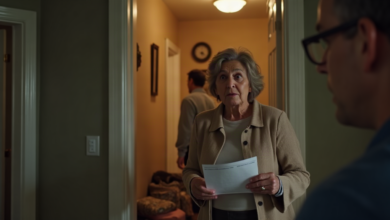
My parents called me at 2 a.m. on Christmas Eve screaming for $20,000 to “save” my brother from prison… I said no, and my mother told me I was dead to her — but the next morning, a Las Vegas detective called and revealed the crime was never what they said it was
The first time my younger brother stole my identity, he was arrested wearing a designer jacket, carrying credit cards with my name on them, and insisting to Las Vegas police that he was me.
The second time he tried to steal my future, my parents helped him.
And on Christmas Eve, at two fourteen in the morning, my mother called demanding twenty thousand dollars to make the whole problem disappear.
“Joshua, if your brother goes to prison, it’ll be your fault!”
Advertisement
I sat in my dark Denver apartment, staring at the sad little Christmas tree blinking beside my television.
Outside, snow covered the parked cars. A container of cold Thai food sat on my coffee table. I had been planning to spend the holiday quietly, catching up on sleep and enjoying two days without work.
Instead, my mother was screaming into my ear.
“They’re going to charge Tanner with assault! Security beat him! He has broken ribs!”
“Then he needs a doctor and a lawyer,” I said.
Advertisement
“He needs money!”
“Twenty thousand dollars?”
“Yes! Tonight!”
I closed my eyes.
“Mom, who exactly is asking for this money?”
“People at the casino. They said everything can be settled before the police get involved.”
“That doesn’t sound right.”
“Don’t start interrogating me!”
“Put Dad on the phone.”
“He’s talking to security.”
“Then let me speak to Tanner.”
“He’s hurt!”
“Then give me the hospital’s name.”
There was silence.
Not the kind that comes when someone is searching for information.
Advertisement
The kind that comes when someone is trying to keep a story from falling apart.
Finally, my mother whispered, “Joshua, please. You’re the only one who can save him.”
I’d heard those words so many times that they should have been printed on our family Christmas cards.
I was thirty-two years old, a licensed architect with a good job, a modest townhouse mortgage, and savings I’d spent years rebuilding after earlier family emergencies.
My brother Tanner was twenty-seven.
He had already burned through a college education, two business ventures, three cars, and more chances than anybody I knew.
Advertisement
But to my mother, he was still the little boy who needed protecting.
And I was still the responsible son whose bank account existed to make that possible.
“I’m not sending twenty thousand dollars to strangers in the middle of the night,” I said.
Her breathing changed.
“What?”
“No.”
“If Tanner goes to jail, that’s on you.”
“Mom, I didn’t get him into trouble.”
“You have the money!”
“That doesn’t mean I owe it to him.”
She began crying.
Then she stopped suddenly and spoke in a voice so cold I barely recognized it.
Advertisement
“You’re dead to me, Joshua.”
I stared at the Christmas lights.
For a moment, I felt twelve years old again, standing in our hallway while my mother told me I’d disappointed her.
Then I answered quietly.
“Merry Christmas, Mom.”
I hung up.
By morning, I’d receive a call from a Las Vegas detective explaining that the police weren’t investigating an ordinary casino fight.
They were investigating a man who had used my identity to obtain credit, rent luxury vehicles, and gamble with money he didn’t have.
Advertisement
That man was Tanner.
My brother hadn’t simply gotten himself arrested.
He had been pretending to be me.
And the twenty thousand dollars my family demanded wasn’t intended to protect an innocent man.
It was intended to keep me from discovering what he’d done.
My name is Joshua Hayes. I grew up in a suburban house outside Denver with my parents, my younger brother Tanner, and our sister Skyler.
Dad worked in commercial insurance.
Mom managed the household and occasionally helped with bookkeeping for a family friend’s business.
Advertisement
We weren’t wealthy, but we lived comfortably.
The trouble wasn’t that my parents loved Tanner more than us.
At least, that’s not how I understood it as a child.
The trouble was that they believed different rules applied to different children.
Tanner was imaginative, sensitive, and charming.
I was organized, dependable, and serious.
Skyler was outgoing and particularly concerned with appearances.
When Tanner broke a neighbor’s window with a baseball, Mom explained that boys made mistakes.
When I accidentally damaged a school library book, Dad made me pay for it from my allowance.
Advertisement
When Tanner forgot his homework, Mom stayed up helping him complete it.
When I struggled with a difficult mathematics assignment, Dad told me that learning to solve problems independently would make me stronger.
I grew up thinking independence was something to be proud of.Eventually, I realized it was also my family’s excuse for giving me less attention.
At sixteen, I worked weekends at a hardware store to save for a used car.
Tanner received one for his eighteenth birthday.
Advertisement
Mom said he needed transportation to develop his independence.
I remember staring at the keys in his hand and wondering why his independence was something my parents were willing to purchase while mine was something I had to earn.
Still, I loved my brother.
We played basketball together, went fishing with Dad, and spent countless summer evenings playing video games.
There were good years.
Tanner could be generous with his attention when he wanted to be.
He was funny, persuasive, and capable of making almost anyone feel special.
Advertisement
But as we got older, his charm became a way of escaping consequences.
He never completed college.
Mom and Dad paid his tuition for three semesters before he dropped out, claiming the program wasn’t right for him.
A year later, he launched an online electronics business.
It failed.
Then he started a marketing company with a friend.
That failed too.
Each time, he had an explanation.
An unreliable partner.
An unfair customer.
A difficult economy.
An industry that didn’t appreciate his vision.
Advertisement
My parents accepted every explanation.
And when money was required, they eventually called me.
By then, I had become an architect.
I loved the profession.
When I was a boy, I spent hours drawing houses and imagining how families might live inside them.
At university, I became fascinated by the relationship between buildings, neighborhoods, and the people who used them.
After graduation, I worked for an architectural firm in Denver, completed the necessary professional requirements, and slowly built a reputation for careful commercial design work.
Advertisement
I wasn’t a millionaire, regardless of what Skyler would later tell the internet.
But I earned a solid salary.
I paid my bills.
I avoided unnecessary debt.
And I saved because I knew how quickly financial stability could disappear.
Tanner seemed to interpret that stability as a personal invitation.
When he needed money to finish college, I contributed.
When he needed equipment for his first business, I helped.
When he wrecked a car he couldn’t afford to replace, I covered part of the repair.
Advertisement
I told myself older brothers were supposed to help.
Then Skyler approached me about a luxury vehicle lease.
She wanted a Porsche because she believed arriving at job interviews in an expensive car would make her seem successful.
I suggested buying something more practical.
She accused me of not supporting her ambitions.
Mom said I should have more faith in my sister.
Eventually, I co-signed.
Six months later, Skyler stopped making payments.
The leasing company contacted me.
I covered the overdue amount and spent months helping resolve the remaining obligation.
Advertisement
Skyler complained that I’d embarrassed her by insisting she take responsibility for future payments.
That was when I began noticing a disturbing pattern.
Whenever someone in my family needed help, their need became more important than my financial security.
But whenever I asked for accountability, I became the problem.
Dad called me judgmental.
Mom said money had made me cold.
Tanner joked that I should start charging my siblings admission to Thanksgiving.
Everyone laughed.
I laughed too.
I didn’t realize how much resentment I’d been swallowing until I began avoiding family phone calls.
Advertisement
The caller’s name would appear on my screen, and my stomach would tighten.
Was Tanner in trouble again?
Did Skyler need money?
Were my parents about to ask me to fix something they’d already promised somebody else I would handle?
I eventually started seeing a counselor, who helped me understand how thoroughly I’d confused being loved with being useful.
One afternoon, she asked what I thought my parents valued most about me.
I answered immediately.
“My reliability.”
She nodded.
“And what do they value when you aren’t providing anything?”
Advertisement
I didn’t know.
That question followed me home.
I began setting small boundaries.
I stopped lending money without written agreements.
I refused to co-sign anything else.
I told Mom I could help her compare repair estimates but wouldn’t automatically pay every household expense.
She became upset.
“Joshua, you’ve changed.”
I looked at her.
“I hope so.”
But boundaries were difficult to maintain when I’d spent most of my life afraid of disappointing her.
Three days before Christmas Eve, Skyler posted a photograph online.
Advertisement
I almost scrolled past it.
Then I recognized Tanner.
He was standing beside a bright yellow Lamborghini Urus outside a luxury Las Vegas resort.
The caption read:
Christmas starts early when you’re living your best life.
Another photograph showed Skyler inside what appeared to be a private aircraft.
Crystal glasses.
Leather seats.
Designer luggage.
I stared at the pictures.
My parents had told me they were taking an inexpensive trip to Lake Tahoe.
Mom had even accepted two hundred dollars from me for a nice holiday dinner.
Advertisement
I called her.
No answer.
I texted Tanner.
Nothing.
Then I looked at the photographs again.
Something felt wrong.
Tanner hadn’t been employed consistently for months.
Skyler had recently complained that her rent was too high.
My parents were always describing financial difficulties.
Yet suddenly they were traveling in luxury.
I checked my bank and credit card accounts.
Nothing appeared unusual.
For a while, I considered calling my mother again.
Then I stopped.
I was tired of investigating other people’s decisions.
Advertisement
If they wanted to lie about a vacation, that was their choice.
I didn’t have to become involved.
I wish I’d trusted my instincts enough to check my credit reports that night.
Instead, I went back to work and tried to enjoy the holiday.
Then came the phone call at two fourteen in the morning.
Mom claimed Tanner had been injured in an altercation with casino security.
She demanded twenty thousand dollars.
Dad refused to speak to me.
Nobody would provide a hospital name, police report, or attorney’s contact information.
Advertisement
When I refused to send the money, Mom told me I was dead to her.
Within minutes, my family began calling repeatedly.
Skyler sent messages accusing me of abandoning Tanner.
Dad left a voicemail saying I was disgracing the family.
Tanner’s girlfriend texted that I had the power to save his future and was choosing not to.
Then Skyler posted a video.
She was sitting in a hotel hallway with mascara running down her cheeks.
“My millionaire architect brother is refusing to help us save Tanner from corrupt Vegas police,” she sobbed.
Advertisement
Below the video was a fundraising link.
Help Tanner Fight Corrupt Vegas Police.
I watched it twice.
Then I took screenshots.
Something about the performance bothered me.
The story kept changing.
First it was casino security.
Then a hospital.
Then the police.
Now Skyler was asking strangers to donate money without explaining what had actually happened.
I didn’t sleep much after that.
At eight the following morning, my phone rang again.
The number carried a Las Vegas area code.
I almost ignored it.
Advertisement
Then I answered.
“Mr. Joshua Hayes?”
“Yes.”
“This is Detective Ramirez with the Las Vegas Metropolitan Police Department. I’m contacting you about a possible identity theft investigation involving Tanner Hayes.”
My heart began pounding.
I asked for his name and department contact information, then called back through the department’s published number to confirm the call was legitimate.
When we resumed speaking, Detective Ramirez explained that Tanner had originally been detained following a disturbance at a resort.
During the investigation, officers discovered identification bearing my name and personal details but showing Tanner’s photograph.
Advertisement
They also recovered credit cards and transaction records that appeared connected to accounts opened using my information.
A luxury vehicle rental and casino credit arrangements were being examined as well.
I sat down.
“Detective, are you telling me my brother has been using my identity?”
“That is one of the matters we’re investigating. We need to establish which transactions you authorized.”
“None,” I whispered.
He asked whether I had traveled to Las Vegas recently.
No.
Had I applied for new credit accounts there?
Advertisement
No.
Had I given Tanner permission to use my driver’s license information, Social Security number, or financial credentials?
Absolutely not.
Then I told him about my mother’s demand.
Twenty thousand dollars.
Cash.
No police.
No lawyers.
Before the official report.
Detective Ramirez became quiet.
“Mr. Hayes, do you still have those messages?”
“Every one.”
“Please preserve them.”
I swallowed.
“Mom told me it was money to settle an assault case.”
“That isn’t how criminal charges are resolved,” he replied. “We’d like to understand who asked for that payment and why.”
Advertisement
After the call, I stared at my phone.
For years, I’d paid for Tanner’s mistakes.
But this was different.
He hadn’t simply asked me for money.
He’d used my identity to create financial obligations I knew nothing about.
I could lose months or years fighting accounts I never opened.
My credit could be damaged.
My professional reputation could be questioned.
And if investigators didn’t untangle the evidence properly, I might have to prove I had nothing to do with transactions made in my name.
AdvertisementI called my bank, reported suspected identity theft, and began the process of freezing my credit files.
I contacted my employer to explain that I might need to travel because of a family-related criminal investigation involving misuse of my identity.
Then I booked a flight to Las Vegas.
By midafternoon, I was standing inside a police facility, watching my mother rush toward me with tears streaming down her face.
“Joshua! Thank God!”
She reached for my arm.
I stepped back.
Advertisement
“Don’t touch me.”
Her expression changed immediately.
Dad stood beside her.
“Do you have the money?”
I stared at him.
Even now.
Even after everything.
The first thing he wanted to know was whether I’d brought twenty thousand dollars.
Then I saw Tanner being escorted down a hallway.
He was wearing expensive clothes and the same designer sunglasses from Skyler’s photographs.
When he noticed me, his expression changed.
For the first time in years, my younger brother looked genuinely frightened.
Advertisement
Detective Ramirez opened a secure door.
“Mr. Hayes, we’re ready for your statement.”
Dad seized my arm.
“If you go in there, you destroy this family.”
I pulled free.
“No, Dad. I’m finally telling the truth about it.”
Then I walked through the doorway.
And I discovered that the person who had helped Tanner obtain my information was someone I’d trusted even more than my brother.
Detective Ramirez led me into a small interview room with gray walls, a metal table, and two chairs.
Advertisement
He offered me water.
I declined.
My mouth felt too dry to swallow anything.
Then he opened a folder.
“Joshua, we need to establish how your brother obtained your personal information.”
I leaned forward.
“What do you have?”
He showed me copies of documents recovered during the investigation.
A fraudulent Colorado driver’s license.
Credit applications.
A luxury vehicle rental agreement.
And several pages containing financial information that should never have been in Tanner’s possession.
I recognized the last document immediately.
Advertisement
It was an old tax return.
Mine.
From three years earlier.
I stared at the page.
“Where did he get this?”
“We’re still investigating that.”
I looked closer.
There was a handwritten note near the bottom of the photocopy.
Joshua’s current employer. Ask him about the bonus.
I knew that handwriting.
My mother’s.
For several seconds, the room became completely silent.
Detective Ramirez watched my expression.
“Do you recognize the writing?”
“Yes.”
“Whose is it?”
I swallowed.
“My mother’s.”
He made a note.
Advertisement
I explained that years earlier, while I was moving apartments, Mom had offered to store a box containing tax records, old insurance documents, and other paperwork.
She’d kept the box in my parents’ house.
I had forgotten about it.
Apparently, she hadn’t.
Detective Ramirez explained that investigators had spoken briefly with my parents. They had acknowledged that Tanner received financial documents from the family home, although their accounts of how it happened weren’t entirely consistent.
I stared at the copied tax return.
Advertisement
“Did she know what he was doing?”
“We haven’t established that,” Ramirez answered. “That’s one reason we’re examining the messages and interviewing everyone involved.”
I appreciated that he didn’t pretend to know more than the evidence showed.
But I had a terrible feeling.
My mother had been asking me for money for years.
She knew how much I earned.
She knew I had good credit.
And she knew Tanner had a history of financial problems.
I remembered the private jet photograph.
Advertisement
The Lamborghini.
The sudden luxury vacation.
Then the phone call at two in the morning.
“Detective,” I said, “I think my parents knew he was using my name before they called me.”
He looked up.
“What makes you say that?”
“Because they didn’t ask me to help him find a lawyer. They asked me to send twenty thousand dollars without documentation, and they refused to explain who would receive it.”
Ramirez nodded.
“Please include that in your statement.”
We spent nearly two hours reviewing records.
Advertisement
The suspected fraudulent accounts totaled more than ninety thousand dollars in transactions and outstanding charges.
The casino was also investigating a substantial unpaid marker connected to identification bearing my name.
Not every transaction had been fully verified.
Some charges might be reversed.
Others would require documentation and formal disputes.
But the scale was already enormous.
Tanner had not merely used my name once.
He had constructed an entire financial identity around it.
He’d presented himself as a successful Denver architect.
Advertisement
He’d used my employment information.
He’d used personal details from old records.
And he’d relied on the fact that, because we were brothers, certain questions about our shared history were easy for him to answer.
I felt physically sick.
When the interview ended, Detective Ramirez explained the next steps.
I would need to complete an identity theft report, preserve the original messages, contact the affected financial institutions, and dispute any unauthorized accounts.
The investigation would continue separately.
He couldn’t promise when charges would be filed or how quickly the fraudulent accounts would be resolved.
Advertisement
He also couldn’t guarantee that my parents would face criminal consequences.
Those decisions depended on evidence.
I understood.
For once, I was grateful that somebody was dealing with facts instead of emotions.
Before leaving, I asked one question.
“Was Tanner seriously injured?”
Ramirez paused.
“He was evaluated after the altercation. I can’t discuss all of his medical information, but I can tell you the situation described to us doesn’t match the story you were given.”
I nodded.
That was enough.
Advertisement
When I returned to the public waiting area, my parents were still there.
Mom rushed toward me.
“Joshua, what happened?”
I looked at her.
“Why did you give Tanner my tax documents?”
Her face drained.
Dad stood.
“Lower your voice.”
I ignored him.
“Mom, why did Tanner have my financial records?”
She looked toward my father.
Then back at me.
“He needed some paperwork.”
“For what?”
She began crying.
“He said he was applying for a business opportunity.”
I stared at her.
Advertisement
“And you gave him my tax return?”
“He said you wouldn’t mind.”
I almost laughed.
“Mom, he used my name to open credit accounts.”
She covered her mouth.
Dad stepped forward.
“We didn’t know he’d take it that far.”
I turned toward him.
“Take what that far?”
He stopped.
I waited.
Then Dad looked away.
And I understood.
They hadn’t necessarily known every transaction.
They might not have known about the fake license or the gambling arrangements.
But they had known Tanner was using my financial information without permission.
Advertisement
They had known enough to become frightened when his situation unraveled.
And instead of warning me, they’d asked me for twenty thousand dollars.
“Were you planning to tell me?” I asked.
Mom sobbed.
“We thought we could fix it before you found out.”
I felt something inside me go numb.
Before I found out.
Not before Tanner hurt someone.
Not before he committed fraud.
Before I found out.
I looked at my father.
“Is that what the money was for?”
Advertisement
He rubbed his forehead.
“Tanner said he needed cash to resolve the casino problem and cover some urgent obligations. We thought if we could get everything settled, nobody would have to know.”
I stared at him.
“And you’d let me carry the debt?”
Dad didn’t answer.
That silence told me enough.
My mother reached for my hand.
“Joshua, please. We never wanted you to get hurt.”
I stepped away.
“You knew my information was being used without permission. You hid it from me. Then you threatened to disown me when I refused to send money.”
Advertisement
She began crying harder.
I looked at both of them.
“Don’t contact my employer. Don’t contact my bank. And don’t use my name for anything.”
Dad’s face hardened.
“You’re going to let your brother go to prison?”
I shook my head.
“Dad, Tanner’s choices brought him here. Mine didn’t.”
Then I walked away.
I returned to Denver the following day.
Christmas was already over by the time I unlocked my front door.
The little tree was still blinking.
The Thai food was still in the refrigerator.
Advertisement
And my apartment looked exactly as I’d left it.
But I didn’t feel like the same person.
For the next several weeks, I dealt with the practical consequences.
I submitted identity theft reports.
I contacted credit bureaus and financial institutions.
I worked with fraud departments to challenge accounts I hadn’t opened.
I obtained copies of police records where available and kept a detailed file of every conversation.
Some accounts were closed quickly after investigators confirmed the documents were fraudulent.
Others took months.
Advertisement
I had to respond to collection notices, provide affidavits, and repeatedly explain why the man in the driver’s license photograph wasn’t me.
I also hired an attorney to help with the financial disputes and protect my interests during the criminal investigation.
It was exhausting.
There were days when I came home from work and sat at the kitchen table surrounded by paperwork, wondering how my brother had managed to create so much trouble in such a short time.I had to respond to collection notices, provide affidavits, and repeatedly explain why the man in the driver’s license photograph wasn’t me.
I also hired an attorney to help with the financial disputes and protect my interests during the criminal investigation.
It was exhausting.
There were days when I came home from work and sat at the kitchen table surrounded by paperwork, wondering how my brother had managed to create so much trouble in such a short time.
But I was no longer paying to hide his mistakes.
Advertisement
I was doing the work necessary to separate myself from them.
Skyler’s fundraising campaign became another problem.
I contacted the platform, provided documentation about the inaccurate claims, and requested that it review the fundraiser.
The campaign was eventually removed while the organizer addressed the concerns and donor refunds were processed.
Skyler called me furious.
“You made me look like a liar!”
I took a breath.
“You told people Tanner was being persecuted by corrupt police. Did you know he was using my identity?”
Advertisement
She hesitated.
“I knew there were problems with some accounts.”
“Did you know those accounts were in my name?”
Silence.
I waited.
Finally, she whispered, “Tanner said you knew.”
I closed my eyes.
“Skyler, I didn’t.”
Her voice changed.
“I thought you were helping him.”
“You could have asked me.”
“I know.”
For the first time, my sister sounded ashamed.
But I wasn’t ready to comfort her.
I told her to correct the false statements she’d made about me.
She eventually posted a public clarification.
Advertisement
It wasn’t perfect.
But it was a beginning.
The criminal case moved slowly.
Investigators reviewed financial records, interviewed witnesses, and examined the documents Tanner had used.
My parents were questioned about the information they had provided and the messages they’d sent.
I cooperated when asked.
I didn’t try to influence the outcome.
Eventually, Tanner faced charges involving identity-related fraud and unauthorized financial transactions.
His attorney negotiated a resolution after reviewing the evidence.
Months later, Tanner pleaded guilty to several offenses and received a custodial sentence followed by supervision and restitution obligations.
Advertisement
The exact financial consequences remained complicated because not every loss belonged to the same institution or victim.
For me, the most important thing was that the fraudulent obligations were being distinguished from debts I had legitimately incurred.
I wasn’t going to spend another decade paying for his choices.
My relationship with my parents changed even more dramatically than my relationship with Tanner.
For several months, I didn’t speak to them.
Mom left messages.
Sometimes she apologized.
Sometimes she accused me of being cruel.
Advertisement
Sometimes she reminded me that Tanner was still my brother.
I saved the messages but didn’t respond.
Dad sent an email explaining that they’d been frightened and had made decisions under pressure.
I understood that fear could make people behave badly.
But fear didn’t explain why they’d handed over my personal records in the first place.
And it didn’t excuse the attempt to make me pay twenty thousand dollars without telling me what had happened.
Eventually, Dad wrote something different.
Advertisement
We knew he was using information that wasn’t his. We convinced ourselves it was temporary. We were wrong.
I read that sentence several times.
It was the first time either parent had acknowledged the central problem without trying to shift responsibility onto me.
I answered briefly.
Thank you for admitting that. I need distance, and I need you to respect it.
He did.
Mom struggled more.
She’d spent so many years believing that keeping Tanner out of trouble was the same as loving him that she couldn’t easily accept the difference.
Advertisement
For a long time, she acted as though my cooperation with investigators was what had damaged the family.
I refused to argue about it.
My counselor helped me understand something I’d never considered before.
I could recognize my mother’s pain without accepting responsibility for it.
I could love Tanner without protecting him from accountability.
And I could be a decent son without sacrificing my identity, career, and financial security to prove it.
Those ideas sounded simple when spoken aloud.
Living by them took practice.
Advertisement
One afternoon, nearly a year after the Las Vegas incident, I received a letter from Tanner.
It had been forwarded through his attorney.
For several days, I left it unopened on my desk.
Then I sat down and read it.
He began by apologizing for using my identity.
He admitted that he’d been gambling for longer than any of us realized.
What started as occasional sports betting had turned into increasingly reckless attempts to recover losses.
He’d borrowed money, lied about income, and convinced himself he could win enough to fix everything.
Advertisement
When the debts became overwhelming, he began using information he’d obtained from our parents.
He wrote that he had justified it by telling himself I was financially secure and would eventually help.
Then he added a sentence that made me stop reading.
I knew you’d worked hard for what you had. I just decided my problems mattered more.
I sat quietly for a long time.
It was the first time Tanner had described his behavior without blaming someone else.
The letter didn’t ask me for money.
Advertisement
It didn’t ask me to contact the court.
It didn’t demand forgiveness.
It ended simply.
I’m sorry, Joshua. I don’t expect you to trust me again.
I folded the letter.
Then I put it in a drawer.
I wasn’t ready to forgive him.
I didn’t know whether I ever would be.
But I appreciated that, for once, he seemed to understand what he’d done.
Life in Denver gradually became normal again.
My work continued.
I completed a major architectural project involving a community healthcare facility and was promoted to a senior design role.
Advertisement
I became more careful about my personal information and financial records.
I monitored my credit.
I kept documentation of the identity theft case.
And I stopped assuming that being related to someone automatically made them trustworthy.
That last lesson hurt the most.
For years, I’d believed my parents would protect me if something truly serious happened.
Instead, when the danger came from Tanner, they had chosen to protect him from me.
But I also discovered that family wasn’t the only place a person could find loyalty.
Advertisement
My friend Marcus, another architect at my firm, helped me organize the first wave of credit dispute paperwork.
My neighbor, Helen, brought dinner when I was too exhausted to cook.
And a colleague named Rebecca checked on me every few days without asking for details I wasn’t ready to share.
None of them demanded repayment.
None of them used my gratitude as leverage.
They simply cared.
The following Christmas, I hosted dinner at my townhouse.
Not a large gathering.
Just six friends, good food, and a table crowded with dishes everyone had contributed.
Advertisement
Marcus brought roasted vegetables.
Helen made apple pie.
Rebecca arrived with a board game that kept us laughing until nearly midnight.
At one point, someone knocked over a glass of wine.
We cleaned it up.
Nobody panicked.
Nobody blamed anyone.
And nobody asked me to pay for a disaster I’d had nothing to do with.
I looked around the table and felt an unexpected ache.
This was what I’d wanted from my family for years.
Not perfection.
Not wealth.
Just the ability to make a mistake without being punished for it, and the freedom to say no without losing everyone’s love.
Advertisement
Later that evening, after my guests left, I stood beside the little Christmas tree.
I’d kept it.
The same inexpensive drugstore tree that had been blinking in my apartment when Mom called at two fourteen in the morning.
One branch leaned awkwardly to the left.
The lights sometimes flickered.
But I liked it.
It reminded me that something ordinary could survive a terrible night and still belong in my life afterward.
My phone vibrated.
Mom.
For a moment, I considered ignoring it.
Advertisement
Then I answered.
“Merry Christmas, Joshua.”
Her voice was quiet.
“Merry Christmas, Mom.”
She asked whether I’d had a good day.
I told her I had.
She didn’t ask for money.
She didn’t mention Tanner.
Instead, after a long silence, she said, “I know I hurt you.”
I closed my eyes.
“Yes.”
“I thought protecting your brother meant protecting our family.”
I waited.
“But I wasn’t protecting you.”
“No,” I whispered. “You weren’t.”
She began crying.
For once, she didn’t ask me to make her feel better.
Advertisement
She simply apologized.
I listened.
Then I told her I appreciated the apology but still needed time.
She said she understood.
I hoped she did.
When the call ended, I stood beside the tree for a long while.
I wasn’t sure whether our relationship would ever return to what it had been.
Perhaps it shouldn’t.
What we’d called closeness had often meant that I gave and everyone else decided how much.
A healthier relationship would have to look different.
It would have to include honesty.
Advertisement
Respect.
And the understanding that my love couldn’t be measured by how much money I was willing to lose.
Today, Tanner is still dealing with the consequences of his actions.
His recovery is his responsibility.
My parents have begun attending family counseling.
Skyler and I speak occasionally, although I remain careful about what personal information I share.
And I continue building the life I nearly allowed my family’s emergencies to consume.
I’m still an architect.
I still live in Denver.
Advertisement
I still believe in helping people who genuinely need help.
But I no longer believe that loving someone requires me to surrender my judgment.
Sometimes I think about the detective’s call.
The Las Vegas number.
The forged identification.
My mother’s handwriting on the tax return.
The look on Tanner’s face when he saw me at the police facility.
Those memories still hurt.
But the moment I remember most clearly is the one that happened before any of that.
Two fourteen in the morning.
Advertisement
My mother’s voice demanding twenty thousand dollars.
The silence after I said no.
And the words she used when she realized I wouldn’t give in.
You’re dead to me.
For years, I would have done almost anything to avoid hearing that sentence.
I would have borrowed money.
Canceled plans.
Given up savings.
Made promises I couldn’t afford.
Anything to keep my mother’s approval.
But that Christmas, something changed.
I finally understood that a parent’s love shouldn’t disappear because an adult child refuses to finance a lie.
Advertisement
I understood that Tanner’s future wasn’t mine to purchase.
And I understood that protecting myself didn’t make me responsible for the consequences of someone else’s crimes.
The next morning, I learned that my brother had tried to steal my identity.
But the night before, when I refused to send the money, I had already begun taking it back.
Not just my name.
Not just my credit.
My right to make decisions without fear.
My right to enjoy what I’d earned.
Advertisement
And my right to build a life that didn’t revolve around rescuing people who refused to be honest with me.
My mother once told me family came first.
I still believe family matters.
But now I know that family should never require you to disappear so somebody else can avoid facing the truth.
That Christmas, I said no.
For the first time in my life, the word was enough.
And everything that came afterward taught me why I should have said it much sooner.
Advertisement
THE END
Disclaimer: This content is entirely AI-generated for fictional and entertainment purposes only. Any resemblance to actual persons, living or dead, events, or locations is purely coincidental, and the creator assumes no liability for any interpretation of this content.