A Grave Marker with a Familiar Design
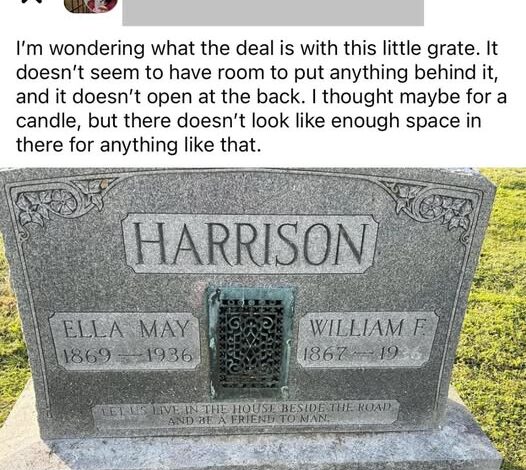
That deep connection to home is poignantly reflected in a unique cemetery marker featuring a small cast-iron grate. At first glance, the metal detail may seem unusual for a gravestone. Yet upon reflection, it feels like a heartfelt tribute—a symbolic echo of the home the deceased once cherished.
The grate resembles the same cast-iron floor vents commonly found in late 19th- and early 20th-century houses. It may represent a desire for a piece of beloved home life to accompany the individual into their final resting place—a quiet reminder of warmth that transcends death..

The Poetic Connection
The grave marker also features a quote from Sam Walter Foss’s poem, “The House by the Side of the Road.” The poem speaks of hospitality, kindness, and offering shelter to travelers, values that align beautifully with the symbolism of a heating grate. Just as a grate allowed warm air to circulate throughout a home, the poem celebrates the spreading of warmth through generosity and openness.


In this context, the iron grate becomes more than decoration—it becomes a metaphor. It suggests that even in death, the individual remains welcoming, generous, and warm in spirit, living on in the memories of loved ones.

Source: All Poetry
More Than Just a Functional Object
Throughout history, homes were not merely structures; they were sanctuaries where families gathered, worked, and built memories. During the late 19th and early 20th centuries, cast-iron floor grates were especially common, particularly in regions where central heating was still considered a luxury.
These grates were essential components of early heating systems, allowing warmth to rise from furnaces or stoves below and circulate through different rooms. But they were not designed for practicality alone. The intricate patterns and ornamental details reflected an era when function and beauty were inseparable.
Decorative ironwork symbolized craftsmanship and artistry. Even something as utilitarian as a floor grate was designed to enhance the aesthetic character of the home. It stood as a quiet reminder that everyday objects could also carry elegance and intention.
A Symbol of Threshold and Welcome
Incorporating a cast-iron grate into a gravestone suggests a powerful emotional connection between the person memorialized and the home they loved. It may symbolize the threshold of a house, implying that the individual remains at the doorway—forever welcoming visitors with the same warmth they showed in life.
Perhaps they were someone who kept their door open for neighbors, hosted family gatherings, or made others feel instantly at ease. The memorial design subtly tells a story of hospitality, kindness, and enduring presence.

Home as an Eternal Idea
In a world that constantly changes, the idea of home remains one of the most enduring human experiences. It represents love, safety, comfort, and belonging. Small architectural details—like a humble cast-iron grate—carry forward that meaning in unexpected ways.
Just as warm air once spread throughout a house through iron grates, so too does the memory of a loved one continue to radiate through the hearts of those left behind. The symbolism is gentle but profound: warmth does not disappear; it lingers and travels.
The next time you find yourself standing in an old house, resting your feet on a beautifully patterned iron grate, pause for a moment. Consider the families who once gathered there, the laughter that echoed through those rooms, and the quiet comfort that filled the space.
Like the grate on that gravestone, those memories remain—eternal, meaningful, and filled with warmth.