Blinding Lights: Why American Roads Are Getting More Dangerous
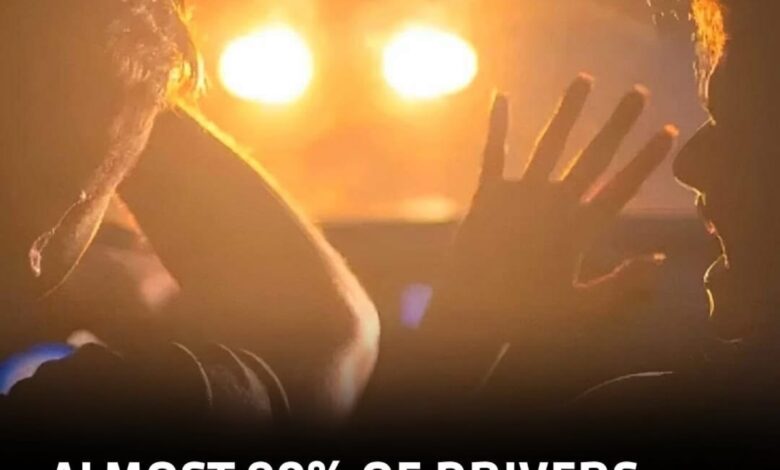
The glare hits you before you even see the car. Your vision flares white, your heart jumps, and for a split second, you’re driving half-blind at 60 mph. Drivers across the United States are saying the same thing: this isn’t just “bright” anymore—it’s a public safety crisis.
As complaints to the NHTSA (National Highway Traffic Safety Administration) surge, a silent war is breaking out on our highways between automotive styling and human biology.
1. The “Arms Race” on American Roads
In the U.S., the shift toward SUVs and lifted pickup trucks has turned LED brightness into a weapon. Because these vehicles sit higher off the ground, their ultra-bright LED housings are positioned exactly at the eye level of anyone driving a sedan or a compact car. When a modern heavy-duty truck pulls up behind a Toyota Corolla, it’s not just illuminating the road—it’s burning into the driver’s retinas through the rearview mirror.
2. The Blue Light Problem
Not all light is created equal. Older halogen bulbs emitted a warm, yellowish glow. Modern LEDs emit a high-intensity blue-white light.
-
The Science: Human eyes are naturally more sensitive to blue light at night. This spectrum causes the pupils to constrict and creates a “scattering” effect inside the eye, leading to a halo of glare that obscures everything else on the road.
-
The Result: “Flash blindness” that can last several seconds—at highway speeds, you could travel the length of a football field while unable to see clearly.
3. Regulations Are Stuck in the Dark Ages
For decades, U.S. federal safety standards required high beams and low beams to be two separate settings. Meanwhile, Europe has used Adaptive Driving Beam (ADB) technology for years. ADB uses sensors to “cut out” the part of the light beam that would hit an oncoming car, keeping the rest of the road bright.
While the NHTSA finally green-lit this technology for the U.S. in 2022, the rollout has been agonizingly slow due to overly complex testing requirements. Until these systems become standard, we are stuck with “dumb” lights that pump out maximum lumens with zero precision.
4. The “Safety” Paradox
Engineers argue that brighter LEDs make the road safer for the person behind the wheel by spotting pedestrians and deer sooner. But safety experts argue this is a zero-sum game. If you illuminate a deer for yourself but blind the driver coming toward you, you haven’t prevented an accident—you’ve just changed who is likely to crash.
The Bottom Line
We are currently living in a “wild west” of automotive lighting. With an aging population more sensitive to glare and a vehicle fleet that keeps getting taller and brighter, the “LED War” is far from over.
Until the DOT enforces stricter aiming standards and manufacturers prioritize eye comfort over “cool” blue aesthetics, the best we can do is look toward the white line on the shoulder and hope for the best.
Key Takeaways for the U.S. Driver:
-
Keep it clean: A dirty windshield scatters light even more, intensifying the glare.
-
Flip the tab: If you don’t have an auto-dimming mirror, remember to use the manual “flip” tab on your rearview mirror to kill the glare from behind.
-
Check your aim: If you’ve leveled your truck or changed your own bulbs, make sure your headlights are aimed down at the road, not at the horizon.