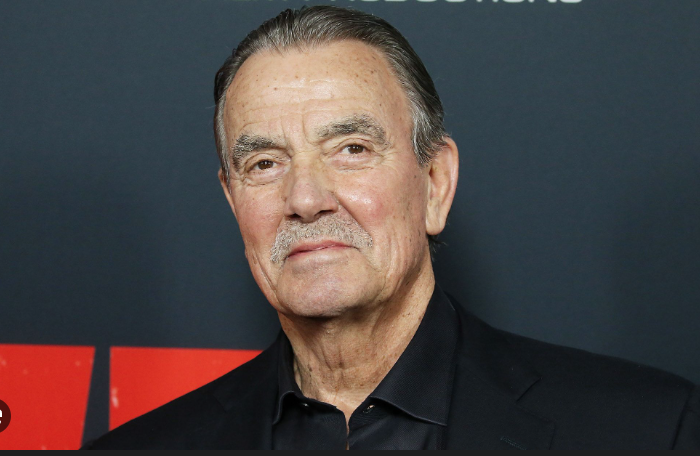
ERIC Braeden, star of Young and the Restless, makes a heartfelt video statement regarding his cancer diagnosis
Eric Braeden, the legendary actor best known for portraying Victor Newman on The Young and the Restless, has spoken publicly about a deeply personal challenge: a recent cancer diagnosis. At 82, Braeden chose honesty over silence, addressing fans directly in a heartfelt video message that was raw, composed, and unmistakably resolute. His words were not framed by fear or self-pity, but by clarity, discipline, and an unshakable commitment to keep moving forward.
Braeden explained that the diagnosis came unexpectedly, discovered during what was supposed to be a routine medical checkup. He had been recovering from knee surgery and began experiencing issues related to his prostate. What initially appeared to be a standard post-surgical concern led to further testing, and that testing revealed something far more serious. Doctors identified high-grade cancer cells located near his bladder, a finding that immediately altered the course of his medical care and, inevitably, his personal life.
Rather than letting rumors spread or headlines distort the truth, Braeden decided to tell the story himself. He addressed the situation during a Facebook Live session, speaking calmly and directly to viewers. He explained the medical facts as plainly as possible, without dramatization, and confirmed that he is currently undergoing immunotherapy as part of his treatment plan. His tone was measured and confident, signaling that while the diagnosis is serious, it is not something he views as defining or defeating him.
What stood out most in his message was not the diagnosis itself, but his mindset. Braeden made it clear that he does not consider himself a victim. He acknowledged the reality of cancer, the seriousness of the treatment, and the physical toll it can take, but he refused to frame the experience as a surrender. Instead, he spoke about it as a fight—one he fully intends to win. His words carried the weight of experience, not just as an actor who has spent decades commanding the screen, but as a man who has lived long enough to understand adversity without being intimidated by it.
Despite his ongoing treatment, Braeden emphasized that his work on The Young and the Restless will continue. Production plans remain unchanged, and his character, Victor Newman, will stay front and center on the show. For Braeden, continuing to work is not a burden—it is a source of strength. Acting, he explained, is not simply a job or a routine; it is part of who he is. The ability to go to work, to step into a role he has embodied for decades, gives him purpose and focus during a time when many would choose to withdraw.
“I’m happy to be able to go to work,” he said, underscoring how deeply connected he is to his craft. That statement was not performative optimism. It was practical and grounded. Work represents normalcy, discipline, and forward momentum. For someone facing a major health challenge, those things matter. They anchor the mind and prevent the illness from becoming the center of existence.
Braeden also spoke about recovery with confidence. He acknowledged that treatment is ongoing and that it takes time, but he expressed certainty that he will regain his full strength. “It won’t be long till I’m back to my best,” he said, projecting determination rather than vague hope. The message was clear: this chapter is temporary. He does not see his career, his identity, or his future as being put on hold.
The response from fans was immediate and overwhelming. Messages of support poured in from around the world, many from viewers who have followed his work for generations. For decades, Victor Newman has been a symbol of power, resilience, and control. Seeing the man behind the character confront a real-life battle with the same composure only deepened the respect audiences have for him. His transparency resonated, especially with those who have faced similar diagnoses or watched loved ones go through cancer treatment.
What makes Braeden’s statement particularly impactful is its lack of sensationalism. There were no exaggerated claims, no emotional manipulation, no attempt to soften the truth with platitudes. He spoke like someone who understands the gravity of the situation but refuses to let it dominate the narrative. That balance—acknowledging risk while projecting resolve—is rare and powerful.
At 82, Braeden’s career already stands as one of longevity and influence. He has been a fixture on daytime television for decades, shaping one of the most iconic characters in the genre. Yet his recent message reminded audiences that his strength does not come from fiction or fame. It comes from discipline, perspective, and an unwillingness to be defined by circumstances he did not choose.
Cancer is often described as a battle, but Braeden’s approach reframes that idea. This is not about dramatics or heroics. It is about showing up, following through with treatment, staying mentally engaged, and continuing to live with intention. His decision to speak openly was not a publicity move—it was an act of control. By telling his story on his own terms, he set the tone for how it will be discussed.
As he continues treatment and remains active on set, Braeden stands as a reminder that strength is not measured by the absence of hardship, but by how one responds to it. His message was simple, direct, and grounded in reality: the diagnosis is real, the treatment is underway, and life goes on. For him, that means working, fighting, and expecting to come out the other side intact.
There was no promise of an easy road, and no request for sympathy. Just clarity, resolve, and forward motion. In an industry built on illusion, Eric Braeden chose truth—and delivered it with the same authority that has defined his career for decades.