My Classmates Spent Years Laughing at My ‘Lunch Lady’ Grandma – Until My Graduation Speech Made Them Fall Silent
I’m eighteen, and I graduated from high school last week. People keep asking me what comes next, but the truth is, everything still feels paused—like something ended too suddenly and the world forgot to press play again.
The hallways still smell like cafeteria rolls and disinfectant. Sometimes, when the house is quiet, I swear I hear footsteps in the kitchen, even though I know that can’t be true.
My grandmother raised me. Not part-time. Not “helped out.” She was everything—my parent, my safety net, my constant—after my parents died in a car crash when I was little. I don’t remember the accident itself, just fragments from before: my mom’s laugh, the ticking of my dad’s watch, a song playing softly on the radio. Then it was just the two of us.
She was fifty-two when she took me in, already working full-time as a cafeteria cook at the same school I’d one day graduate from. Our house was old and creaky, and money was always tight, but she never let it feel that way. She made things warm, steady, survivable.
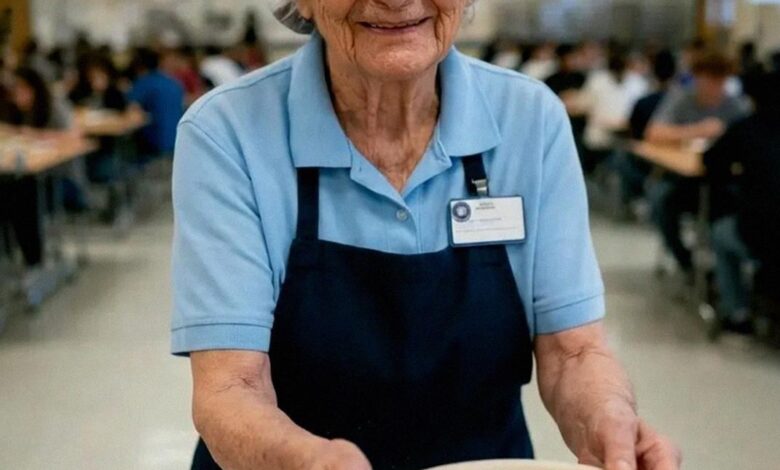
Her name was Lorraine, though most students knew her as “Miss Lorraine” or simply “the lunch lady,” like that title erased the fact that she was a person who loved fiercely and showed up every single day. She was seventy and still arriving before dawn, gray hair tied back with a scrunchie she’d sewn herself.
Every apron she wore was different—sunflowers, strawberries, little patterns she said made kids smile. Even after cooking all day for other people’s children, she still packed my lunch every morning, always with a sticky note tucked inside. Eat the fruit or I’ll haunt you. You’re my favorite miracle.
We didn’t have much, but she never acted like we were missing anything. When the heater broke, she filled the living room with blankets and candles and called it a spa night. My prom dress came from a thrift store, eighteen dollars, and she stitched rhinestones onto the straps while humming Billie Holiday.
“I don’t need to be rich,” she once told me. “I just want you to be okay.”
I was okay—until high school made things harder.
The comments started quietly. Whispers in hallways. Jokes that landed just softly enough to avoid consequences. Kids mimicked her Southern accent, laughed at her aprons, called me “Lunch Girl” or “PB&J Princess.” Some of them were kids who’d once eaten popsicles in our backyard.
One day, a girl asked loudly if my grandma still packed my underwear with my lunch. Everyone laughed. I didn’t.
Teachers heard it. No one stopped it. Maybe they thought it wasn’t serious. But every comment felt like a small cut against the one person who kept me standing.
I never told my grandma. She already came home exhausted, hands aching from arthritis. But she knew anyway. And somehow, she stayed kind. She remembered names, slipped extra fruit to hungry kids, asked about games, smiled at people who never smiled back.
I buried myself in books and scholarships. I skipped parties and focused on the finish line, hearing her voice in my head: One day you’ll make something beautiful out of all this.
Then, in the spring of senior year, she started pressing her hand to her chest. Joking it off. Brushing it aside. She kept saying, “Let’s get you across that stage first.”
The morning it happened, the kitchen was silent. Too silent. I found her on the floor, one slipper twisted under her foot, coffee half-brewed. The paramedics came quickly. Too quickly. They said “heart attack” like it explained everything.
She was gone before sunrise.
People told me I didn’t have to go to graduation. But she’d planned for it all year—worked extra shifts, ironed my gown, set my shoes out weeks in advance.
So I went.
I wore the dress she chose. Pinned my hair the way she liked. And when my name was called for the student speech, the words I’d written weeks earlier no longer mattered.
I stepped up to the podium and said, “Most of you knew my grandmother.”
The gym went still.
“She served you thousands of lunches,” I continued, “so tonight, I’m serving you the truth.”
I told them who she really was. That she raised me after my parents died. That she heard the jokes. That she never stopped being kind anyway. That love isn’t loud, and kindness isn’t weakness.
“She died last week,” I said. “She didn’t get to see this. But she made it possible.”
The silence stayed. Then came quiet applause—not celebration, but something heavier. Something honest.
Afterward, the kids who once laughed came up to me. Apologizing. Crying. Owning it. They told me they wanted to build something on campus—a tree-lined walkway by the cafeteria. Lorraine’s Way.
“She fed us,” one of them said. “Even when we didn’t deserve it.”
“She would’ve fed you anyway,” I answered.
That night, I went home alone. The apron hook on the wall was empty. I whispered, “They’re planting trees for you.”
For the first time since she died, the silence didn’t feel so hollow.
She taught me how to love without conditions. How to endure. How to forgive.
And maybe one day, if I’m lucky, I’ll be someone’s polar star too.