SOTD – Reducing Household Water Waste Through Mindful Bathroom Practices!
In the modern home, the act of flushing a toilet is a subconscious reflex—a seamless, sanitary, and socially mandated behavior that most people perform multiple times a day without a second thought. It is the invisible backbone of urban hygiene, a marvel of engineering that whisks waste away with a simple lever pull. However, as the global dialogue shifts toward sustainability and the preservation of finite natural resources, this “automatic” habit is coming under scrutiny.
Environmental advocates and conservation experts are increasingly suggesting that the path to a water-secure future may involve a return to mindfulness regarding our most basic bathroom rituals. The goal is not to abandon hygiene, but to recalibrate our understanding of necessity in a world where fresh water is becoming increasingly scarce.
To appreciate the impact of a single flush, one must look at the hidden journey of the water that fills the porcelain tank. In most developed nations, the water used to flush a toilet is the exact same water that flows from the kitchen tap—high-quality, potable water that has been meticulously filtered, chemically treated, and pumped through vast infrastructure systems to meet drinking standards. Using several liters of this “liquid gold” to transport a small amount of liquid waste is, from a purely resource-management perspective, a profound inefficiency. A standard older toilet can use up to nine liters per flush, while even modern “low-flow” models use roughly three to six liters. In a typical household, these small events accumulate into a staggering volume, often accounting for nearly 30% of total indoor water consumption.
One of the more provocative suggestions for reducing this footprint is the practice of selective flushing. The “if it’s yellow, let it mellow” mantra, once relegated to drought-stricken regions or off-grid cabins, is finding a quiet foothold in mainstream environmentally conscious households. The logic is simple: if the waste is purely liquid, the toilet does not necessarily require the immediate force of a full flush. While this approach can significantly reduce annual water usage—saving a single family tens of thousands of liters a year—it requires a shift in domestic culture. Implementing such a change is most successful in private residences where all occupants are aligned on the goal of conservation. It necessitates a balanced approach to maintenance, including frequent cleaning to prevent mineral buildup and ensuring proper bathroom ventilation to maintain a pleasant atmosphere.
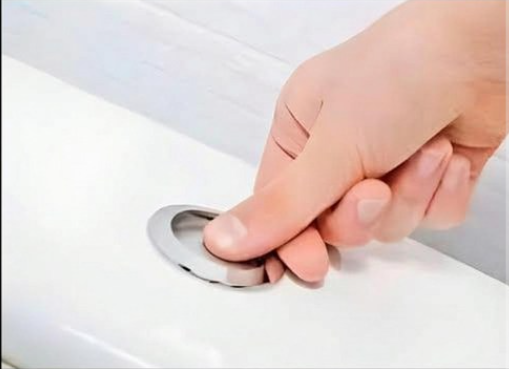
However, behavioral changes are only one piece of the conservation puzzle. For those who find selective flushing unappealing or unfeasible due to shared living arrangements, technology offers a robust alternative. The rise of the dual-flush toilet represents one of the most significant advancements in residential water efficiency. By providing a low-volume option for liquid waste and a full-volume option for solids, these systems allow users to maintain traditional social etiquette while still achieving a 20% to 50% reduction in water use compared to traditional models. Furthermore, the integration of high-efficiency toilets (HETs) and pressure-assisted models has proven that a toilet can be both powerful and parsimonious, using air pressure to clear the bowl with a fraction of the water required by gravity-fed designs of the past.
The conversation about bathroom water waste also extends to the “hidden” leaks that often go unnoticed for months. A silent leak in a toilet flapper can waste up to 750 liters of water a day—the equivalent of dozens of extra flushes. Regular maintenance and simple “dye tests” (placing food coloring in the tank to see if it seeps into the bowl) are essential practices for any mindful household. By treating the toilet as a precision instrument rather than an indestructible appliance, homeowners can prevent the massive, invisible waste that often counteracts even the most diligent conservation efforts.
Comparative Household Water Consumption Over Time
Toilet Type Liters per Flush Estimated Annual Use (1 Person) Environmental Impact
Traditional (Pre-1994) 13.2L 24,090L High resource strain
Standard Low-Flow 6.0L 10,950L Moderate efficiency
High-Efficiency (HET) 4.8L 8,760L Significant conservation
Dual-Flush (Liquid) 3.0L 5,475L Optimal sustainability
Beyond the hardware and the habits lies a broader ethical consideration: the global water crisis. According to international environmental reports, water scarcity affects more than 40% of the global population, a figure projected to rise as climate patterns shift. In this context, every liter of treated water saved in a suburban bathroom is a liter that requires less energy to process and less stress on local aquifers and reservoirs. The energy-water nexus is a critical component here; the process of treating and transporting water is an energy-intensive endeavor that contributes to a household’s carbon footprint. Therefore, water conservation is, by extension, energy conservation.
Navigating the social dimensions of water-saving practices requires a degree of tact and situational awareness. While selective flushing may be an acceptable and even celebrated practice within a close-knit, eco-friendly family, it remains outside the bounds of standard etiquette in workplaces, public settings, or when hosting guests. In these scenarios, respect for common social norms is paramount. The objective of the sustainability movement is not to create discomfort or social friction, but to foster a culture where we value the resources we use. Education and transparency are the best tools for bridging this gap—when people understand the why behind a practice, they are far more likely to adopt it or, at the very least, respect it.
The transition toward a “water-mindful” bathroom is ultimately about the power of cumulative impact. If every household in a mid-sized city replaced one older toilet with a high-efficiency model or reduced their daily flushes by just two, the collective savings would equal millions of liters of water per day. This is the “snowball effect” of sustainability: small, localized actions that, when mirrored across a population, lead to systemic change.
As we look toward the future of home design and urban living, the bathroom will likely continue to be at the forefront of the green revolution. From graywater recycling systems—where sink water is filtered and used for the next toilet flush—to waterless urinal technology, the innovations are already here. But while we wait for these technologies to become standard in every home, the most effective tool we possess remains our own awareness. By choosing to see the water in the bowl not as a disposable commodity, but as a treated, precious resource, we can transform a mindless reflex into a meaningful act of environmental stewardship. In the end, protecting our planet’s most vital resource doesn’t require us to compromise our comfort; it simply asks us to pay attention to the flow.