The Man Who Bought the World: 21 Years, 10,000 Flights, and a Heart of Gold
In 1987, American Airlines made Steven Rothstein an offer that seemed impossible to refuse.
Pay $250,000 once. Fly first-class anywhere in the world. Forever.
Rothstein was 37, a Chicago investment banker who practically lived on airplanes. He did the math. He wrote the check. Two years later, he added a companion pass for another $150,000, allowing him to bring anyone he wanted along for the ride.
What followed was the stuff of legend.
Over the next 21 years, Rothstein took approximately 10,000 flights. That’s 476 flights per year. More than one every single day. He flew to London for dinner. Tokyo for sushi. Paris for a meeting. Sydney for a weekend. He logged 30 million miles.
His wife Nancy would later say he “got on a plane like most people get on a bus.”
But here’s where the story becomes extraordinary.
Rothstein didn’t just use his golden ticket for himself. He turned it into something beautiful.
He would arrive at airports early, scan the waiting areas, and approach strangers who needed help. A homeless man trying to reunite with family. A stranded traveler with a cancelled flight. A priest who dreamed of visiting Rome. A policeman hoping to return home to Bosnia. People who could never afford first-class, or sometimes any ticket at all.
He’d offer them his companion seat. Free.
His daughter Caroline would later recall how her father used the pass to help countless people, turning what could have been pure indulgence into random acts of extraordinary generosity.
For two decades, American Airlines accepted this. The CEO even wrote Rothstein a personal letter in 1998, promising to “honor the deal, far into the future.”
Then came December 13, 2008.
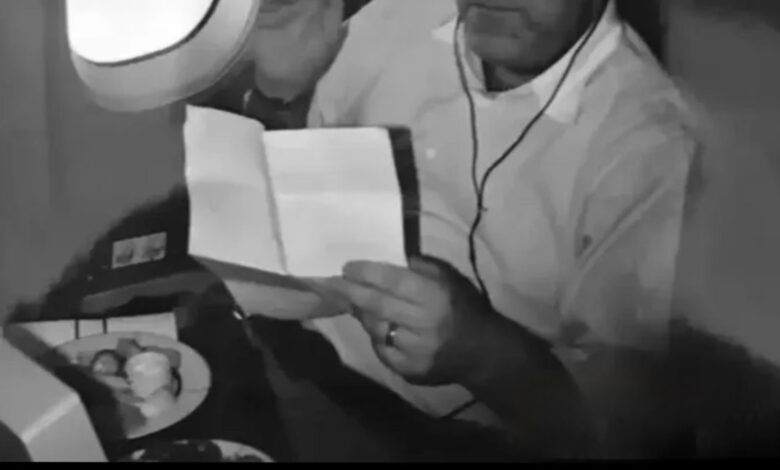
Rothstein checked his luggage at Chicago O’Hare, walked to the gate with a companion, and prepared to board a flight to London. Just as he stepped toward the plane, an airline employee handed him a letter.
His Air pass was terminated. Effective immediately. For “fraudulent usage.”
Twenty-one years of unlimited freedom ended in thirty seconds.
The legal battle that followed was bitter. Rothstein sued for $7 million. American Airlines countersued. The case dragged through courts for years before settling out of court with confidential terms.
But there’s a heartbreaking layer to this story that makes everything more human.
In 2002, Rothstein’s teenage son Josh was killed in a car accident. He was 15 years old. Over 1,000 people attended his funeral. Ten of them were American Airlines employees.
In the years that followed, many of those “speculative reservations” the airline complained about came during his darkest nights of grief.
“When everyone was asleep in the house, and I had nobody to talk to, and I was lonely about Josh’s death, I would telephone American Airlines reservations and speak to the agents about who knows what for an hour,” Rothstein later explained. “They knew me. I knew their names. I knew their lives.”
At the end of each call, they’d ask what reservation he wanted to make. He’d book a flight somewhere. Not because he needed to go. Because he was desperately lonely.
Those thousands of unused bookings weren’t fraud.
They were a grieving father’s attempts to feel connected to the world.
The airline that had been his lifeline through tragedy took it away.
Former CEO Bob Crandall later admitted: “We thought originally it would be something that firms would buy for top employees. It soon became apparent that the public was smarter than we were.”
So who was right? The man who used the pass exactly as advertised? Or the company that sold an unsustainable promise and tried to escape it?
We’ll never know.
What we do know is this: For 21 years and 10,000 flights, Steven Rothstein lived the dream we all have.
The freedom to go anywhere, anytime.
And the generosity to take others along for the journey.
Some promises, it turns out, have expiration dates.
Even the ones that say “forever.”