The Untold Story of Drew Barrymore: From Troubled Child Star to Hollywood Powerhouse
Drew Barrymore is one of the most recognizable faces in Hollywood, but few people know the full story behind her rise, fall, and remarkable comeback.
A Childhood Overshadowed by Fame
Born into the legendary Barrymore dynasty, Drew entered the spotlight at the age of seven through E.T. the Extra-Terrestrial.
But her early fame came at a devastating cost.
Instead of a stable childhood, Drew was exposed to the dark side of Hollywood far too young. Her mother took her to Studio 54 at age nine — a world filled with drinking, drugs, and celebrities partying until dawn.
By age 10, she was smoking cigarettes.
By 12, she was using cocaine.
She later described her home environment as chaotic, lacking boundaries, structure, and proper parenting.
A Crisis That Led to Transformation
At 13, after her addiction spiraled, Drew was sent to a psychiatric institution. Unlike luxury rehab centers for celebrities, this was a strict, locked-down facility focused on discipline and therapy.
Although traumatic, Drew has repeatedly said that it saved her life.
Emancipation at 14
When she left the institution, Drew took one of the boldest steps any teenager could take: she legally emancipated herself from her mother.
At just 14, she lived alone, worked odd jobs, and struggled to get roles. Studios considered her “too risky.” Insurance companies wouldn’t cover her. Hollywood had written her off.
But she didn’t give up.
Climbing Back
Throughout the 1990s, Drew slowly rebuilt her career with perseverance and hard work. Her breakthrough comeback came with The Wedding Singer in 1998 — a turning point that reintroduced her to audiences as a grown, charismatic actress.
In 1995, she co-founded Flower Films, becoming one of the youngest female producers in Hollywood. With the success of Charlie’s Angels, Never Been Kissed, 50 First Dates, and more, she established herself as both a businesswoman and creative force.
Her Legacy Today
Today, Drew Barrymore is an actress, producer, talk-show host, entrepreneur, and philanthropist. She has spoken openly about her past, advocating for mental health, boundaries, and recovery.
Her story remains one of Hollywood’s most powerful examples of overcoming adversity, rebuilding identity, and choosing healing over destruction.
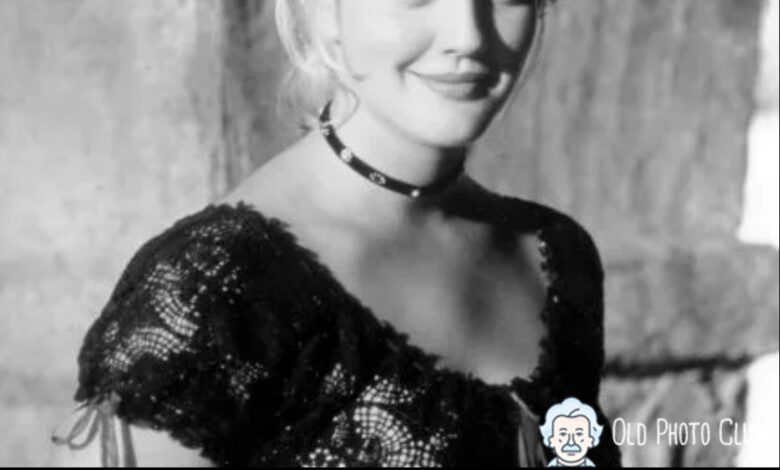
In this old photograph, she looks like any other sweet Hollywood child star.
But behind that innocent smile… a storm was already forming.”
Drew Barrymore was only 7 when she became beloved around the world in E.T.
No one knew she would lose her childhood faster than any star before her.
At 9, she was in Studio 54.
At 10, she was drinking.
At 12, using cocaine.
At 13, locked in a psychiatric ward.
At 14, she legally divorced her own mother.
And yet… she rose.
She rebuilt her life, her career, and her identity from nothing.
She became the woman she desperately needed when she was a little girl.
Not every old photo tells a happy story —
but some tell the story of a survivor.
~Old Photo Club
She was born into fame — but fame swallowed her whole.
At 7, she was America’s sweetheart.
But no one saw the scared child begging for a normal life behind those bright eyes.
She wanted safety. She got Hollywood nightclubs.
She wanted love. She got enablers and chaos.
She wanted guidance. She got addiction before she was even a teenager.
At 13, she hit rock bottom.
And in that place — in a locked psychiatric ward — she found something she had never known before: hope.
At 14, she made a decision that would define her entire life:
she broke free from her past.
She lived alone. Worked alone. Fought alone.
But she fought. And she won.
Her story isn’t just about recovery.
It’s about choosing to rise when the world expects you to fall.
Drew Barrymore is a well-established figure in the entertainment industry, known for her acting career, production work, and recent ventures in television. Her path to success began in childhood with the breakthrough role in E.T. the Extra-Terrestrial.
Despite her early fame, she experienced significant personal challenges, including exposure to substance use at a young age, time in a psychiatric institution, and legal emancipation at age fourteen.
Over the following years, Barrymore rebuilt her career, eventually co-founding the production company Flower Films and starring in several successful films. She later expanded her work into television with The Drew Barrymore Show.
Her story is regarded as a notable example of resilience and long-term recovery within the entertainment industry.