US Olympic Athlete Revives a Once-Banned Move from 1977, Surprising Fans!
The Milan–Cortina Winter Games have delivered the kind of moments that remind audiences why the Olympics remain unmatched in their ability to blend sport, history, and emotion on a global stage. Among the many performances that captivated fans, one stood out for its audacity and symbolism: a daring return to a move many believed belonged only to the past.
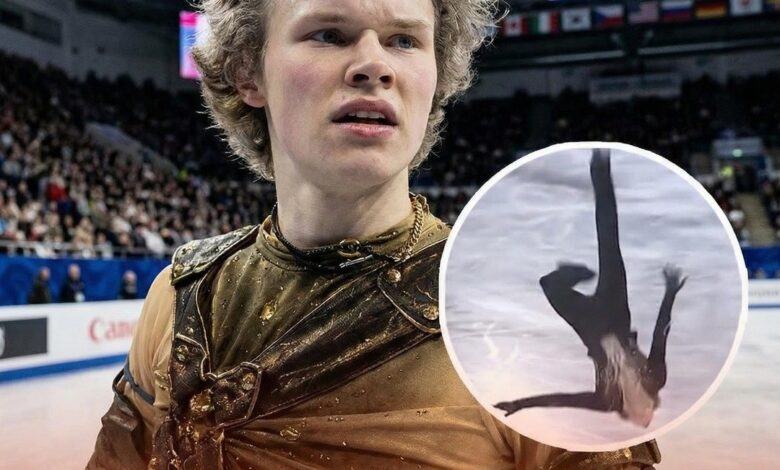
During the figure skating team event, Ilia Malinin electrified the arena by landing a backflip in competition, a maneuver that had been absent from Olympic programs for nearly half a century. The crowd’s reaction was immediate and thunderous. As Malinin completed the rotation and skated cleanly out of the landing, the moment felt larger than the score itself. It was not just a technical achievement, but a bridge between eras of the sport.
The backflip carries a unique place in figure skating history. Once seen as a bold expression of athleticism and showmanship, it was effectively removed from competitive skating in the late 1970s after officials raised concerns about safety and control. The last time a backflip was legally performed in Olympic competition dates back to that era, after which the move became relegated to exhibitions and ice shows. Skaters could still perform it for crowds, but never where medals were on the line.
For decades, the ban symbolized a broader tension within figure skating: the balance between artistry, innovation, and athlete safety. While the sport evolved with increasingly complex jumps and combinations, the backflip remained off-limits, a reminder of a time when rules tightened to protect competitors from unnecessary risk.
That changed when regulations were updated, reopening the door for certain acrobatic elements under specific conditions. The adjustment was cautious and deliberate, but it allowed skaters like Malinin to reimagine what was possible within the competitive framework. Known for his explosive jumping ability and willingness to push boundaries, Malinin seized the opportunity on one of the world’s biggest stages.
Although he ultimately finished second in the event, the placement felt almost beside the point. Within minutes, clips of the backflip spread across social media, sports broadcasts, and international news outlets. Commentators and former skaters weighed in, many noting that while medals are remembered, moments like this are what endure in Olympic memory.
The performance reinforced Malinin’s reputation as a skater unafraid to blend tradition with innovation. His approach reflects a new generation of athletes who respect the sport’s past while refusing to be constrained by it. By reviving a move once deemed too dangerous, he didn’t just execute a technical element—he challenged assumptions about how far the sport can safely go.
The Games, however, are never defined by a single moment. Alongside triumphs, they also reveal the intense emotional pressure and discipline demanded of elite athletes. That reality came into sharp focus during a separate judo competition, where a high-profile bout ended in controversy after emotions spilled over following a decisive result.
Officials intervened quickly, and organizers later confirmed disciplinary action. While details were handled through proper channels, the message was clear: respect for opponents and adherence to Olympic values remain non-negotiable. The incident sparked discussion among fans and analysts alike, underscoring that the Olympic stage magnifies not only athletic excellence but also lapses in composure.
Such moments serve as reminders that the Olympics are as much about character as they are about competition. Athletes are expected to perform at the limits of human ability while maintaining respect, restraint, and sportsmanship—an expectation that becomes harder under the weight of global scrutiny.
The emotional highs and lows of the Games were further illustrated when a decorated American skier suffered a serious crash during a downhill event. The fall happened at high speed, sending a collective gasp through spectators and fellow competitors. Medical teams responded immediately, stabilizing the athlete and transporting them for evaluation.
As news of the crash spread, messages of support poured in from across the Olympic village and beyond. Competitors paused their own preparations to check on updates, a quiet show of solidarity that often goes unseen amid medal counts and highlight reels. The incident underscored the inherent risks of winter sports, where fractions of a second and slight miscalculations can have serious consequences.
While the athlete’s condition became the focus, the moment also highlighted the resilience demanded of those who compete at this level. Every run, jump, or descent carries physical danger, and athletes accept that risk in pursuit of excellence. The Olympics celebrate victory, but they also expose the cost of reaching it.
Taken together, these moments—Malinin’s historic backflip, the judo controversy, and the skiing accident—capture the full emotional spectrum of the Winter Games. They show triumph fueled by courage, the consequences of losing composure, and the vulnerability that accompanies pushing the human body to its limits.
The Milan–Cortina Olympics have reminded viewers that the Games are not simply about medals or national pride. They are about stories that unfold in real time, shaped by preparation, risk, discipline, and the willingness to step into uncertainty. When an athlete revives a move last seen in 1977, it connects generations. When another falters under pressure, it exposes the human cost of competition. When a skier crashes and rises again, it reflects resilience that resonates far beyond sport.
These are the moments that linger long after podium ceremonies fade. They are why the Olympics continue to matter, not just as a sporting event, but as a reflection of ambition, restraint, courage, and perseverance on the world’s most demanding stage.