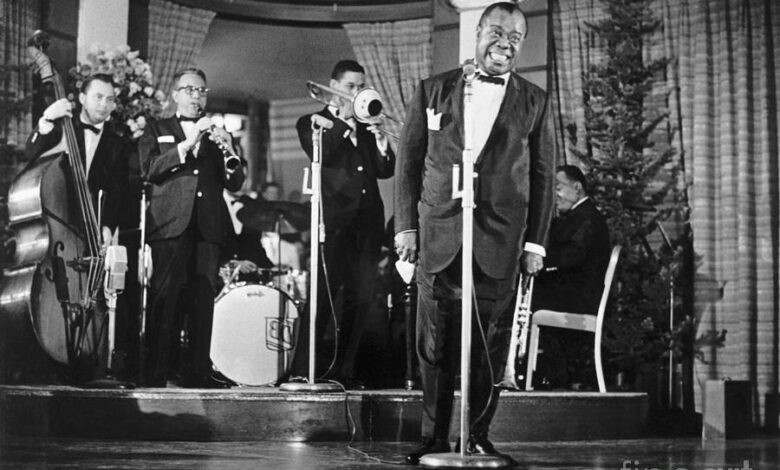
From the Backstreets of New Orleans to the King of Jazz
Louis Armstrong, affectionately known as “Satchmo” (short for “Satchel Mouth”), is one of the most influential musicians in history and the single most important figure in the birth and global spread of jazz. With his gravelly voice, dazzling trumpet playing, infectious smile, and larger-than-life personality, he turned jazz into an international language of joy. From his impoverished childhood in the streets of New Orleans to his status as a worldwide cultural ambassador, Armstrong’s life was a true American success story filled with talent, resilience, and unbreakable spirit.
Early Life and Hardship
Louis Daniel Armstrong was born on August 4, 1901 (though he sometimes claimed July 4 for patriotic reasons) in New Orleans, Louisiana — the cradle of jazz. He grew up in extreme poverty in the tough “Back o’ Town” neighborhood. His father abandoned the family early, and his mother worked as a prostitute, often leaving young Louis with his grandmother.
As a child, he worked odd jobs — selling newspapers, delivering coal, and singing on street corners for pennies. In 1912, at age 11, he was arrested for firing a pistol in the air on New Year’s Eve and sent to the Colored Waif’s Home for Boys. There, under the guidance of band instructor Peter Davis, he discovered his passion for music and learned to play the cornet. It was the turning point of his life.
The Rise of a Legend
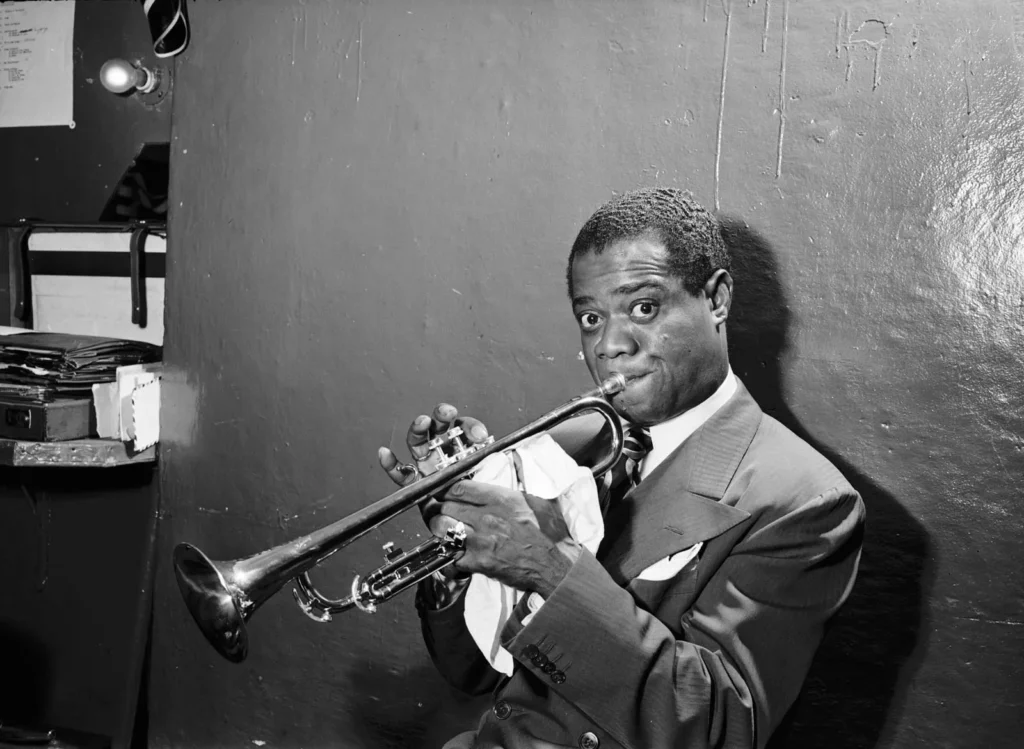
Released from the home in 1914, Armstrong returned to the streets but quickly became a fixture in New Orleans’ vibrant music scene. He played in brass bands, riverboats on the Mississippi, and honky-tonks. In 1922, he was invited by his mentor King Oliver to join his band in Chicago. That move changed everything.
In 1925, Armstrong began recording with his own groups — the Hot Five and Hot Seven. These revolutionary sessions (including classics like “Heebie Jeebies,” “Struttin’ with Some Barbecue,” and “Potato Head Blues”) introduced the world to his groundbreaking improvisational style, scat singing, and emotional depth. He transformed jazz from ensemble music into a soloist’s art form.
By the late 1920s, he had moved to New York, starred in Broadway shows, and appeared in early films. His charismatic stage presence and unique voice made him a star beyond the jazz world.
newsone.comThe Legend Of Satchmo: Louis Armstrong’s Life In Photos
Peak Fame, Tours, and Cultural Icon Status
In the 1930s and 1940s, Armstrong became an international sensation. He toured Europe extensively, becoming one of the first Black American superstars to achieve global fame. He recorded timeless hits like “Mack the Knife,” “Blueberry Hill,” and “When the Saints Go Marching In.”
His big-band era gave way to the All-Stars small group in the 1940s, which he led for decades. In the 1950s and 1960s, he continued to evolve, starring in major Hollywood films and recording massive commercial successes such as “Hello, Dolly!” (1964), which knocked The Beatles off the top of the charts, and the beloved “What a Wonderful World” (1967).
Armstrong was also a civil rights pioneer in his own quiet way. Though he avoided direct confrontation, he publicly criticized President Eisenhower during the 1957 Little Rock crisis and became a symbol of Black excellence and dignity.
Personal Life and Later Years
Armstrong was married four times. His final and longest marriage was to Lucille Wilson in 1942; they remained together until his death. He had no biological children but adopted and supported many young musicians.
Even in his later years, despite heart and kidney problems, he kept performing and smiling. His final public appearance was in 1971 at the Waldorf-Astoria in New York.
Death and Enduring Legacy
Louis Armstrong died on July 6, 1971, at age 69, in his Queens, New York home, just two days after celebrating what would have been his 70th birthday (by his preferred date). He passed peacefully in his sleep.
He sold millions of records, influenced virtually every jazz musician who followed (from Dizzy Gillespie to Miles Davis), and helped shape popular music, rock & roll, and even hip-hop through his rhythmic innovations and vocal style. His joyful spirit and genius turned jazz into America’s classical music and a universal force for happiness.
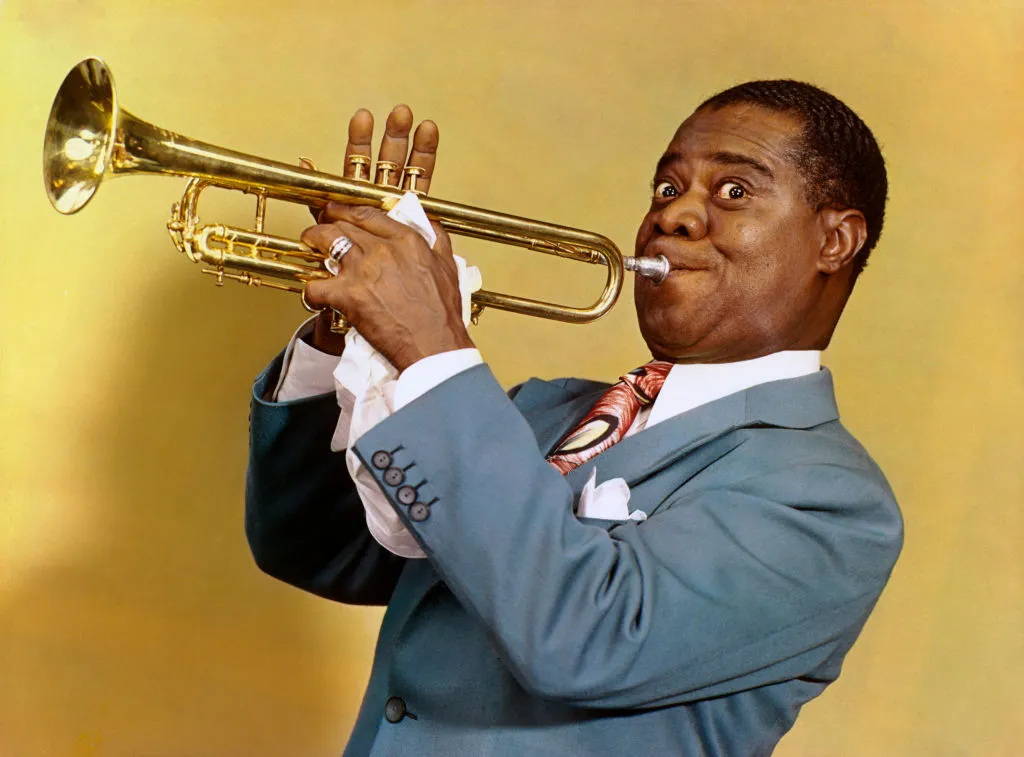
Some of his most beloved hits include:
“What a Wonderful World” (1967)
“Hello, Dolly!” (1964)
“Mack the Knife” (1955)
“La Vie en Rose” (1950)
“When the Saints Go Marching In”
“Stardust” (1931)
Louis Armstrong didn’t just play music — he was music. He took the pain of the streets and turned it into pure joy that the whole world could understand. Even today, when you hear that unmistakable trumpet or that warm, raspy voice singing “What a Wonderful World,” you can’t help but smile. Satchmo’s legacy lives on — forever swinging.
THE SONG: