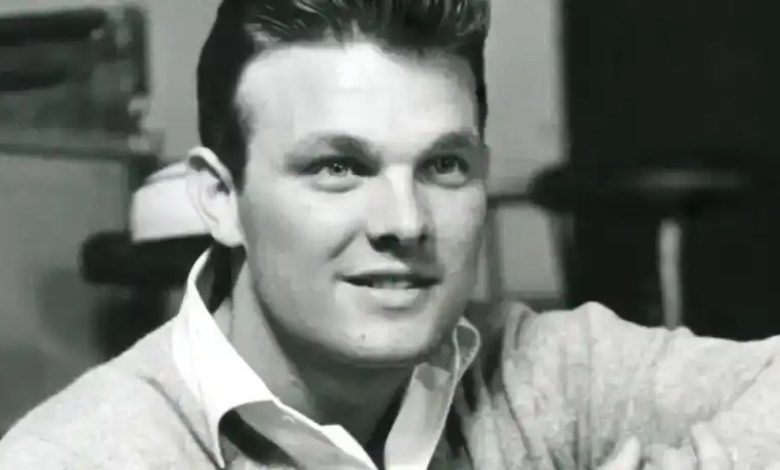
Tommy Roe’s “Sweet Pea” Brings Bubblegum Pop to the Forefront and Captures Teen Spirit in 1966
In the summer of 1966, while the world was tuning into the raw energy of rock ‘n’ roll and the emerging sounds of psychedelia, a bright, bouncy tune cut through the airwaves and reminded everyone just how much fun pop music could be. Tommy Roe’s “Sweet Pea” wasn’t trying to change the world or protest the times—it simply wanted to dance. And in doing so, it helped plant the flag for a genre that would soon be known as bubblegum pop, while perfectly bottling the carefree, optimistic spirit of mid-1960s teenagers.
Tommy Roe had already tasted stardom once. Born Thomas David Roe in Atlanta, Georgia, on May 9, 1942, he exploded onto the charts in 1962 with “Sheila,” a rockabilly-tinged smash that reached No. 1. A string of hits followed, but after a stint in the U.S. Army reserves in 1964–65, Roe found himself needing a fresh start. He moved to California, teamed up with producer Gary S. Paxton, and recorded a song he had originally written for The McCoys (the group behind “Hang On Sloopy”). When they never got back to him, Roe decided to cut it himself. The result was “Sweet Pea,” released in the summer of 1966 on ABC Records as the lead single from his album of the same name.
From the very first notes, “Sweet Pea” announces itself with a punchy, stop-start drum break that immediately grabs attention. Clocking in at a crisp 2:19, the track is pure ear candy: a driving bass line, jangly guitars, handclaps, and Roe’s enthusiastic, slightly nasal vocal delivery. The lyrics are delightfully innocent. The narrator spots a girl at a dance whose friends call her “Sweet Pea.” He asks her to dance, suggests they go for a walk, confesses his love, and pleads, “Oh Sweet Pea, won’t you be my girl?” There’s no angst, no rebellion—just the giddy thrill of a teenage crush. It’s the musical equivalent of a cherry Coke and a sock hop.
That simplicity was exactly the point. By 1966, the music industry had begun noticing that younger listeners—especially preteens and early teens—wanted songs that were fun, catchy, and easy to sing along to. While The Beatles were heading into experimental territory and The Rolling Stones were getting edgier, a new wave of artists was crafting music aimed squarely at the bubblegum-chewing demographic. “Sweet Pea” didn’t just ride that wave; it helped define it. With its upbeat tempo, repetitive chorus, and sugar-coated melody, the song became one of the earliest and most successful examples of bubblegum pop reaching national prominence. Roe himself later embraced the label, even if he initially bristled at it, recognizing that it gave him a clear identity in a crowded market.
The timing couldn’t have been better. In 1966, American teenagers were enjoying relative peace and prosperity before the full weight of the Vietnam War and social upheaval hit home. Radio was still king, and AM stations across the country spun “Sweet Pea” relentlessly. The song climbed to No. 8 on the Billboard Hot 100, spending two weeks at that peak in late July and logging 14 weeks on the chart. It topped the charts in Canada and New Zealand, hit No. 7 in Australia, and ranked No. 44 on Billboard’s year-end Hot 100 list. More importantly, it re-established Roe as a major pop force after his post-army hiatus.
What made “Sweet Pea” resonate so deeply with teens wasn’t just the melody—it was the feeling. In an era when teen magazines, sock hops, and drive-in movies still ruled youth culture, the song captured that magical, butterflies-in-the-stomach moment of first love. It was aspirational yet relatable: any kid listening could imagine themselves at that dance, spotting their own “Sweet Pea” across the gym floor. The track’s lighthearted energy offered an escape from homework, parental rules, and the first rumblings of a more complicated world. It was pop music doing what it does best—making listeners feel happy, seen, and ready to move.
Roe followed “Sweet Pea” with another bubblegum gem, “Hooray for Hazel,” which also cracked the Top 10 later that year. By 1969, his even bigger hit “Dizzy” would cement his legacy as a bubblegum icon. Yet “Sweet Pea” remains a standout because it arrived at just the right cultural moment, helping bridge the gap between the early-’60s teen idols and the full-blown bubblegum explosion of The 1910 Fruitgum Company and The Ohio Express that would follow.
More than half a century later, the song still sounds fresh. That infectious drum break has been sampled over 100 times across hip-hop, rock, and electronic tracks, proving its enduring groove. But for those who remember 1966, “Sweet Pea” is more than a catchy oldie—it’s a time capsule. It reminds us of a brief, shining era when pop could be unapologetically fun, when a simple invitation to dance was enough to top the charts, and when the spirit of American teenagers was as sweet and bright as the girl in the song.
Tommy Roe may not have set out to launch a genre or define a generation, but with “Sweet Pea,” he did both. In just two minutes and nineteen seconds, he brought bubblegum pop front and center and gave the world a perfect snapshot of teen spirit in 1966—pure, joyful, and impossible not to smile at.
THE SONG: