A Quiet Reflection on a Changing World: The Story Behind “Day Is Done” (1969)
Some songs do not try to dominate their era—they try to understand it. In 1969, *Day Is Done* by Peter, Paul and Mary arrived as one of those rare pieces of music: gentle, reflective, and quietly observant in a time defined by upheaval.
While much of the late 1960s soundtrack was shaped by protest anthems, electric experimentation, and cultural rebellion, *Day Is Done* stood apart. It did not shout. It did not argue. Instead, it paused—offering a moment of stillness in a world that felt like it was moving too fast.
A Folk Trio Defined by Meaning
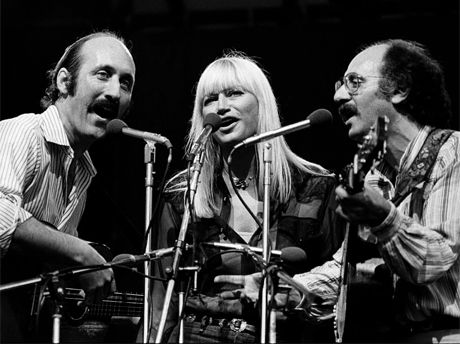
Peter, Paul and Mary had already established themselves as one of the most influential folk groups of the 1960s. Known for their harmonies and socially conscious material, they often gave voice to themes of peace, justice, and human connection.
By the end of the decade, however, the cultural atmosphere had shifted dramatically. The optimism of early 1960s folk music had been tested by political unrest and generational tension. *Day Is Done* emerged from that emotional landscape.
A Song About Growing Up Too Soon
Written by Peter Yarrow, *Day Is Done* carries the perspective of a parent watching a child enter a world marked by uncertainty. The lyrics reflect a simple but profound ritual: saying goodnight, offering comfort, and acknowledging that innocence does not last forever.
The song was inspired in part by letters from soldiers during the Vietnam War, especially those describing young men who wrote home about children and families while facing the realities of combat.
That connection gave the song its deeper emotional weight. It was no longer just about bedtime—it was about the end of safety, and the beginning of awareness.
Simplicity as Emotional Power
Musically, *Day Is Done* is restrained almost to the point of fragility. Soft acoustic guitar, delicate arrangement, and the trio’s signature harmonies create a sound that feels intimate and unguarded.
There is no dramatic climax. No explosive chorus. Instead, the song unfolds like a lullaby for a troubled world.
That simplicity is what gives it strength.
A Different Kind of Protest Song
Although *Day Is Done* is often associated with the protest era, it does not function like a traditional protest song. There are no slogans or calls to action. Instead, it reflects the emotional cost of conflict through empathy and tenderness.
This approach made the song stand out even within the folk movement, where direct political messaging was more common.
Rather than demanding change, it asks listeners to feel the weight of time, responsibility, and innocence lost.
Reception in a Divided Era
When the song was released in 1969, reactions were mixed but deeply felt. Many listeners embraced its softness as a necessary contrast to the intensity of the period. Others found its quiet tone unexpected from a group known for more outspoken material.
Yet over time, *Day Is Done* found its place as one of the trio’s most enduring recordings. It became a song revisited during moments of reflection, remembrance, and transition.
A Legacy of Gentle Honesty
For Peter, Paul and Mary, the song represents a continuation of their core mission: to use music as a bridge between personal emotion and collective experience.
Even decades later, *Day Is Done* remains striking in its restraint. It does not attempt to resolve the world’s tensions. Instead, it acknowledges them quietly, like a voice speaking in the dark before sleep.
More Than a Lullaby
What makes *Day Is Done* unforgettable is not its scale, but its intimacy. It captures a feeling that is both personal and universal—the moment when the world feels too large, and all that remains is the need for comfort and understanding.
In a decade defined by noise, it offered silence.
And in that silence, it still speaks.