The Inheritance Trap: My Sister Stole the Penthouse, But I Stole the Empire
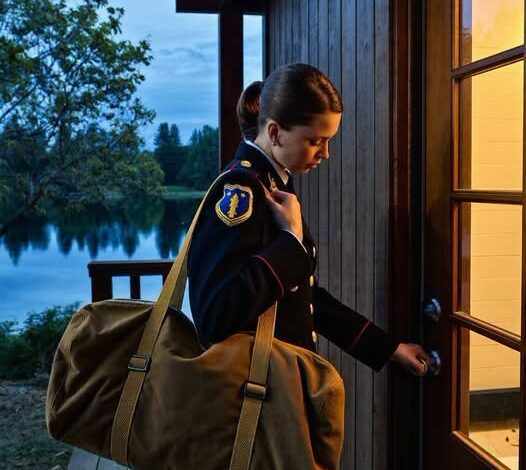
You think you know how inheritance works—the golden child gets the city apartment, the black sheep gets the rotting shack in the middle of nowhere. That’s what I thought, too. My sister Skylar walked away with a luxury Nashville high-rise, leaving me with a crumbling cabin in the desolate Ozarks. I was the family outcast, the one they mocked for choosing a “pathetic” life. But as the floorboards groaned under my feet, I realized I hadn’t been exiled to a graveyard; I had been handed the keys to a kingdom. The secret buried beneath this floor will shatter my sister’s world forever.
Hank McCoy didn’t knock; he simply appeared, his presence filling the cramped, dusty space of the cabin like a storm front. He set a pot of beef stew on the rustic table, his eyes—hard, experienced, and tired—scanning the perimeter as if he were still guarding a battlefield. He had known my father, really known him, and as he looked at me, his expression softened into something resembling respect. He didn’t come to offer pity for my “measly” inheritance. He came to prepare me for a war.
“Your father didn’t leave you a pile of wood and termites, girl,” Hank said, his voice sounding like gravel grinding against stone. “He left you a legacy that your sister’s soft hands couldn’t possibly hold. She’s chasing the neon lights and the hollow validation of Nashville, oblivious to the fact that you’ve been chosen for something much darker and much more profitable. This cabin isn’t a home; it’s a vault.”
I stared at him, the spoon clattering against the bowl. The Ozarks had always been a place of mystery, a rugged expanse of forest where my father spent his final, secretive years, but I had assumed it was just a hobby. Hank moved to the far corner of the living room, prying up a loose board with the practiced efficiency of a man who had done this a dozen times before. From the darkness beneath the floor, he pulled out a thick, iron-bound ledger, its leather cover worn by decades of handling.
“This is the McCoy mining claim,” Hank continued, his tone devoid of any humor. “It has been dormant for sixty years, a ghost story to the outside world. But the mineral rights attached to this land? They are worth more than every square inch of that Nashville high-rise Skylar is so proud of. Your father kept it hidden because he knew the moment the property taxes were paid, your sister would have sold the land to the first corporate developer who dangled a check. He didn’t want a successor who cared about dividends. He wanted someone who understood duty. He wanted a soldier.”
The weight of the ledger in my hands was immense. As I traced the ink-stained entries, the reality of my family’s past shifted violently. My mother’s constant, fake-sweet pressure to visit the cabin, the way Skylar would giggle about my “trashy” living situation at holiday dinners—it was all a tactical maneuver to get me to abandon the property. They had been trying to goad me into quitting, hoping I would hand over the deed out of shame or frustration. They were so busy counting the potential profit of the city apartment that they hadn’t realized the real fortune was hidden in the dirt where they refused to step.
“Why me?” I whispered, my voice barely audible over the wind howling through the trees. “Why leave it to me in silence? Why put me through the humiliation of thinking I’d been cast aside?”
Hank sighed, leaning against the rough-hewn wall. “Because he had to be sure, kid. Your sister is a creature of comfort; she breaks the moment she’s uncomfortable. But you? You’ve been hardened by years of being the outcast. You’ve stood your ground when the whole world told you to run. He knew that the moment you walked through this door, you’d either sell it out of spite or you’d recognize the weight of the history. He didn’t want someone who just wanted the money. He wanted someone who could protect the empire.”
I thought of Skylar at that very moment, likely sipping champagne in her penthouse, feeling smugly superior. She was playing a game of shallow status, while I held the literal foundations of our family’s future. I had been insulted, belittled, and cast out, yet I was the one holding the keys to a kingdom she didn’t even know existed. The rage I had felt for months evaporated, replaced by a cold, sharp clarity.
“What happens tomorrow?” I asked, looking up at the old Marine.
Hank smiled—a grim, satisfied curve of the lips. “Tomorrow, we go to the county seat. We file the legal transition papers. And then, we sit back and watch how your sister handles the news that she isn’t the heiress she thought she was. You’ve been playing the soldier for long enough, kid. It’s time you started playing the queen.”
I walked to the window and looked out at the sprawling, dark acres of the forest. The trees no longer felt like an isolating cage; they felt like a barricade. This cabin was a fortress, and I was the architect of everything that would come next. Skylar would have her city lights and her high-rise, but she would never have the land, the history, or the power that I now possessed. I had spent my life as the outcast, but the game had changed. The soldiers had retreated, and for the first time, I was ready to command the board. The woods were quiet, but for me, they were finally screaming with possibility. My sister had inherited a title, but I had inherited an empire, and the real work was just beginning.