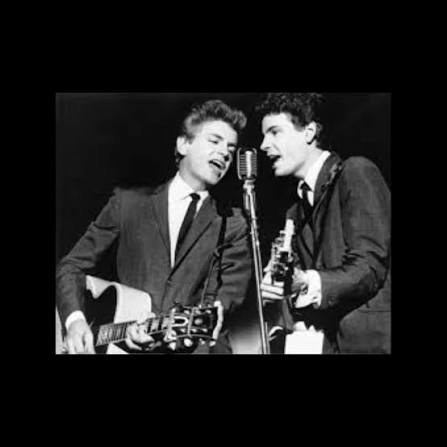
Released in the early 1960s, this gentle ballad turned a rainy day into one of music’s most unforgettable symbols of heartbreak. Yet decades later, its quiet message about hiding pain still feels painfully familiar to listeners around the world.
There are songs about heartbreak, and then there are songs that seem to understand the quiet loneliness that follows after the tears have already fallen.
Released in 1962, “Crying In The Rain” arrived during one of the most successful periods of The Everly Brothers, yet its emotional power feels just as intimate today as it did more than six decades ago.
Unlike many dramatic breakup songs of its era, this one never raises its voice, choosing instead to whisper its sadness through a melody so gentle that listeners almost forget how heartbreaking the lyrics truly are.
From the opening notes, the song creates the image of someone standing alone beneath a gray sky, carrying a broken heart that no one else can see.
The central idea is remarkably simple, as the narrator hides his tears in the rain so the world will never know how much pain he feels inside.
That single image became one of the most memorable metaphors in popular music, transforming ordinary weather into a shield for private sorrow.
Anyone who has ever tried to appear strong while quietly falling apart can instantly recognize themselves in those words.
The genius of the song lies in how little it tries to explain, allowing listeners to fill the empty spaces with their own memories and regrets.
Instead of telling a complicated story, it captures a universal feeling that crosses generations, cultures, and decades.
The Everly Brothers were already famous for their extraordinary vocal harmonies, but “Crying In The Rain” showcased those harmonies in a particularly moving way.
Their voices blend so naturally that it becomes difficult to tell where one ends and the other begins.
The result feels less like two singers performing and more like a single emotional voice speaking directly to the listener.
Every line carries a quiet vulnerability that perfectly matches the song’s theme of hidden sadness.
What makes the performance so effective is its restraint, because the brothers never push the emotion too hard.
They trust the melody, the lyrics, and the listener’s imagination to do most of the work.
That confidence gives the song a timeless elegance rarely found in modern recordings.
Part of the song’s lasting appeal also comes from its songwriting pedigree, having been written by the legendary team of Carole King and Howard Greenfield.
Their lyrics avoid clichés by focusing on a small human moment rather than grand declarations of heartbreak.
The rain becomes both a physical setting and an emotional companion, surrounding the narrator while protecting his secret.
As listeners, we are invited into that private world without ever feeling manipulated.
Yet even among the energetic hits of the early 1960s, “Crying In The Rain” stood apart because of its emotional maturity.
It understood that sadness does not always arrive with dramatic gestures or broken screams.
Sometimes heartbreak appears quietly, hidden behind a calm face and a forced smile.
That idea remains just as relevant today in a world where people often conceal their struggles behind carefully constructed images.
Many listeners continue to connect with the song because it expresses emotions they find difficult to put into words themselves.
Its message is not about overcoming pain immediately but about enduring it one day at a time.
There is something deeply human about that honesty, and it explains why the song continues to resonate with audiences decades later.
The production itself is beautifully understated, allowing the vocals to remain at the center of the experience.
Nothing feels excessive, and every musical element serves the emotional story being told.
The arrangement moves forward with a gentle confidence that mirrors the steady falling of rain outside a lonely window.
As the song unfolds, listeners become immersed in a mood rather than simply following a narrative.
That mood lingers long after the final note fades, which is one of the hallmarks of truly memorable music.
Many songs are enjoyed for a few minutes and then forgotten, but some remain attached to specific moments in our lives.
“Crying In The Rain” belongs firmly in that second category, quietly accompanying people through heartbreak, reflection, and healing.
Its enduring popularity proves that emotional truth never goes out of style, regardless of changing musical trends.
Even listeners discovering the song for the first time today can immediately understand the feeling at its core.
The image of hidden tears beneath falling rain remains as powerful now as it was in 1962.