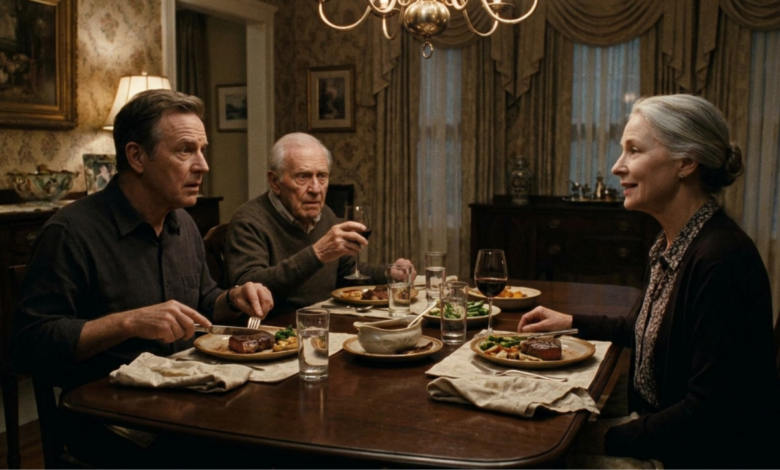
At 65, My Husband Gave Me 48 Hours to Leave After 40 Years of Marriage—But He Forgot I Owned 25% of His Company, and One Secret Destroyed His Perfect Plan…
**At 65, My Husband Gave Me 48 Hours to Leave After 40 Years of Marriage—But He Forgot I Owned 25% of His Company, and One Secret Destroyed His Perfect Plan**
Tonight, I had finally seen the last expression.
Fear.
“What agreement?” Walter asked.
I turned toward him.
“The one you signed in Attorney Michael Bennett’s office. The one Gerald signed right beside you. The one that has been sitting in a safe deposit box ever since.”
Walter placed his wineglass on the table.
“That was a private business matter.”
“Yes,” I replied. “It was.”
Gerald pushed his chair back slightly.
“Terry, don’t start playing games.”
I almost laughed. Games. That was an interesting word coming from a man who had apparently spent the morning arranging the end of a forty-year marriage without bothering to tell his wife.
“I’m not playing anything, Gerald. I’m simply wondering whether your lawyer knows about it.”
He stared at me. Then he looked at Walter. And in that brief exchange, I understood something important. They hadn’t forgotten the agreement. They had assumed I would never have the courage to mention it.
Walter cleared his throat.
“Whatever you think you have, Teresa, it doesn’t change the fact that the house belongs to Gerald.”
I nodded slowly.
“You’re right about the house.”
Gerald seemed relieved.
“Good. Then we understand each other.”
“No,” I said quietly. “We don’t.”
I stood, picked up my napkin, and placed it beside my plate.
“Thank you for dinner.”
Gerald looked irritated.
“Where are you going?”
“To bed.”
“You have forty-eight hours.”
“I heard you the first time.”
I walked out of the dining room. Behind me, I heard Walter mutter something about ungrateful women. Then Gerald said something I couldn’t quite make out. I didn’t turn around.
For the first time in forty years, I wasn’t interested in hearing what they had to say about me. I had something more important to do.
I went upstairs to our bedroom, closed the door, and sat on the edge of the bed. The room was exactly as I had left it that morning. Gerald’s shirts hung neatly on the left side of the closet. My dresses were on the right. His expensive watches sat inside the wooden display case he had received for his sixtieth birthday.
On the dresser was a framed photograph from our wedding. I was twenty-five years old in that photograph. My hair was longer, my smile was enormous, and Gerald was holding my hand as though he never intended to let go.
I studied the photograph for a long time. Then I turned it facedown.
I wasn’t angry because our marriage was ending. I was angry because I had spent so many years believing that loyalty meant accepting whatever someone decided to give me. I had confused being needed with being loved. And now, at sixty-five, I was finally learning the difference.
I opened the bottom drawer of my dresser and removed a small key. It was attached to a faded blue ribbon. Three years earlier, I had placed that key inside a small envelope with a handwritten note. I had told myself that I would never need it. But I had kept it anyway. Somewhere inside me, I must have known that one day Gerald would forget the difference between my kindness and my weakness.
I took out my phone and called the only person who knew the entire story.
“Michael?”
A familiar voice answered.
“Teresa? Is everything all right?”
“No,” I said. “But I think it’s finally time.”
There was a pause. Then he asked the question I had been expecting.
“Did Gerald file?”
“Yes. He gave me forty-eight hours to leave.”
Michael exhaled slowly.
“I see.”
“And Walter was there.”
“That doesn’t surprise me.”
I looked toward the bedroom door.
“Michael, they think I have nothing.”
He was quiet for a moment.
“Then perhaps it’s time they learned what they signed.”
I closed my eyes.
“Can you meet me tomorrow morning?”
“Of course. Bring the blue binder.”
I looked down at the key in my hand.
“I will.”
Before ending the call, Michael said something that made me sit perfectly still.
“Teresa, there’s one more thing. I received a call from Gerald’s attorney this afternoon.”
My stomach tightened.
“What did he want?”
“He was asking about the ownership structure of Whitfield & Son Construction.”
I frowned.
“Why?”
“Because Gerald is preparing to transfer some company assets before the divorce proceedings begin.”
I stared at the wall.
“Can he do that?”
“Not without creating a serious problem for himself.”
I swallowed.
“Michael, what kind of assets?”
He paused.
“That’s exactly what I want to discuss tomorrow.”
When the call ended, I sat in the dark for several minutes. Downstairs, I could hear Gerald and Walter talking. They sounded relaxed. They were probably discussing how quickly they could get my belongings out of the house. Perhaps they were already deciding which room would become Walter’s permanent office.
They had no idea that the woman they were planning to remove from their lives had spent three decades keeping their business alive. And they had no idea that I had saved every document. Every signature. Every transfer. Every promise.
I opened the drawer again and removed a small notebook. On the first page, written in my handwriting, were three words:
Everything is documented.
I placed it inside my handbag. Then I went to sleep. For the first time in years, I slept without worrying about whether Gerald had taken his evening medication, whether Walter needed another prescription, or whether the company payroll had been processed. I slept like a woman who had finally given herself permission to stop carrying everyone else’s burdens.
The following morning, Gerald was already in the kitchen when I came downstairs. He was drinking coffee and scrolling through his phone. He didn’t look up.
“Morning.”
I opened the refrigerator.
“Good morning.”
“I assume you’ve started packing.”
I poured myself a glass of orange juice.
“I have an appointment.”
He finally looked at me.
“With whom?”
“Michael Bennett.”
His expression hardened.
“Why are you going to see him?”
“Because he’s my attorney.”
Gerald gave a short laugh.
“Teresa, you don’t need an attorney. My lawyer has already prepared everything. You’ll receive a fair settlement once you sign the papers.”
I looked at him.
“Your lawyer prepared a settlement without speaking to me?”
“That’s how these things work.”
“No, Gerald. That’s how you wanted this one to work.”
He put his coffee down.
“Don’t make this more difficult than it needs to be.”
I picked up my handbag.
“You keep saying that.”
“Because you’re not listening.”
I walked toward the door. Then I stopped.
“Gerald?”
“What?”
“Did you tell your lawyer about the agreement from three years ago?”
His jaw tightened.
“Stop bringing that up.”
“Why?”
“Because it has nothing to do with this divorce.”
I smiled faintly.
“Then you shouldn’t have anything to worry about.”
I left before he could answer.
Michael Bennett’s office was in downtown Pittsburgh, on the seventh floor of an old brick building. I had known him for twenty-two years. He had handled our company’s original incorporation documents, reviewed several major contracts, and helped us establish the legal structure that eventually allowed Whitfield & Son Construction to grow beyond a small family business.
He was seventy-one now, with silver hair, reading glasses, and the kind of calm voice that made people feel they were being heard.
When I entered his office, he stood and shook my hand.
“Teresa.”
“Michael.”
He closed the door behind me.
“Sit down. Tell me exactly what happened.”
I explained the dinner, the divorce papers, the forty-eight-hour ultimatum, and Walter’s comments. Michael listened without interrupting. When I finished, he leaned back in his chair.
“Did you sign anything other than the acknowledgment?”
“No.”
“Good.”
He nodded.
“Did Gerald tell you why he suddenly wants a divorce?”
“No. He simply announced it.”
Michael removed a pair of glasses from his desk.
“Did you notice anything unusual about his behavior recently?”
I thought about it. For the past six months, Gerald had been taking more phone calls outside the house. He had started locking his office door. Several times, I had asked about company expenses, and he had brushed me off. He had also been unusually interested in our personal financial documents.
“I noticed changes,” I said. “But I didn’t know what they meant.”
Michael opened a folder.
“I think we’re about to find out.”
He turned his computer toward me. On the screen was a document titled:
WHITFIELD & SON CONSTRUCTION — PROPOSED ASSET TRANSFER
I leaned closer. There were several transactions listed. A commercial property. Two company vehicles. A warehouse. And a transfer involving a subsidiary company I recognized immediately.
My heart began beating faster.
“Michael, what is this?”
He pointed to the last page.
“Gerald has been preparing to move several assets into a separate company.”
“Who owns that company?”
“That’s the interesting part.”
He clicked another document. The company was registered under a name I had never heard before. But the registered manager was someone I recognized. Gerald’s younger brother, Richard.
I shook my head.
“Richard hasn’t worked for the company in years.”
“Correct.”
“Why would Gerald transfer assets to him?”
Michael folded his hands.
“That’s what we’re investigating.”
I stared at the screen. Then something occurred to me.
“Does this have anything to do with the agreement?”
Michael opened a blue binder.
“Everything.”
He placed it in front of me. The binder was worn around the edges. I remembered buying it at an office-supply store nearly three years earlier. Inside were the original documents from a meeting that had changed the structure of our family business.
At the time, Gerald had been experiencing serious financial problems. A major commercial project had gone wrong. One of the company’s contractors had failed to complete work on schedule, and several clients had withheld payments. The company owed money. Payroll was due. Suppliers were demanding payment.
Gerald had come home one night looking like a man who had lost everything. He sat at our kitchen table and buried his face in his hands.
“Terry, I don’t know what to do.”
I had never seen him like that. He told me the company might not survive. Walter had been furious, blaming Gerald for poor management. Richard refused to help.
I was the one who stayed awake that night reviewing the accounts. I discovered that the company had enough valuable contracts and receivables to survive, but it needed restructuring and immediate financial support. I contacted Michael. I helped prepare the documents. I arranged meetings with the bank. And I used my personal savings to cover several urgent expenses.
At first, Gerald promised to repay everything. Then he said he would give me a formal ownership interest in the company. Walter had objected.
“She is your wife, Gerald. Why does she need to be listed in the business?”
I remembered my response.
“Because I’m not asking for a gift. I’m asking for recognition of what I’ve contributed.”
Walter had stared at me as if I had insulted him. But Gerald had eventually agreed. The agreement was signed in Michael’s office. It established my ownership interest and protected certain assets from being transferred without my written consent.
I remembered the exact moment Gerald signed. He had looked at me and said:
“This is just paperwork, Terry. We’re family. You don’t need to worry about any of it.”
I had smiled. I trusted him.
Michael turned a page.
“Teresa, your ownership interest is twenty-five percent.”
I nodded.
“I remember.”
“But there’s something else.”
He placed another document in front of me. I looked at the signature page. Gerald’s name. Walter’s name. And mine.
Below the signatures was a clause I had read three times before signing. It stated that if the company attempted to transfer substantial assets without proper approval, the affected transactions could be challenged, and the parties responsible could face financial and legal consequences.
Michael tapped the page.
“Gerald knew about this provision. Walter knew about it too.”
I looked up.
“Then why would they attempt to transfer the assets?”
Michael didn’t answer immediately. Instead, he opened another folder. Inside were bank statements, accounting reports, and a series of financial transactions.
I began reading. At first, the numbers didn’t make sense. Then I saw a payment. $185,000. Another. $240,000. Another. $310,000. All transferred over several months to companies connected to Richard.
My mouth went dry.
“Michael, what are these payments?”
He looked at me.
“I believe Gerald has been moving company money through related entities.”
I read the figures again.
“Is this legal?”
“Not necessarily. We need to examine the purpose and documentation behind every transaction.”
I put the papers down.
“Why didn’t anyone tell me?”
Michael’s expression softened.
“Because they believed you were no longer involved in the financial decisions.”
I felt something inside me break. Not because of the money. Not even because of the divorce. But because I understood what had happened. They had used my work when they needed it. They had used my savings when the company was in danger. They had used my knowledge when they were desperate. And once the business became successful, they had slowly pushed me away until I became nothing more than the woman who prepared dinner.
I looked at Michael.
“What happens now?”
He closed the folder.
“First, we preserve every document. Second, we formally respond to the divorce filing. Third, we investigate the transfers. And fourth, we make sure no company property is disposed of while the ownership issues remain unresolved.”
I nodded. Then I asked something that had been troubling me since dinner.
“Michael, can they really make me leave the house in forty-eight hours?”
He shook his head.
“No. Not simply because Gerald says so. The legal process matters. Your rights depend on the property ownership, applicable law, and the circumstances of the marriage. But a dinner-table ultimatum is not a court order.”
For the first time that morning, I felt my shoulders relax. I wasn’t powerless. I had simply been treated as though I was.
Michael handed me a glass of water.
“There’s something else I need to ask.”
“What?”
“Do you still have the original financial records from the early years of the company?”
I thought about the filing cabinets in our basement. The old invoices. The payroll books. The bank correspondence. The contracts. I had kept everything. Gerald used to tease me about it.
“You save too much paper, Terry. Nobody needs all those old records.”
I had never thrown them away.
“Yes,” I answered. “I have them.”
Michael nodded slowly.
“Then I think we’re going to need them.”
When I returned home that afternoon, Gerald’s car was parked in the driveway. I walked through the front door and heard voices coming from his office. The door was partially open. I wasn’t trying to listen. But then I heard my name.
“She doesn’t know anything,” Gerald said.
I stopped. A second voice answered. Walter.
“You’d better make sure she doesn’t find out.”
“She won’t. She’s already signed the acknowledgment.”
“That’s not what I’m talking about.”
There was a pause. Then Walter spoke again.
“What about the twenty-five percent?”
My heart began beating harder. Gerald lowered his voice.
“I’m dealing with it.”
“You said that last month.”
“I said I’m dealing with it, Father.”
“What if she brings Bennett into this?”
Gerald laughed nervously.
“She won’t. Teresa doesn’t understand how these things work anymore.”
I stood completely still. Then Walter said something that made my blood run cold.
“You should have done this years ago. Before she started thinking she was part of the company.”
I closed my eyes. Forty years. Forty years of believing I was part of a family. And apparently, they had been discussing how to remove me for years.
I quietly stepped away from the office. I didn’t confront them. I didn’t cry. I went upstairs, changed my clothes, and began sorting through my belongings. Not because I accepted their forty-eight-hour deadline. But because I wanted to know exactly what I owned, what I needed, and what I was willing to leave behind.
I packed my personal photographs. My mother’s jewelry. My old letters. The little wooden box containing the first birthday card Naomi had ever made for me. Then I opened the closet and found a dress I hadn’t worn in years. It was blue, simple, and beautiful. Gerald had once told me I looked like the woman he fell in love with whenever I wore it.
I held it against myself. For a moment, I wondered whether that man had ever truly existed.
My phone vibrated. It was a message from Naomi.
Mom, Dad called me. What’s happening? He says you’re making the divorce difficult. Please call me.
I stared at the message. Naomi was our only daughter. She was thirty-eight, married, and living outside Philadelphia. She had always been closer to Gerald. Not because she didn’t love me, but because Gerald had spent years making sure he was the parent who appeared at important events. He paid for the expensive gifts. He attended the charity dinners. He told everyone he had built the company from nothing. I had been the woman standing behind him.
When Naomi graduated from university, Gerald gave the speech. When she married Daniel, Gerald welcomed the guests. When she had her first child, Gerald bought the expensive crib. I had done the planning, the shopping, the cooking, the cleaning, and the countless little things nobody remembered. But I never complained. I wanted my daughter to have a happy family.
I typed a response.
Your father and I are getting divorced. I will explain everything when we speak. Please don’t take sides before you know the truth.
She replied almost immediately.
Dad says you want money from the company.
I closed my eyes. There it was. He had already started telling his version. I wrote back.
I want what I legally contributed to and what I worked for. That’s all.
Then I put my phone down. I wasn’t going to fight with my daughter through text messages. I would let the documents speak.
That evening, Gerald came upstairs. He stood in the bedroom doorway, looking at the suitcases.
“What are you doing?”
“Organizing my things.”
He frowned.
“You’re actually leaving?”
“I haven’t decided where I’m going yet.”
He looked relieved.
“Good. Then perhaps we can avoid unnecessary drama.”
I continued folding a sweater.
“Gerald, why are you doing this?”
He sighed.
“Because things haven’t been working for a long time.”
“Forty years?”
“Don’t exaggerate.”
I turned toward him.
“Do you remember the night the company almost collapsed?”
His expression changed.
“Why are you bringing that up?”
“Because I do.”
“Terry, that was years ago.”
“I remember the kitchen table. I remember you crying. I remember the money I put into the company. I remember the bank appointments, the contracts, and the agreement you signed.”
He rubbed his forehead.
“Here we go again.”
I looked directly at him.
“Did you ever intend to honor that agreement?”
He didn’t answer. Instead, he walked toward the dresser and picked up his watch.
“I’m not discussing business with you.”
“Then why did you make me part of the business when you needed me?”
He stopped. For a few seconds, neither of us spoke. Then he said something I will never forget.
“Because you were my wife.”
I stared at him.
“That was your answer?”
He shrugged.
“You helped because you wanted to help. I never forced you.”
I felt tears forming, but I refused to let them fall.
“No. You didn’t force me. I loved you.”
He looked uncomfortable.
“Don’t make this emotional.”
I almost laughed. A man ending a forty-year marriage was asking me not to make it emotional. I turned away.
“Good night, Gerald.”
He remained in the doorway.
“You have until tomorrow evening.”
I continued folding my clothes.
“Then I suppose you should make the most of the time.”
He left. I heard his footsteps disappear down the stairs. Then I heard him call Walter. I couldn’t make out the conversation. But I heard one sentence clearly.
“She’s not going to be a problem.”
I sat on the bed. And for the first time, I wondered whether Gerald understood that the woman he had spent forty years underestimating was no longer afraid of losing him.
The next morning, Michael called.
“Teresa, I have an update.”
I was sitting at the kitchen table with a cup of tea.
“What is it?”
“We received a response from Gerald’s attorney.”
“And?”
“He is claiming that your twenty-five percent ownership interest is invalid.”
I closed my eyes.
“On what grounds?”
“He claims you signed the agreement under circumstances that did not create a legitimate ownership transfer.”
I looked toward the window. Rain was falling again.
“That’s ridiculous. I remember signing it.”
“I know. And we have the original document. But there’s another development.”
“What now?”
Michael hesitated.
“Gerald has requested an emergency meeting with the company’s board.”
I straightened.
“Why?”
“To approve the asset transfers we’ve been discussing.”
“Can he do that without me?”
“That depends on the governing documents and the nature of the transactions. But we have grounds to challenge any attempt to bypass your rights.”
I looked at the blue notebook beside my tea.
“What do you need from me?”
“Everything you have from the company’s early years. Especially the financial records showing your contributions.”
I nodded.
“I’ll bring them.”
“Good. And Teresa?”
“Yes?”
“Don’t confront Gerald about the transfers yet.”
“Why?”
“Because I want to understand where the money went before we make our next move.”
I agreed. But after ending the call, I couldn’t stop thinking about the money. Three years earlier, I had helped save the company. Now, Gerald was attempting to remove me while transferring its assets elsewhere. It wasn’t simply a divorce anymore. Something much larger was happening. And I had a feeling the truth was going to be far worse than I imagined.
That afternoon, Naomi arrived unexpectedly. She walked into the house carrying a small handbag and wearing the same expression she had when she was a teenager and believed she was about to receive bad news.
“Mom?”
I stood from the sofa.
“Naomi.”
She hugged me, but the embrace was brief.
“Dad said you were packing.”
“I am.”
“Why?”
“Because your father wants a divorce.”
She looked down.
“He told me.”
I waited. Then she said, “He also said you were demanding a large amount of money.”
I sat down.
“Naomi, do you remember when the company was struggling three years ago?”
She nodded.
“A little.”
“Your father came to me for help. I used my personal savings. I worked with the bank. I helped restructure the business. And I signed an agreement giving me twenty-five percent ownership.”
Naomi looked surprised.
“Twenty-five percent?”
“Yes.”
“Dad never told me that.”
“I know.”
She sat opposite me.
“But why would he give you part of the company?”
I studied my daughter’s face. Because I had saved it, I wanted to say. Because I worked for it. Because I was there when everyone else walked away. Instead, I answered gently.
“Because I earned it.”
Naomi looked uncomfortable.
“Mom, I don’t want to get involved in your marriage.”
“You don’t have to.”
“Dad says you changed. He says you’ve become obsessed with money and control.”
I felt a familiar ache in my chest.
“Naomi, have you ever wondered why I stopped attending company dinners?”
She frowned.
“No.”
“Because I wasn’t invited anymore.”
She said nothing.
“Have you ever wondered why your father started introducing me as someone who helped around the office instead of someone who helped build the business?”
Her eyes moved toward the floor.
“Mom…”
“I didn’t tell you because I didn’t want you caught between us.”
She swallowed.
“Are you saying Dad used you?”
I took a breath.
“I’m saying I spent forty years loving a man who slowly convinced everyone that my contributions didn’t matter.”
Naomi looked at me for a long time. Then she reached across the table and took my hand.
“Why didn’t you tell me?”
I smiled sadly.
“Because I thought protecting my family meant staying quiet.”
Her eyes filled with tears. Before she could answer, Gerald entered the room. He stopped when he saw us holding hands.
“Naomi. I didn’t know you were coming.”
“I wanted to see Mom.”
Gerald looked at me.
“Have you been telling her about the company?”
I released Naomi’s hand.
“She asked.”
He shook his head.
“This is exactly what I didn’t want. You’re dragging our daughter into a business dispute.”
Naomi stood.
“Dad, she wasn’t dragging me into anything.”
Gerald looked surprised.
“Excuse me?”
“I came here because you told me she was demanding money. I wanted to hear her side.”
He looked at me. Then he looked back at Naomi.
“Your mother is making this much more complicated than it needs to be.”
Naomi folded her arms.
“Then show me the agreement.”
Gerald went completely still.
“What?”
“The ownership agreement. If Mom is wrong, show me the documents.”
For a moment, I thought he might shout. Instead, he gave a cold smile.
“You don’t understand the business, Naomi.”
“Then explain it to me.”
He looked at her as though she had betrayed him. Finally, he turned and walked toward his office.
“I have work to do.”
Naomi watched him disappear. Then she turned toward me.
“Mom, I think there’s something Dad isn’t telling us.”
I nodded.
“I think so too.”
She looked at the suitcases beside the staircase.
“Are you really going to leave?”
I reached for her hand.
“Naomi, I spent most of my life making sure everyone else had somewhere to belong. Now I need to make sure I have somewhere to belong too.”
She began to cry. And for the first time since the divorce announcement, I allowed myself to cry with her.
That evening, Michael sent me a message. It contained a scanned document. The subject line read:
URGENT — ADDITIONAL COMPANY RECORD
I opened the attachment. It was a bank authorization form dated six months earlier. The account belonged to Whitfield & Son Construction. The transaction amount was $1,750,000.
I read the name of the receiving company. Then I read it again. The company was not registered under Richard’s name. It was registered under the name of a woman. A woman I had never met. But the signature authorizing the transaction was unmistakable. Gerald Whitfield.
I called Michael immediately.
“Michael, who is this woman?”
“I was hoping you could tell me.”
“I’ve never seen her before.”
“Her name is on several documents. We are trying to identify her relationship to the company.”
I stared at the screen.
“Why would Gerald send almost two million dollars to a company owned by a stranger?”
Michael lowered his voice.
“Teresa, I don’t think she’s a stranger to him.”
My stomach tightened.
“What do you mean?”
“I found another document.”
He paused.
“It’s a property purchase agreement.”
I sat down.
“Where?”
“Outside Pittsburgh. A large residential property.”
“Who bought it?”
“Gerald.”
I looked at the bank authorization again. Then Michael added something that made the room seem suddenly smaller.
“The property was purchased using funds connected to the same company receiving those transfers.”
I couldn’t speak.
“Teresa, there’s more.”
I gripped the phone.
“What?”
“The woman listed on the property documents is also listed as the emergency contact on Gerald’s private insurance policy.”
I felt my fingers go numb. Michael continued.
“Her name is on the paperwork as his spouse.”
For several seconds, I couldn’t hear anything except the rain against the windows. Then I whispered:
“Michael… Gerald is already married?”
“Not according to the records we’ve reviewed so far. But we need to investigate exactly what this document represents.”
I stared at the kitchen wall. Forty years. Forty years of marriage. And perhaps, while I was taking care of his father, preparing his meals, and keeping his company alive, Gerald had been building another life. A second home. A second financial arrangement. Possibly another woman.
I didn’t know yet. But I knew one thing. The divorce papers on our dining table were not the beginning of this betrayal. They were simply the moment Gerald believed he could finally get away with it.
Then my phone vibrated again. This time, it was a message from an unknown number. There was no greeting. No explanation. Just one sentence.
Teresa, if you want to know why Gerald is divorcing you now, meet me tomorrow. Come alone. I have something you need to see about your husband—and your father-in-law.
Below the message was a photograph. I opened it. My breath caught. It showed Gerald standing outside a restaurant, holding hands with a woman. But it wasn’t the woman from the property documents who frightened me. It was the person standing beside them. Walter.
My ninety-one-year-old father-in-law was smiling at the woman as though he had known her for years. And in her arms was a little boy. A boy who looked remarkably like Gerald.
I enlarged the photograph. Then I noticed the date printed beneath it. Three months before Gerald told me he wanted a divorce.
I slowly lowered my phone. For the first time, I understood that the divorce might not be about getting rid of an inconvenient wife. It might be about protecting a secret. And if that secret was what I suspected, then the truth could destroy far more than a forty-year marriage. Because the little boy in that photograph was wearing a jacket with the Whitfield family crest embroidered on the chest.
—
I stared at the photograph until my eyes began to hurt. The little boy was perhaps five or six years old. He had dark brown hair, Gerald’s narrow eyes, and the same small dimple that appeared whenever Gerald smiled. I knew that dimple. I had seen it on our wedding day, in photographs from family vacations, and on the face of our daughter when she was a little girl. There was no mistaking it. The boy looked like a Whitfield.
But what frightened me most wasn’t the possibility that Gerald had another child. It was Walter. My ninety-one-year-old father-in-law was standing beside that woman, smiling at the child as though he were proudly welcoming another member of the family.
I looked at the photograph again. Then I called Michael. He answered after two rings.
“Teresa?”
“Michael, I received a photograph.”
“What photograph?”
I sent it to him. There was silence on the other end. Finally, he spoke.
“Where did you get this?”
“An unknown number. Someone wants to meet me tomorrow.”
“Do not go alone.”
“They specifically told me to come alone.”
“I don’t care what they told you. We don’t know who this person is or what they’re trying to accomplish.”
I sat down.
“Michael, do you think that boy is Gerald’s son?”
“I don’t know. A photograph isn’t proof of paternity.”
“But why would Walter be there?”
“That’s the question we need answered.”
I closed my eyes.
“Michael, I want the truth.”
“And you’ll get it. But promise me you won’t sign anything, transfer any money, or confront Gerald until we understand what’s happening.”
“I promise.”
He paused.
“Teresa, there’s something else. I reviewed the $1.75 million transfer again. The receiving company was established less than a year ago. Its registered address is connected to the property in that photograph.”
I felt sick.
“So the money went toward buying that house?”
“That’s one possibility. We are still tracing the transactions.”
I looked at the clock. It was almost eleven.
“Michael, tomorrow I’m meeting the person who sent the photograph.”
“Then we’ll arrange for someone to accompany you nearby. You don’t have to handle this alone.”
After we ended the call, I remained at the kitchen table. I thought about all the birthdays, Christmas dinners, family vacations, and ordinary evenings I had shared with Gerald. I thought about Walter sitting at my dining table, complaining about his medication, asking me to prepare his favorite meals, and calling me an outsider when it suited him. And I thought about Naomi. Our daughter deserved the truth. But I wasn’t ready to destroy her understanding of her father with a photograph and a suspicion. I needed evidence. I needed answers. And I needed to know how far the betrayal went.
The following morning, I drove to a small coffee shop near the river. Michael had arranged for a private investigator to remain nearby. I didn’t know exactly where he was sitting, but knowing someone was close gave me some comfort.
At 10:05, a woman entered. She was perhaps forty years old, with shoulder-length blonde hair and a gray coat. She looked around the room before approaching my table.
“Mrs. Whitfield?”
“Yes.”
“My name is Laura Bennett.”
She sat opposite me. I studied her face.
“Are you the person who sent me the photograph?”
She nodded.
“I’m sorry for contacting you this way.”
“Who is the woman in the photograph?”
Laura lowered her eyes.
“Her name is Vanessa Cole.”
“And the boy?”
“His name is Ethan.”
I waited. Laura took a breath.
“Ethan is Gerald’s son.”
My fingers tightened around my coffee cup.
“How old is he?”
“Six.”
Six years. I had been married to Gerald for forty years. I had celebrated our thirty-fourth wedding anniversary while another woman was raising his child. I had been caring for Walter. I had been helping run the company. And somewhere during those years, Gerald had been building a second family.
I looked at Laura.
“How long have you known?”
“I’ve been working as an accountant for one of the companies connected to Vanessa’s property.”
“Why are you telling me?”
Laura hesitated.
“Because I discovered something in the financial records.”
“What?”
“The money used to support Vanessa and Ethan was coming from Whitfield & Son Construction.”
I felt my stomach turn.
“How much?”
“I don’t know the complete amount. But I found several transfers totaling more than $1.7 million. There were also payments for school fees, medical expenses, travel, and the property.”
I stared at her.
“Did Gerald approve them?”
“Yes.”
“Did Walter know?”
Laura looked directly at me.
“He knew everything.”
I leaned back. For a moment, the coffee shop seemed to disappear around me. Then I asked the question that mattered most.
“Why send me the photograph now?”
Laura opened her handbag and removed a small folder.
“Because Gerald is preparing to move the remaining money out of the company. Vanessa has been told that once the divorce is finalized, she and Ethan will receive a substantial settlement.”
I looked at the folder.
“What does that have to do with me?”
Laura pushed it toward me.
“Your ownership interest.”
I opened it. Inside were copies of financial statements, transfer records, and internal emails. One email was dated four months earlier. The subject line read:
TERESA — OWNERSHIP RESOLUTION
I read it twice. The message had been sent by Gerald to his attorney. It said that my twenty-five percent ownership interest needed to be eliminated before any major restructuring could take place. Another email contained Walter’s response.
She has no idea what she’s entitled to. Make sure the divorce is completed before she starts asking questions.
I put the papers down. Laura continued.
“There’s another reason I contacted you.”
“What?”
She looked nervous.
“Vanessa doesn’t know the full story either.”
I frowned.
“What do you mean?”
“She believes Gerald is financially independent and that the money he gives her comes from his personal wealth. She doesn’t know that the company funds are connected to your ownership interest.”
I stared at her.
“Are you telling me she believes she’s building a life with a wealthy businessman?”
Laura nodded.
“She was told the divorce was already being arranged.”
I looked out the window. A bus passed. People hurried along the sidewalk, carrying coffee and talking on their phones. The world continued as though nothing had happened. But my life had changed completely.
I looked back at Laura.
“Do you have original records?”
“Yes. I have copies of the accounting reports and the emails. I’ve also preserved the documents showing the payments.”
“Why would you risk your job?”
Laura’s eyes filled.
“Because I have a father who lost his retirement savings after trusting a company executive who manipulated the books. I know what happens when people believe financial wrongdoing will simply disappear.”
She paused.
“And because I don’t think you deserve to be blamed for something you didn’t do.”
I looked down at the folder. For the first time in two days, I felt something other than pain. I felt determination.
“Laura, I need you to give these documents to my attorney.”
She nodded.
“I already made arrangements.”
Then she reached into her handbag one more time.
“There is something else you should know about Walter.”
I looked up.
“What?”
“He wasn’t just aware of Gerald’s relationship with Vanessa.”
Laura lowered her voice.
“He helped establish the company that received the money.”
I felt cold.
“What?”
“He is listed as an original organizer of the company. Gerald is listed as its financial controller.”
I slowly closed the folder. Walter had not simply watched his son betray his wife. He had helped arrange the financial structure that made it possible. For forty years, I had believed that man was difficult, demanding, and unkind. I had never imagined he would deliberately help dismantle the family business while I was still working to protect it.
I stood.
“Thank you, Laura.”
She nodded.
“I’m sorry.”
I looked at her.
“Don’t apologize for telling the truth.”
Then I walked outside. My phone rang almost immediately. It was Michael.
“Teresa, are you finished?”
“Yes.”
“Good. Come to my office. There’s something we need to discuss before Gerald’s board meeting.”
At Michael’s office, I found three large folders on the conference table. He was sitting with another attorney and a forensic accountant. I recognized the accountant’s name from the company’s earlier financial reviews.
“Teresa,” Michael said, “we’ve made some progress.”
I sat down.
“Tell me.”
The forensic accountant opened the first folder.
“We reviewed the company’s bank statements, invoices, and transfer records. We identified several payments that appear to have been made for purposes unrelated to legitimate business operations.”
“How much?”
He adjusted his glasses.
“The transactions currently under review total approximately $2.3 million.”
I closed my eyes. Two-point-three million dollars. Money that should have remained in the company. Money that could have paid employees, suppliers, and contractors. Money connected to a business I had helped save.
Michael continued.
“Some transactions were disguised as consulting fees. Others were described as property expenses and management services.”
“Who authorized them?”
“Most were approved by Gerald. Several documents also contain Walter’s authorization.”
I looked at the second folder.
“What about my ownership?”
Michael opened it.
“Your twenty-five percent interest was properly documented. The original agreement was signed by all relevant parties, and we have supporting correspondence.”
He placed another paper in front of me. It was a letter from Gerald. Three years earlier, he had written:
Teresa’s financial contributions and operational involvement were essential to the company’s recovery. Her twenty-five percent ownership interest reflects her contribution and is intended to remain protected under the company’s governing agreement.
I stared at the words. It was strange. The man who had told me I contributed nothing had once written down exactly how much I mattered.
Michael watched me.
“This is important evidence.”
I nodded.
“What happens now?”
“We will challenge the attempted asset transfers and seek appropriate court orders to preserve the company’s property. We will also respond to the divorce proceedings and protect your financial interests.”
“Will I lose the company?”
He shook his head.
“Not simply because Gerald wants you gone.”
I looked at the financial reports.
“Can the money be recovered?”
“Some of it may be. That will depend on where it went and what the investigation establishes.”
I sat quietly for a moment. Then I asked:
“What about Vanessa?”
Michael folded his hands.
“She may be a witness. Whether she knew about the source of the money is something we need to establish.”
I nodded.
“I don’t want to punish a child.”
Michael’s expression softened.
“No one is suggesting that.”
“Ethan is innocent.”
“Absolutely.”
I looked at the photograph again. That little boy hadn’t asked to be born into a secret. He hadn’t stolen anything. He wasn’t responsible for his father’s decisions. And whatever happened next, I wanted to make sure he wasn’t used as a weapon in an adult conflict.
I looked at Michael.
“I want everything handled properly. I don’t want revenge. I want the truth, and I want what belongs to me.”
Michael nodded.
“That’s exactly what we’ll pursue.”
That afternoon, Gerald called.
“Where are you?”
“At an appointment.”
“With Bennett?”
I didn’t answer. He sighed.
“Teresa, this is getting ridiculous.”
“What is?”
“You involving lawyers in everything.”
I almost smiled.
“You involved a lawyer when you filed for divorce.”
“That’s different.”
“How?”
He became irritated.
“Because I’m trying to end a marriage, not destroy a business.”
I looked at the folder on my desk.
“Then why are you transferring company assets?”
Silence. A long silence. Finally, he said:
“Who told you that?”
I closed my eyes.
“Does it matter?”
“Yes, it matters.”
“Gerald, I have the documents.”
His voice changed.
“What documents?”
“The bank transfers. The company records. The property transactions.”
I heard him breathe heavily. Then he said something that confirmed everything.
“You had no right to access those records.”
I stared at the phone.
“No right?”
“You’re not running the company anymore.”
“I own twenty-five percent.”
“That’s being disputed.”
“Then let the lawyers settle it.”
He raised his voice.
“Listen to me, Terry. You need to understand that you are making a terrible mistake.”
I remained calm.
“No, Gerald. I made a mistake forty years ago.”
“What?”
“I believed that loving you meant I had to accept being invisible.”
He said nothing. I continued.
“I won’t make that mistake again.”
Then I ended the call.
Two days later, I received a formal notice from Michael. A court had granted temporary relief preventing certain company assets from being transferred while the ownership dispute and financial concerns were examined. It wasn’t the final decision. But it meant Gerald couldn’t simply move everything out of the company while the case was pending.
That evening, Gerald came home furious. He threw a copy of the notice onto the kitchen counter.
“What have you done?”
I was preparing tea. I looked at the document.
“Michael sent me a copy.”
“You’ve frozen the company!”
“No. The court has ordered certain transactions to be restricted while the dispute is reviewed.”
“You’re going to ruin everything!”
I put down the kettle.
“Gerald, I didn’t transfer $2.3 million.”
He stared at me.
“Those were legitimate expenses.”
“Then you should have no difficulty explaining them.”
He stepped closer.
“You think you’re clever because you have a few old papers?”
“No.”
“Then what?”
I looked directly at him.
“I think I’m entitled to the same respect you demanded from everyone else.”
He shook his head.
“You’re going to regret this.”
I didn’t answer. He walked away. But this time, I noticed something different. He wasn’t angry because I had embarrassed him. He was frightened because his control was slipping.
The following week, Naomi came to visit again. She brought her husband, Daniel, and their two children. I was surprised to see them all standing at the front door.
“Mom,” Naomi said, “we wanted to spend some time with you.”
I hugged her. Then I hugged my grandchildren. For the first time in several days, the house felt warm. Daniel helped the children put their coats away. Naomi came into the kitchen.
“Mom, can we talk?”
I nodded. She sat down.
“I spoke with Dad.”
I poured her some tea.
“And?”
“He told me the company records were taken out of context. He said the money was part of a business arrangement.”
I listened.
“But then I spoke to someone who used to work in the accounting department.”
I looked up.
“Who?”
“An old employee. He said you were the person who handled payroll and supplier payments for years. He said you practically ran the office.”
I smiled faintly.
“That’s kind of him.”
Naomi shook her head.
“Mom, why didn’t you ever tell me how much you did?”
I looked at her.
“Because I thought your father would eventually tell you himself.”
She began crying.
“I believed him when he said you were only helping occasionally.”
I reached across the table.
“Naomi, you were a child. You didn’t know.”
“But I should have asked.”
I squeezed her hand.
“We cannot change what we didn’t understand at the time.”
She wiped her eyes.
“There’s something else.”
“What?”
“I saw the photograph.”
My heart tightened.
“Who showed you?”
“Dad accidentally left his phone open when he visited. I saw a picture of him with Vanessa and Ethan.”
I looked down. Naomi continued.
“Mom, is Ethan really Dad’s son?”
“I don’t know what has been legally established. But there is evidence suggesting it.”
She covered her mouth.
“And Grandpa knew?”
I nodded. She looked devastated.
“Why would they do this to you?”
I took her hand.
“Sometimes people become so concerned with protecting what they want that they stop caring about the people they hurt.”
Naomi leaned forward and hugged me.
“I’m sorry, Mom.”
I held her tightly. For forty years, I had tried to protect my family from uncomfortable truths. Now my daughter was finally beginning to understand why silence had hurt us all.
A week later, Gerald’s attorney contacted Michael. They wanted to discuss a settlement. Michael asked me to come to his office. When I arrived, he explained the proposal.
“Gerald is offering you $150,000 in exchange for relinquishing your twenty-five percent ownership interest and agreeing not to pursue claims connected to the disputed transactions.”
I stared at him.
“One hundred and fifty thousand?”
“Yes.”
I almost laughed. I had spent years keeping financial records, managing payroll, helping the company survive, and contributing my own savings. The company was worth considerably more than that. And they wanted me to disappear for $150,000.
“What did you tell them?”
“I told them we would review the proposal.”
I looked at Michael.
“Did they really think I would accept?”
“They may be testing whether you’re willing to settle quickly.”
I shook my head.
“I’m not interested.”
Michael nodded.
“Then we proceed.”
But I had one question.
“What happens to the divorce?”
Michael explained that the divorce proceedings would continue separately from the company dispute. The court would consider the relevant marital property, financial contributions, and applicable legal agreements.
I understood. I wasn’t going to confuse the issues. I wanted a fair divorce. I wanted my legal ownership protected. And I wanted the company to survive.
“Michael,” I said, “I don’t want to own something just to make Gerald miserable.”
He smiled.
“Then what do you want?”
I thought for a moment.
“I want the business to become what it should have been. A company where people are treated fairly, employees are paid properly, and no one has to beg for recognition.”
Michael nodded.
“That’s a reasonable goal.”
I looked at the settlement offer again.
“Tell them no.”
The financial investigation continued for several months. The forensic accountant identified additional questionable transactions, and the company had to answer difficult questions about payments made to related entities. Gerald maintained that the transfers were legitimate. Walter insisted that he had acted only as an adviser. But the records told a different story.
Several documents showed that the money had been used to finance Vanessa’s property, personal expenses, and other costs unrelated to the company’s operations. The investigation also established that Gerald had concealed his relationship with Vanessa while representing certain financial arrangements as ordinary company expenses.
The evidence was presented through the proper legal process. There were no dramatic courtroom speeches. No sudden confessions. Just documents, bank records, signatures, and witnesses. And sometimes, the truth is more powerful when nobody is shouting.
Vanessa eventually agreed to provide information. She explained that Gerald had told her he was separated from his wife emotionally and that the divorce was only a formality. She also said she had been told the money used for her home came from Gerald’s personal investments. When she learned that the funds were connected to Whitfield & Son Construction, she was shocked. She cooperated with the investigation and provided the records she had. She did not become my friend. I did not expect her to. But I was grateful that she chose not to help hide the truth.
As for Ethan, he remained a child who needed stability, love, and protection. I refused to blame him for anything.
One afternoon, I received a handwritten letter from Vanessa. It was short. She wrote that she understood I had been hurt, that she was sorry for the pain caused by the situation, and that she hoped the adults could resolve their problems without involving the children. I read it twice. Then I placed it in a drawer. I didn’t reply. There are apologies that deserve acknowledgment, and there are wounds that need time before they can be addressed.
The divorce was finalized several months later. It was not the clean victory Gerald had imagined. The court considered the marital assets, financial records, and the relevant ownership agreements. I received a fair settlement under the applicable arrangements, and my twenty-five percent ownership interest in Whitfield & Son Construction was recognized. The company-related financial claims continued through their own process. Gerald was required to account for the questionable transfers, and the business took steps to recover funds where legally possible.
Walter’s involvement was also examined. The old man, who had once sat at my dining table and told me I had taken more than enough from his family, was no longer treated as the unquestioned authority inside the company. The family he had spent decades trying to control was finally forced to confront the consequences of his decisions.
But the moment I remember most wasn’t the divorce hearing. It was the afternoon I returned to the house to collect the last of my belongings. Gerald was standing near the staircase. He looked older. His hair was thinner, and the confidence he once carried into every room seemed to have disappeared. He watched me pick up the small wooden box containing Naomi’s childhood birthday cards.
“Terry.”
I stopped.
“What?”
He looked at the floor.
“Can we talk?”
I placed the box on the table.
“About what?”
He swallowed.
“I never thought things would end like this.”
I studied him.
“Neither did I.”
He walked toward the window.
“I thought you would understand.”
I almost smiled.
“Understand what, Gerald?”
“That I needed a different life.”
I nodded.
“You were allowed to want a different life.”
He looked at me.
“Then why did you fight so hard?”
I took a moment before answering.
“Because wanting a different life didn’t give you the right to erase mine.”
He looked away. I continued.
“You could have told me the truth. You could have ended our marriage honestly. You could have discussed the company and the money without treating me like an unwanted employee. Instead, you chose to humiliate me at dinner, give me forty-eight hours to leave, and pretend I had contributed nothing to the family we built.”
His eyes became wet.
“I made mistakes.”
I looked at him.
“Yes, you did.”
“I am sorry.”
I believed that he might genuinely regret some of what had happened. But regret wasn’t the same as accountability. And an apology didn’t restore forty years.
“I hope you learn from them,” I said.
He looked at me.
“Is there any chance we could ever be friends?”
I thought about the question. Then I answered honestly.
“I don’t hate you, Gerald. But I don’t want to spend the rest of my life trying to become comfortable with what you did.”
I picked up the wooden box.
“Goodbye.”
And this time, when I walked away, I didn’t look back.
—
Three months after the divorce was finalized, I moved into a small house in Sewickley, about twenty minutes from the old Whitfield family home. It wasn’t a mansion. It didn’t have a swimming pool, a three-car garage, or expensive furniture. It had three bedrooms, a little garden, a bright kitchen, and a back porch where I could sit with a cup of coffee and watch the birds.
For the first time in forty years, every room belonged to me. I chose the curtains. I chose the furniture. I chose what to cook for dinner. And if I didn’t feel like cooking, I ordered something and enjoyed it without worrying whether Gerald would complain.
The first Sunday morning, I woke up at seven. I made coffee, toasted two slices of bread, and sat near the kitchen window. I didn’t have to prepare Walter’s medication. I didn’t have to check whether Gerald had an important meeting. I didn’t have to answer questions about missing company documents or find someone to repair something in a house that never seemed to belong to me. I simply sat. And I cried.
Not because I missed Gerald. I cried because I suddenly realized how exhausted I had been. For years, I had believed that being a good wife meant being available every minute of every day. I had forgotten that I was also a person. A woman with dreams, opinions, interests, and a life that deserved attention. I was sixty-five years old. And somehow, I was starting again.
The company situation took longer to resolve. Michael continued representing my interests, and the financial investigation eventually established that substantial company funds had been improperly used for personal purposes. Gerald faced the consequences of those transactions through the appropriate legal and business proceedings. The company also recovered some of the money through settlements and the sale of assets that were no longer necessary.
Walter’s health began declining. He moved into a residential care facility where he received professional assistance. I heard about it from Naomi. She called one afternoon.
“Mom, Grandpa asked about you.”
I was watering the flowers outside my kitchen.
“Did he?”
“He asked whether you were still angry with him.”
I looked at the roses.
“What did you tell him?”
“I told him I didn’t know.”
I thought about Walter. For decades, I had treated him as my own father. I remembered driving him to medical appointments, preparing his meals, and sitting beside him during long hospital visits. I remembered his complaints about the food, the weather, and almost everything else. And I remembered his words at that final dinner.
You’ve taken more than enough from this family.
I took a breath.
“Naomi, I don’t spend my days being angry with him.”
“Would you visit him?”
I considered it.
“Not right now.”
She understood.
“Okay, Mom.”
Before ending the call, she said something that made me smile.
“By the way, I told Daniel that we’re having Sunday dinner at your house next week.”
I laughed.
“Then I suppose I should buy some groceries.”
“Don’t make too much food.”
“I’m your mother. I don’t know how to make too little food.”
We both laughed. It was a small moment. But it meant more to me than any expensive gift Gerald had ever purchased.
One Saturday afternoon, Naomi arrived with her children. My grandson, Oliver, ran through the front door.
“Grandma!”
He wrapped his arms around my waist. My granddaughter, Lily, followed him, carrying a drawing.
“Look what I made!”
I knelt down. It was a picture of a yellow house with a red roof, a garden, and three people standing outside. There was a little heart above the house.
“That’s beautiful,” I told her.
She pointed at the woman in the drawing.
“That’s you, Grandma.”
I smiled.
“Who’s that beside me?”
“Mommy.”
“And who’s that?”
“Me!”
I looked at the picture again. There was no Gerald. There was no Walter. There was no enormous family house. Just three generations standing outside a little yellow home. I felt tears gathering in my eyes.
“Can I keep this?”
Lily nodded enthusiastically.
“You can put it on your refrigerator!”
I did exactly that. For years, I had filled my home with photographs of everyone else. Now I had a picture made by someone who loved me simply because I was Grandma. And that was enough.
A year after the divorce, Whitfield & Son Construction faced another important decision. The board was considering whether to sell the business to a larger construction group. The offer was substantial. Several shareholders wanted to accept immediately.
I attended the meeting. Not as Gerald’s wife. Not as the woman who prepared coffee in the office. Not as Walter’s daughter-in-law. I attended as a recognized shareholder with a twenty-five percent ownership interest.
When I entered the conference room, several people stood to greet me. The company president welcomed me.
“Mrs. Whitfield, we’re glad you could join us.”
I took my seat. Gerald was already there. He looked at me but didn’t speak. The meeting began. Financial projections were presented. The potential sale price was discussed. The employees’ future was considered. Then the chairman asked whether anyone wished to comment.
I raised my hand. Everyone turned toward me.
“I understand the financial reasons for selling,” I began. “But before we make this decision, I want to know what happens to the people who built this company.”
I looked around the room.
“There are employees who have worked here for thirty years. Some started when we had only two offices above a hardware store. Some have children in college. Some are approaching retirement.”
I paused.
“A company is not just a collection of buildings, vehicles, and contracts. It is also the people who trusted us with their working lives.”
The room became quiet. I continued.
“If we sell, I want employee protections included in the agreement. I want their retirement benefits protected. I want outstanding payments settled. And I want the transition to be fair.”
The chairman nodded.
“That is a reasonable request.”
Gerald finally spoke.
“Teresa, this is a business decision, not an emotional one.”
I turned toward him.
“I’m discussing business, Gerald. I’m asking us to remember the people behind the numbers.”
He looked down at his documents. For the first time, he didn’t have an answer.
The board eventually approved a sale with additional protections for employees and other agreed conditions. My share of the proceeds was substantial. I could have bought another mansion. I could have purchased expensive cars. I could have spent the money trying to prove something to Gerald. But I had already learned that peace was worth more than appearances.
I invested part of the money, set aside funds for my future, and established a small educational scholarship in my mother’s name. The scholarship helped students from modest families pursue accounting and business studies. I chose that field because I remembered being a young woman with ambitions, working hard to build a future. I wanted other young women to have opportunities I hadn’t always known how to ask for.
The first scholarship recipient was a twenty-two-year-old student named Emily. When she received the award, she shook my hand and said:
“Thank you for believing in me.”
I smiled.
“Someone believed in me once. I think it’s important that we pass that feeling along.”
One afternoon, almost eighteen months after the divorce, I received a letter. The envelope had Gerald’s handwriting. I recognized it immediately. I placed it on the kitchen table and stared at it for several minutes. Then I opened it.
It was three pages long. He wrote about the company, the divorce, his relationship with Vanessa, and the mistakes he had made. He admitted that he had allowed his father to influence decisions that should have been his own. He admitted that he had treated my work as something he was entitled to receive. He also admitted that he had been afraid of losing control of the company and had convinced himself that removing my ownership interest was the easiest solution.
One paragraph caught my attention.
I used to think you would always be there, Teresa. I thought the house would always be clean, dinner would always be ready, and the company would always have someone keeping everything together. I never understood that you were choosing to do those things because you loved us. I treated your love as an obligation.
I read that paragraph twice. Then I placed the letter back inside the envelope. I didn’t hate Gerald. I didn’t wish him suffering. But I no longer needed him to understand my worth. That was something I had finally learned to recognize for myself. I never replied to the letter. Some chapters don’t need another conversation. They simply need to close.
Two years after that Monday dinner, I celebrated my sixty-seventh birthday. Naomi organized a small gathering at my house. There were flowers, homemade food, music, and a cake decorated with white roses. My grandchildren made a banner that read:
HAPPY BIRTHDAY, GRANDMA TERESA! WE LOVE YOU!
I laughed when I saw it. Everyone was there. Naomi and Daniel. The children. Two close friends from my younger years. Michael Bennett, who had become more than just my attorney during the most difficult chapter of my life.
We ate dinner outside. Nobody complained about the food. Nobody demanded that I refill their glass. Nobody expected me to disappear into the kitchen while everyone else enjoyed the evening. Daniel even washed the dishes. I nearly fainted.
“Daniel, what are you doing?”
He laughed.
“Helping.”
“That’s my job.”
Naomi pointed at me.
“Mom! That’s exactly the kind of thing we’re trying to stop you from saying.”
Everyone laughed. I looked around the table. For years, I had measured my value by how much I could do for other people. Now I was learning that I didn’t have to earn my place at a table. I already deserved to be there.
After dinner, Oliver came over and sat beside me.
“Grandma, are you happy?”
I looked at his little face. Then I smiled.
“Yes, sweetheart. I really am.”
He leaned against my shoulder.
“Good.”
That one word nearly made me cry.
Later that evening, after everyone had gone home, I stepped onto the back porch. The air was cool. The garden lights were glowing. I held a cup of tea and looked at the small house around me. My phone vibrated. It was a message from an old company employee. He had heard about the scholarship and wanted to thank me for helping protect the workers during the sale. His message read:
Mrs. Whitfield, you were always the person who looked after everyone when nobody was watching. I’m glad people finally recognize what you did.
I read it slowly. Then I put the phone down. I thought about that dinner three years earlier. The green beans with toasted almonds. The steak Gerald had been cutting. Walter’s wineglass. The brown envelope. The forty-eight-hour ultimatum. And my question.
Have you told your lawyer about the agreement you signed three years ago?
I smiled. They had thought I was going to leave that dining room as a defeated woman. They believed that after forty years, I had nothing of my own. But they had forgotten something. I had been there when the company was nothing more than two rooms above a hardware store. I had been there when the bank threatened to close its doors. I had been there when employees needed their paychecks. I had been there when the family needed help. And although I had spent too many years allowing others to overlook my contributions, I had never actually lost them.
The documents were still there. The signatures were still there. The truth was still there. But the most important thing I recovered wasn’t money, property, or a share of a construction company. It was myself.
At sixty-five, I thought my life was ending because my husband had decided he no longer wanted me. At sixty-seven, I understood that my life had simply stopped belonging to him.
I finished my tea and looked toward the garden. Then I whispered something my younger self should have heard forty years earlier.
“You are allowed to choose yourself, Teresa.”
And for the first time in a very long time, I believed it.
**THE END.**