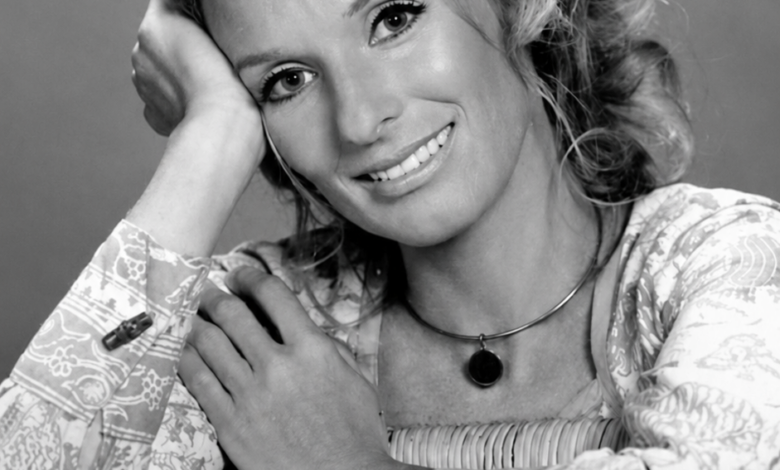
At the age of 82, the American actress Cloris Leachman walked onto the set of the ABC television series Dancing With the Stars to begin training for the competition’s seventh season.
She had been performing professionally for nearly 60 years.
She had won an Academy Award. She had won eight separate Emmy Awards, a record at the time that was tied only with Mary Tyler Moore for the most acting Emmys ever awarded to a single performer in American television history.
She was, when she stepped onto the Dancing With the Stars rehearsal floor in 2008, the oldest competitor in the show’s history.
She had also, in nearly any reasonable sense of the word, nothing left to prove.
She did it anyway.
Cloris Leachman had been born on April 30, 1926, in Des Moines, Iowa. She had taken piano lessons as a small child. She had participated in community theater throughout her teenage years. She had briefly studied drama at Northwestern University before being accepted into Elia Kazan’s first class at The Actors Studio in New York City, the legendary acting school that produced an entire generation of American screen actors.
She had made her film debut in 1947 as an unnamed extra in a film called Carnegie Hall.
She was 21 years old.
She had spent the next 24 years working steadily but quietly in television and film, taking whatever supporting roles she could find. She had appeared in Twilight Zone episodes. She had appeared in early television dramas. She had appeared in summer stock theater productions across the United States. She had been, by every objective measure of her career through her forties, a working actress who had not yet found the role that would make her famous.
In 1971, when Cloris Leachman was 45 years old, she was cast in a small drama directed by the young filmmaker Peter Bogdanovich.
The film was called The Last Picture Show.
She had been cast as Ruth Popper, the lonely, emotionally wounded wife of a high school football coach in a small dying town in 1950s rural Texas.
Bogdanovich had later admitted, in interviews after Cloris Leachman’s death, that he had initially thought she was wrong for the part. She had been, in his memory, almost too bright and too playful in person to convincingly play the small lonely woman the script had required.
She had convinced him otherwise.
She had delivered, in The Last Picture Show, one of the most quietly devastating dramatic performances of the entire decade.
She had played Ruth Popper as a woman whose life had been so completely emptied out by disappointment that the small affair she begins with a high school boy half her age becomes, in her own private heart, the most important relationship she has ever had.
The film was released in October of 1971.
It was praised, almost universally, by the major American film critics.
In April of 1972, Cloris Leachman won the Academy Award for Best Supporting Actress for her performance.
She was 45 years old.
She had been working in Hollywood for 25 years before she had finally been given a role that the world had recognized.
She had not, by her own description in later interviews, considered herself a Best Actress kind of performer.
In an interview she gave decades later, she had remembered the moment she had been told about her Oscar nomination.
She had said: “When I came back for the next season of The Mary Tyler Moore Show, I told them I’d done this film in Texas. And that was the end of that. I didn’t even think about it. Until I got a call that I’d been nominated for an Oscar.”
She had not been thinking about awards.
She had been thinking about her next job.
Her next job, as it had turned out, would be one of the most beloved character roles in the entire history of American situation comedy.
She had been cast, beginning in the autumn of 1970, as Phyllis Lindstrom, the nosy, vain, irrepressibly self-absorbed landlady of Mary Richards in The Mary Tyler Moore Show.
She had appeared as Phyllis in all seven seasons of the show.
She had then appeared in a spin-off series, simply called Phyllis, from 1975 to 1977.
She had won two Emmy Awards for the Mary Tyler Moore role, in 1974 and 1975.
In the autumn of 1974, in the middle of the run of The Mary Tyler Moore Show, Cloris Leachman appeared in another film that would become one of the most beloved performances of her career.
She had been cast by the comedy director Mel Brooks in his Universal horror parody Young Frankenstein.
She had played Frau Blücher, the elderly, severely-accented housekeeper of a Transylvanian castle whose name, every time it was spoken aloud, caused horses to whinny in terror.
The film was released in December of 1974.
It became one of the highest-grossing comedies of the entire decade.
Cloris Leachman’s performance, in which she had played a character who appears in only a small handful of scenes, became one of the most quoted comedy performances of the 1970s.
Mel Brooks would later say, in a tribute he posted after her death, that every single time he heard a horse whinny anywhere in the world for the rest of his life, he would think of Cloris Leachman.
She continued working for the next 47 years after Young Frankenstein.
She played, in time, almost every kind of role that an American television and film industry could offer to an older female character actress. She played grandmothers. She played eccentric neighbors. She played villains. She played comedy. She played drama. She played herself.
She appeared as Maw Maw in the Fox sitcom Raising Hope. She appeared as Grandma Ida in the Fox sitcom Malcolm in the Middle. She appeared in The Facts of Life. She appeared in television movies. She appeared in occasional film roles. She voiced animated characters. She did commercial work. She appeared on award shows.
She did not slow down.
She did not retire.
She did not, by every account of those who worked with her in her later years, even seem to think about retirement.
In 2008, when she was 82 years old, Cloris Leachman accepted the offer to compete on the seventh season of Dancing With the Stars.
Her family had begged her not to do it.
She had been suffering, throughout the previous year, from various small physical ailments associated with advanced age. She had been moving more slowly than she had moved in her younger years. She had been forgetting things. Her doctors had been advising her to take it easier, not to take it harder.
She had refused.
She had insisted on competing.
She had been paired with the professional dancer Corky Ballas. She had trained for hours every day for weeks. She had performed full ballroom routines on live national television in front of millions of viewers.
She had lasted, by the judges’ votes, until the seventh week of the competition.
She had been eliminated only after she had outlasted contestants 30 and 40 years younger than herself.
She had become, in the years that followed, an unexpected late-life star.
Younger audiences had discovered her.
They had watched her clips. They had learned her name. They had bought her 2009 autobiography, titled simply Cloris. They had streamed her old Mary Tyler Moore episodes. They had rewatched Young Frankenstein with new appreciation. They had begun, in growing numbers, to think of her as the kind of grandmotherly figure they wished they had in their own families.
She had loved every minute of it.
She had given interviews. She had appeared on talk shows. She had attended events. She had, by every account of those around her, simply continued to work as long as her body would allow her to work.
She kept working until the very end of her life.
Cloris Leachman passed away peacefully at her home in Encinitas, California, on January 27, 2021. She was 94 years old. Her daughter was at her side.
She had been working, in one form or another, until very near the end.
In a tweet he posted shortly after her death, Mel Brooks summarized what nearly everyone who had worked with her over six decades had felt.
He wrote: “Such sad news — Cloris was insanely talented. She could make you laugh or cry at the drop of a hat. Always such a pleasure to have on set. Every time I hear a horse whinny I will forever think of Cloris’ unforgettable Frau Blücher. She is irreplaceable, and will be greatly missed.”
She had been insanely talented.
She had also been, in her quiet private way, one of the longest-working female performers in the entire history of American television and film.
She had made her debut in 1947.
She had been working in 2021.
That was 74 years of professional acting.
Almost no one in the history of her industry had worked that long.
Almost no one had wanted to work that long.
Cloris Leachman had not been most people.
She had been one of those rare performers who genuinely loved the work itself. The applause had been nice. The Oscar had been nice. The Emmys had been nice. The fame and the magazine covers and the late-life nostalgia tours had been very nice.
But what had mattered most to her, throughout her entire 74-year career, had been the actual work.
She had loved being on a set. She had loved learning her lines. She had loved finding her marks. She had loved doing her takes. She had loved waiting in the small chair beside the camera while the next setup was being arranged.
She had loved all of it.
She had loved it from age 21 to age 94.
She had loved it for almost three quarters of a century.
In her 2009 autobiography, Cloris Leachman had written a single short paragraph about her career philosophy that her family quoted often in the days after her death.
She had written: “I never wanted to retire. I never wanted to stop. The work itself is the gift. Everything else is just decoration.”
She had taken the gift.
For 74 years, she had taken it.
She had used it.
She had made the rest of us laugh and cry and feel something at the drop of a hat.