Couple With Dwarfism Have Children Against All The Odds
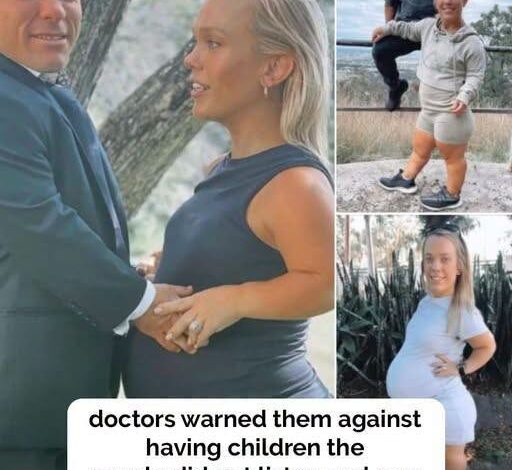
When Charli Worgan and Cullen Adams decided to have children, doctors explained that their pregnancies would carry unusual genetic risks. Both parents have dwarfism, but not the same form. Charli has achondroplasia, while Cullen has geleophysic dysplasia. That difference meant each pregnancy could result in several distinct genetic outcomes.
The Sydney couple understood that a baby could be of average height, inherit Charli’s condition, inherit Cullen’s condition, or inherit both. The combination of both forms was described as potentially fatal. Because the possibilities were serious, the couple used prenatal testing and worked closely with medical professionals during each pregnancy.
Their first daughter, Tilba, inherited achondroplasia from Charli. Their second daughter, Tully, inherited Cullen’s form of dwarfism. The children were not identical examples of their parents’ experiences; each condition has its own medical features and requires individual attention.
Charli later announced the arrival of their son, Rip. His birth in February expanded the family to five and brought another round of public interest. For the parents, however, every pregnancy involved more than a social-media announcement. It included chorionic villus sampling, waiting for genetic results, and facing possibilities that strangers commenting online did not have to live through.
The couple’s decision attracted criticism. Some people argued that they should not have children because of the risks, while others treated their family as a novelty. Charli responded by sharing the medical reality and the ordinary parts of parenting rather than allowing outsiders to define their lives through height alone.
Her social-media account grew to hundreds of thousands of followers. Photographs showed school days, celebrations, sibling relationships, medical appointments, and the practical adjustments familiar to families living with disability. The posts also gave Charli a way to answer recurring questions in her own words.
Dwarfism is not one single diagnosis. Achondroplasia is the most widely recognized form and affects bone growth, while geleophysic dysplasia is much rarer and can involve different skeletal and medical complications. Knowing that both parents are short does not explain their genetics or predict one simple outcome for every child.
The family’s story also highlights the difference between informed risk and careless choice. Charli and Cullen did not ignore medical advice. They listened to the probabilities, underwent testing, and prepared for difficult results. They chose to proceed while remaining engaged with doctors who could monitor the health of Charli and each baby.
No public account can capture every private decision involved. Reproductive choices are personal, and genetic counseling is meant to help families understand options rather than to turn strangers into judges. The couple’s openness does not give viewers ownership over their decisions or permission to speak cruelly about their children.
What the photographs show most clearly is a family living together rather than an abstract medical debate. The children play, grow, and develop individual personalities. Their conditions may shape healthcare and accessibility needs, but they do not erase the ordinary relationships between parents, daughters, son, and siblings.
Charli and Cullen’s family came together against difficult odds and under intense public scrutiny. Their experience cannot promise the same outcome for another couple, and it should never replace professional genetic advice. It does show why people with dwarfism insist on being recognized as whole individuals whose lives include risk, choice, work, love, and parenthood.
The children’s future will include medical decisions specific to the conditions they inherited, along with the same unpredictable interests and relationships that shape any family. Charli’s posts cannot answer every clinical question, but they can correct the assumption that dwarfism makes ordinary family happiness impossible. Her openness is most valuable when it encourages informed understanding rather than turning the children into symbols in someone else’s argument.