How a painful childhood forged a global rock legend
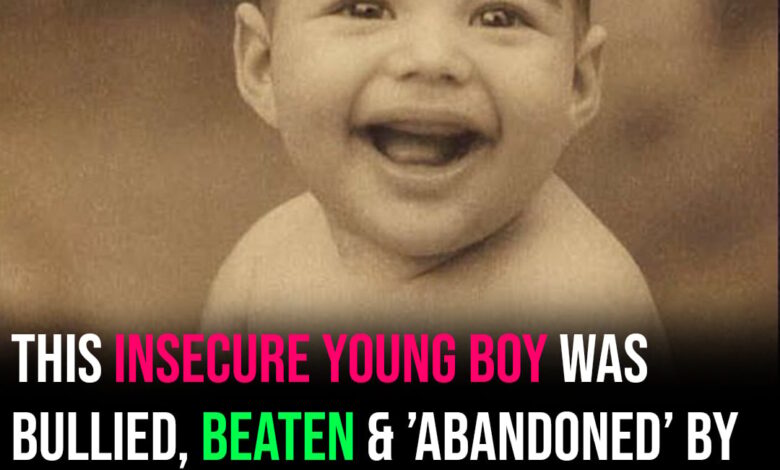
Born Farrokh Bulsara in 1946, the boy who would become Freddie Mercury learned early that survival meant performance. Behind the painted nails and outrageous clothes was a child who’d felt rejected, shipped off to a harsh boarding school, and, according to later accounts, scarred by abuse that stole his innocence but not his will. When revolution forced his family from Africa to London, he reinvented himself completely: art student, airport baggage handler, relentless dreamer studying Hendrix posters like holy texts.
Queen was his final act of defiance against everything that tried to silence him. He weaponized his pain into operatic anthems, towering vocal runs, and that impossible Live Aid command of 70,000 souls. Even as AIDS consumed his body, he kept recording, determined that the curtain would only fall on his terms. The money, the fame, the myth—none of it explains him. The music does.
Freddie Mercury was born Farrokh Bulsara on 5 September 1946 in Stone Town, Zanzibar, to Parsi parents from India. That boy who would one day become the most theatrical rock star the world has ever seen already understood, at a painfully young age, that survival itself was a kind of performance. Sent away at eight to a strict boarding school in India, he found himself an outsider—different in culture, different in accent, different in the way he moved and felt. Later accounts from friends and family speak of darker shadows too: emotional and physical abuse that left scars no one could see but which never managed to break his spirit. Instead, those early wounds seemed to sharpen his hunger for reinvention.
When the Zanzibar Revolution exploded in 1964, the Bulsara family fled to England, arriving as refugees with almost nothing. London in the swinging sixties became Farrokh’s blank canvas. He enrolled at Ealing Art College, studied graphic design by day, and worked the night shift as a baggage handler at Heathrow Airport just to pay the rent. In his tiny bedsit he pinned up posters of Jimi Hendrix like sacred icons, studying every chord, every scream, every note of controlled chaos. He already knew he wanted more than a normal life; he wanted to explode onto the stage and never come down.
In 1970 he met Brian May and Roger Taylor, two students from Imperial College who had a band called Smile. Farrokh—now calling himself Freddie Mercury—joined them, then convinced them to bring in John Deacon on bass. He renamed the group Queen, designed the famous crest himself, and declared that they would not just play rock music—they would perform opera, vaudeville, heavy metal, gospel and pure camp all at once. The rest of the world thought he was arrogant. Freddie simply knew what he was worth.
Queen’s breakthrough came in 1974 with “Killer Queen,” but it was the 1975 masterpiece “Bohemian Rhapsody” that rewrote the rules. A six-minute suite with no chorus, opera sections, hard rock, and a ballad, it became the longest song ever to reach No. 1 in the UK. Freddie’s voice—four octaves of pure velvet and razor blades—could sound like a choir of angels one moment and a screaming demon the next. He weaponised every ounce of pain, loneliness and defiance from his childhood into music that felt like emotional surgery for millions of listeners.
Live, he was untouchable. At Live Aid in 1985 he walked onto the stage at Wembley in front of 72,000 people and 1.9 billion watching on television, sat at a piano, and in twenty-one minutes turned a global charity concert into the single greatest live performance in rock history. No set list. No safety net. Just Freddie, a microphone, and 70,000 voices singing every word back to him. He didn’t just command the crowd—he seduced it, teased it, made love to it, and left it gasping for more.
Behind the painted nails, the moustache, the skin-tight spandex and the outrageous stage costumes was a man who still carried the quiet boy from Zanzibar inside him. He was fiercely private about his sexuality for years, terrified of hurting his traditional parents. Only in the last years of his life did he allow the world to see the real Farrokh—vulnerable, loyal, generous, and heartbreakingly funny. Even as AIDS slowly destroyed his body from 1987 onward, he refused to stop. He recorded the majestic “The Show Must Go On” while barely able to stand, knowing it would be one of his final messages. He died on 24 November 1991, aged just 45, on his own terms, surrounded by the people he loved.
The money, the mansions, the myth, the tabloid headlines—none of that explains Freddie Mercury. What explains him is the music. Songs like “Love of My Life,” “Who Wants to Live Forever,” “Somebody to Love,” “Don’t Stop Me Now” and “We Are the Champions” still sound like they were written yesterday. They are not just hits; they are survival anthems for anyone who ever felt different, rejected, or told they were too much.
Freddie turned every wound into a spotlight. He took the loneliness of a boarding-school boy, the displacement of an immigrant, the fear of a man living with a secret illness, and poured it all into performances so electric that people still feel them decades later. That is why, long after the final curtain, his voice still roars out of stadiums around the world and millions of strangers sing along like they’re part of the same family he always wanted but never quite had as a child.
He didn’t just live. He performed his life so brilliantly that the whole planet is still applauding.