Man Returned from a Three-Day Fishing Trip with a Wedding Ring Mark – He Hadn’t Worn One in 12 Years
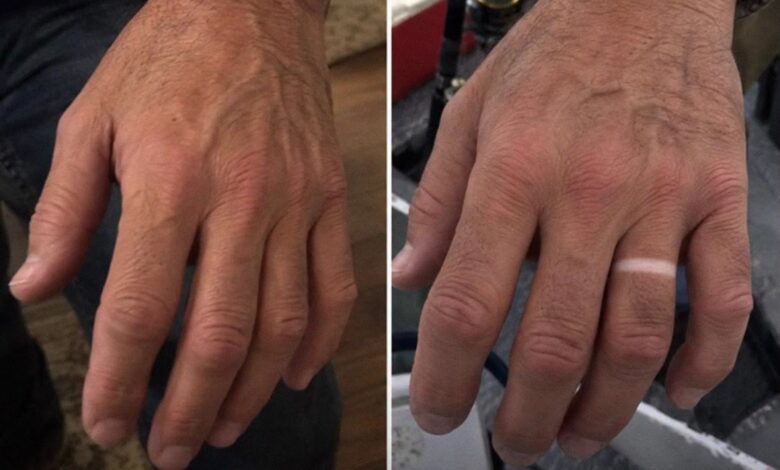
After nineteen years of marriage, Lisa thought she knew Mark’s habits better than anyone. Every summer he spent three days fishing with friends at the same lake. They stayed in a cheap motel, complained about cell service, and came home smelling of fish. This time he barely kissed her before carrying his duffel bag upstairs. At dinner he seemed distracted. When he reached for his glass she noticed a pale band around his left ring finger.
Mark had not worn his wedding ring in twelve years. He had broken the finger at work; even after it healed the ring never fit comfortably again. They had kept it in a bedroom drawer ever since.
“Probably from holding the fishing rod,” he said when she asked. She did not believe him.
The next morning the ring was still in the drawer. Photographs his friends had posted from the trip showed Mark’s left hand carefully hidden. One picture of the group outside a marina restaurant on Saturday morning did not include him at all. When Lisa called the restaurant pretending he had forgotten something, the woman who answered went quiet at the mention of his name and asked who was calling. When Lisa said she was his wife, the call ended abruptly.
In his duffel bag she found a motel key card and a receipt from a jewelry store two towns away. On his laptop, after guessing the new password, she opened a folder marked with a small ring icon. Inside were photographs of Mark standing in the marina restaurant holding hands with a woman in a white dress, slipping a wedding ring onto her finger, and kissing her. A video showed him looking into the woman’s eyes and promising to love her for the rest of his life while people applauded and someone declared them husband and wife. The program identified them as Mark and Claire. The ceremony had taken place Saturday afternoon while Lisa was home washing his work clothes.
She found a public number for the gift shop where Claire worked and called. When she identified herself as Mark’s wife, Claire laughed nervously, then hardened. “Mark’s wife is dead.” After Lisa emailed a recent anniversary photograph, Claire called back, shaken. “Are you the woman Mark told me died twelve years ago?”
Claire had met Mark nearly two years earlier at the lake. He had told her his wife had died twelve years before, that he could no longer wear his wedding ring because it reminded him of the loss, and that he had hurt his finger around the same time. He had taken a real memory from their marriage and rewritten it as a story of Lisa’s death.
They met the next day. Claire showed messages, photographs of birthdays and Christmas dinners, and weekends away. In every recent picture Mark wore a silver wedding band. The pale mark on his finger was not from three days of fishing; it was a tan line from time spent outdoors with Claire. He had told her that after losing his first wife he wanted to exchange vows without the complications of legal paperwork. She had believed she was loving a lonely widower.
Dates lined up with every excuse Mark had given Lisa: work conferences, car trouble, helping a friend on Thanksgiving. Ben, Mark’s oldest fishing companion, confirmed that Mark had introduced Claire on an earlier trip and told the group he and Lisa had separated. None of them had attended the ceremony. They had simply accepted the story Mark wanted them to believe.
When Mark came home and saw the printed photographs and messages spread across the dining table, his face drained. He claimed it had not been a real wedding, that things had gotten complicated, that their marriage had not been good for a while. Lisa reminded him that people forget anniversaries or argue about money; they do not invent a dead wife. He had used the broken finger she had nursed, the urgent-care visit she had driven him to, and turned it into proof that she no longer existed.
She told him to pack a bag. He moved into a rented apartment. Claire wanted nothing further to do with him once she knew the truth. Lisa filed for divorce, preserved every message and the ceremony video, and eventually reached a settlement. They sold the house and divided their assets. She rented a smaller place with a sunny kitchen and bought furniture without wondering whether Mark would complain.
The divorce became final on a Thursday. Three weeks later Claire called again. Mark had contacted her, announced he was now legally free, and asked her to marry him properly this time. He had even brought the ring. Claire told him no. She remembered every weekend he had claimed he needed solitude to grieve, every holiday he had said was too painful because of memories of his late wife. Those moments had simply been excuses to return home to Lisa. “I fell in love with someone who didn’t exist,” Claire said, and returned the ring.
Mark’s fishing friends confronted him after learning the full story. Instead of apologizing he argued that his private life should not affect their friendship. The annual trips ended without him.
Unpacking the last boxes from the old house, Lisa found Mark’s original wedding ring still in its wooden box. For years she had thought keeping it safe was a small act of love. Now she understood that a ring had never been proof of commitment. Mark had worn one for Claire while lying to her and left another in a drawer while lying to Lisa. Neither had made him faithful.
Claire later invited her to a painting class. Lisa said yes. Meeting the other woman had taught her something important: neither of them had been given the truth. Mark had arranged his life so he never had to choose. In the end they made the choice for him. He was free to marry Claire; she no longer wanted him. He was free to rejoin his fishing trips; his friends no longer wanted him there. And Lisa was free to build a life in which she no longer had to inspect her husband’s hands to know whether he was telling the truth.