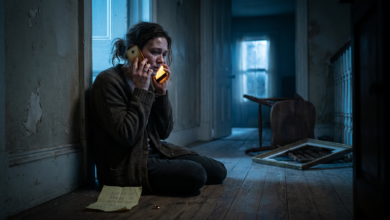
My Dead Husband Called Me From a Stranger’s Phone—Then I Discovered the Terrifying Truth About His “Accident”
Laura Miller lived alone in Cherry Hill, New Jersey. Two years after her husband Mark died in a highway crash on the way to Atlantic City, her days followed the same quiet routine: early coffee, the office, traffic, a cold dinner, and a house that felt too still. Then her neighbor, Mrs. Gable, stopped her at the fence one evening and complained about screaming coming from Laura’s house during the day—a woman’s voice, arguing or begging, for three consecutive days.
Laura checked every room. Nothing was missing. No forced entry. That night she barely slept. At dawn she found Mark’s favorite cracked blue mug clean on the drying rack. She had not washed any dishes.
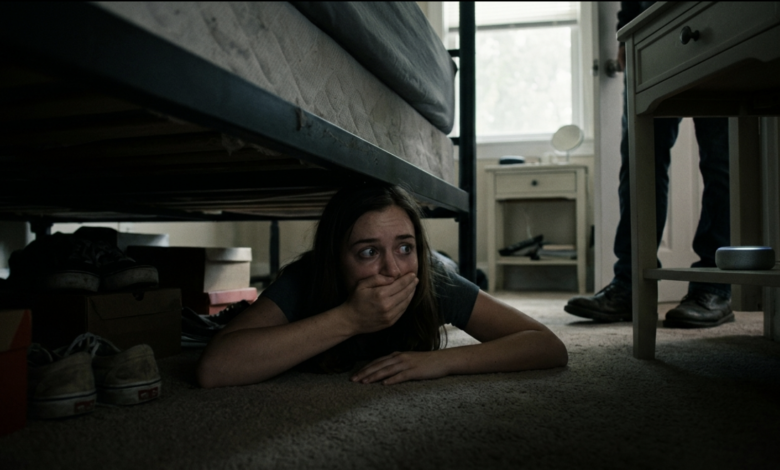
She pretended to leave for work, then slipped back in through the patio door and hid under her bed. Just after noon the front-door lock turned with a key. A woman in heels walked through the house as if she owned it, poured a drink, and entered the bedroom. She dialed a number and put the phone on speaker.
“I’m inside.”
A pause. Then a voice Laura had buried two years earlier answered: “Does Laura suspect anything yet?”
It was Mark.
The woman laughed and called him by name. He directed her to the bottom drawer of the dresser, behind the old insurance documents from the “accident.” She photographed the final page—the one containing beneficiary details and a handwritten note. When she asked what they would do about Laura, Mark’s tone hardened: “That depends on how much she knows… Then we change the plan.”
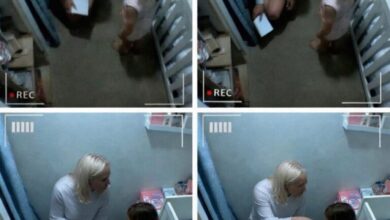
After the woman left, Laura discovered the final page of the insurance agreement was missing. Security footage showed the same black sedan arriving every weekday while she was at work. The driver was Rebecca Shaw, Mark’s former executive assistant—the woman who had cried hardest at his funeral.
An old email from Rebecca three weeks before the crash contained an Asset Transfer and Contingency Agreement signed by Mark, Rebecca, and—apparently—Laura. Laura had never seen the document. Someone had forged her signature.
Claims investigator Daniel Brooks called, saying a request had come to reopen the life-insurance claim. He had found a hospital record bearing Mark’s name entered four months after the supposed death, verified by Rebecca Shaw. When Laura told him she had heard her husband’s voice, Brooks warned her not to confront anyone and not to spend the night alone. He asked about any sealed box Mark had told her never to open.
Laura found the wooden box in the attic. Engraved on the lock: *For Laura, when the truth becomes more dangerous than the lie.* Inside a hidden compartment was a key. The box contained a letter from Mark, a flash drive, and a photograph of him standing outside a hospital four months after his funeral. The letter warned her not to trust Rebecca, not to trust anyone claiming to protect her, and not to believe he had died on Route 70.
As she prepared to examine the flash drive, Daniel Brooks knocked on her door. A text from an unknown number told her not to open it. Through the side window she saw the same black sedan parked across the street, engine running. The voice on the phone identified itself as Mark Miller—alive—and said the man on her porch was the reason everyone thought he was dead.
Laura fled through the garage. In the rearview mirror, Brooks watched her leave and smiled.
At the Riverside Motor Lodge she found Mark thinner, scarred, but unmistakably alive. She slapped him, then collapsed against the wall. He explained that as CFO of a regional investment firm he had discovered a vast fraud scheme run by his employer, Victor Hale: shell companies, stolen identities, forged contracts. When Mark began collecting evidence, the company turned on him. His car was followed. His office was broken into. A photograph of Laura was left on his windshield. He arranged his own disappearance, using a real death—Peter Collins, a courier who had tried to leave the network—as the body in the staged crash. He believed vanishing was the only way to keep Laura safe.
He had known for months that Rebecca was entering Laura’s house. He had not called the police because he no longer knew whom to trust. The flash drive contained recordings of Victor discussing the transfers and of Daniel Brooks helping arrange the crash. Brooks had never been an independent investigator; he worked for a private firm connected to Victor.
Laura refused to disappear again. She contacted an attorney, then a financial-crimes detective, and preserved every piece of evidence. Before leaving the motel she told Mark she would help expose the truth, but she was not promising they would ever be husband and wife again.
The next morning Rebecca called. Laura put the phone on speaker. Rebecca already knew Mark was alive.
For two years Laura had mourned a man who was still breathing. Now she held the evidence that could destroy the people who had stolen her life—and the husband who had decided, without her consent, that her safety required her ignorance.