My Father Called Me “Just a Waitress” in Court Over Grandpa’s $11 Million Inheritance—Then the Judge Discovered Who I Really Was
PART 3
I glanced briefly toward my father.
He was no longer smiling.
“Because I like the work, Your Honor. And because I learned something
important from my grandfather. Never become so impressed with your
…
own position that you forget how ordinary people live.”
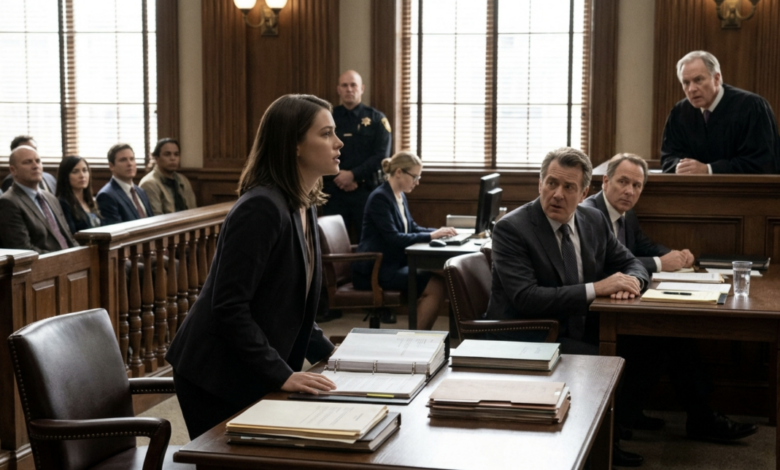
The judge looked at me for several seconds.
Then he turned toward Sterling.
“Counsel, did you investigate the financial background of the person
whose competence you are challenging?”
Sterling cleared his throat.
“Our investigation focused on her current employment and publicly
available information.”
“So you photographed her serving coffee for three weeks, but you did not
investigate the company she claims to operate?”
Sterling’s jaw tightened.
“We were not provided with information suggesting—”
“Then perhaps you should have investigated before making assumptions
in my courtroom.”
The room became completely silent.
I returned to my chair.
My hands were trembling slightly beneath the table, but I kept them
folded together.
I had imagined this moment many times.
I had imagined my father looking embarrassed. I had imagined Sterling
losing his confidence. I had imagined the judge finally understanding that
the woman in the faded blue apron was not the helpless granddaughter
they had described.
But I had not imagined how painful it would feel to see my own father
sitting there, staring at me like I had become a stranger.
…
He had known about my company.
At least, he should have.
He had received the business registration documents three years earlier
when my grandfather specifically requested that certain family members
be informed of my professional responsibilities.
He had simply never cared enough to read them.
And now, for the first time that morning, he looked frightened.
But the worst was still ahead.
Because my professional qualifications were only the beginning.
The judge turned another page.
“Ms. Whitaker, this document appears to be an authorization agreement
signed by your grandfather.”
“Yes, Your Honor.”
“It states that you were appointed as the primary investment
administrator for the Whitaker family estate during his lifetime, with
authority to execute certain transactions under specific conditions.”
“That is correct.”
“And this second document?”
“That is the quarterly performance report for the portfolio.”
The judge examined the figures.
He leaned closer.
“Are these returns accurate?”
“They are, Your Honor. Every transaction is documented, and the
accounts have been independently audited.”
…
“How much did the portfolio contain when you first began assisting your
grandfather?”
“Approximately $6.8 million.”
“And its current value?”
“Just over $11 million, excluding certain private holdings that are not part
of the inheritance.”
A murmur moved through the room.
My father shifted in his chair.
I knew exactly what he was thinking.
Eleven million dollars.
He had spent the last several months telling everyone that I was an
irresponsible young woman who had no idea how to handle money.
Now he was learning that the person he had been trying to remove from
the estate was the same person who had helped preserve and grow it.
But Judge Harrison was not finished.
He placed the report on the desk.
“Mr. Whitaker,” he said, turning toward my father, “I would like you to
explain something.”
My father straightened.
“Yes, Your Honor.”
“You are requesting that your daughter’s authority over the inheritance
be suspended because you believe she lacks the necessary financial
experience.”
“That is correct.”
…
“Yet this authorization document indicates that your father appointed her
to manage significant financial matters years before his death. Were you
aware of this arrangement?”
My father hesitated.
“I knew she helped him occasionally.”
“Occasionally?”
“Yes. She visited him. They discussed business. But that doesn’t mean
she should control eleven million dollars.”
The judge raised his eyebrows.
“Then who should?”
My father did not answer immediately.
Sterling stepped forward.
“Your Honor, my client believes the estate should be administered by an
independent professional fiduciary until the family can resolve the
matter.”
“An independent fiduciary?”
“Yes.”
“And who recommended this arrangement?”
Sterling looked briefly at my father.
“My client has identified a suitable candidate.”
Judge Harrison glanced down at the petition.
Then he looked back up.
“Who is this candidate?”…
Sterling hesitated.
“Mr. Richard Whitaker’s financial adviser, Mr. Charles Bennett.”
I felt something cold settle in my stomach.
Charles Bennett.
I knew that name.
Not because I had ever worked with him.
But because I had seen it in my grandfather’s financial records.
And it was not a name I expected to hear in this courtroom.
I slowly opened my folder again.
“Your Honor, may I ask one question?”
The judge nodded.
“Go ahead.”
“Has Mr. Charles Bennett disclosed his previous business relationship
with my father?”
Sterling immediately objected.
“Your Honor, this is irrelevant.”
“I haven’t finished,” I said quietly.
The judge raised one hand.
“Let her speak.”
I pulled out a document.
“Mr. Bennett was a consultant for Whitaker Holdings until approximately
eighteen months ago. His contract was terminated after my grandfather
discovered irregularities in several proposed investment transactions.”
…
My father suddenly stood.
“That’s enough, Emily!”
The judge struck his gavel.
“Mr. Whitaker, sit down.”
My father slowly lowered himself into his chair.
I placed the document on the table.
“This is a copy of the termination notice. It was signed by my grandfather
and witnessed by the company’s legal adviser.”
Sterling took a step closer.
“Your Honor, we have not had an opportunity to examine this document.”
“Then you may examine it,” the judge replied. “But I suggest you do so
carefully.”
My father stared at me.
For the first time, I could see something behind his anger.
Fear.
Real fear.
And I realized he had never expected me to bring this document into
court.
He had probably assumed I would come with a few bank statements,
some emotional explanations, and perhaps a letter from my grandfather.
He had never considered that I knew about Bennett.
He had never considered that I knew about the missing money.
…
And most importantly, he had never considered that my grandfather had
left instructions for exactly this situation.
My grandfather’s name was Edward Whitaker.
He had built his fortune from almost nothing.
When he was twenty-two, he arrived in New York with a suitcase, a few
hundred dollars, and a job washing dishes in a small restaurant.
He eventually started a distribution business with one delivery truck.
Over the next forty years, he expanded that business into a national
company, invested in commercial property, and built a portfolio that made
him one of the wealthiest people in our family.
But despite his wealth, he never behaved like a man who believed
money made him important.
He still carried his own groceries.
He still wore the same old watch.
And every Monday morning, he visited the little coffee shop where I
worked.
That was where our relationship really began.
I was twenty-three when I first met him.
At the time, I was working two jobs while studying finance at night.
My mother had died when I was seventeen, and my father and I had
never been particularly close.
Richard Whitaker was not a cruel man in the obvious sense.
He did not shout every day.
He did not hit anyone.
He simply believed that everyone around him existed to make his life
He liked expensive restaurants, expensive cars, and people who agreed
with him.
He considered my grandfather’s old-fashioned habits embarrassing.
And he considered my decision to work while studying finance proof that
I lacked ambition.
When I told him I wanted to start my own investment company, he
laughed.
“Emily, you can barely afford your apartment. What makes you think
anyone will trust you with their money?”
I remembered that sentence because it was the first time I realized my
father had no interest in seeing me succeed.
My grandfather, however, reacted differently.
He looked at me across the kitchen table and asked one question.
“Do you understand what happens when people lose money?”
I thought for a moment.
“They lose their savings. Sometimes their homes. Sometimes their
confidence.”
He nodded.
“And what happens when people gain money?”
“They get more opportunities.”
He smiled.
…
“Good. Then remember that money is never just numbers. It represents
people’s lives. If you ever manage it, never forget that.”
From that day forward, he began teaching me.
He showed me balance sheets, investment reports, market trends,
property valuations, and risk assessments.
He never gave me easy answers.
Instead, he asked me to explain what I thought.
Sometimes he disagreed with me.
Sometimes he made me start again.
And sometimes, when I got something right, he would simply nod and
say, “Now you’re thinking.”
After I graduated, I started Whitaker Capital Analytics with a small office,
two employees, and a secondhand computer.
My grandfather was my first major client.
He never advertised that fact.
He never used his influence to force anyone to work with me.
He simply trusted my judgment.
Within three years, my company had grown.
We managed private portfolios for several clients, provided financial
analysis, and advised small businesses on long-term investment
strategies.
I was proud of what I had built.
But I still worked at the coffee shop.
Not because I needed the money anymore.
…
Because it reminded me of where I started.
And because my grandfather liked visiting me there.
He used to say that a person who forgot the value of a dollar would
eventually lose the ability to understand a million.
I never forgot that.
The court hearing continued.
Judge Harrison asked Sterling to explain the relationship between my
father and Charles Bennett.
Sterling shuffled his papers.
“Mr. Bennett has extensive experience in private wealth management.”
“That was not my question,” the judge said.
“Your Honor?”
“What is the nature of his financial relationship with Mr. Whitaker?”
My father leaned toward his attorney and whispered something.
Sterling nodded.
“My client has received professional advice from Mr. Bennett on several
private investment matters.”
“For how long?”
“Approximately five years.”
“And was Mr. Bennett compensated?”
“Yes.”
“How much?”
Sterling paused.
…
“I would need to review the records.”
Judge Harrison removed his glasses.
“Mr. Sterling, I am beginning to wonder whether you reviewed the
records before filing this petition.”
Nobody laughed.
I looked at my father.
He was staring at the table.
Then the judge turned to me.
“Ms. Whitaker, you mentioned irregularities in proposed transactions. Are
you suggesting that Mr. Bennett improperly handled estate funds?”
“I am not making an accusation without evidence, Your Honor. I am
saying that my grandfather documented concerns about transactions
involving Mr. Bennett, and those concerns should be investigated before
this court considers appointing him to control the estate.”
The judge nodded.
“That is a reasonable position.”
I reached for another document.
But before I could hand it over, my father’s attorney interrupted.
“Your Honor, we believe this entire discussion is an attempt to distract
from the central issue. The defendant is attempting to portray herself as
a financial expert, but the estate is an inheritance, not her personal
business.”
I looked at him.
Then I looked at my father.
…
For a moment, I considered saying nothing.
But I had spent too many years allowing people to define me.
So I stood again.
“Your Honor, may I clarify something?”
“Please.”
“My grandfather’s inheritance is not my personal business. I understand
that. I have never claimed that the money belongs to me simply because
I managed it.”
I opened the will.
“However, my grandfather was very specific about how his estate should
be handled. He did not appoint my father as the administrator. He did not
appoint Mr. Bennett. And he did not leave the final decision to whoever
could hire the most expensive attorney.”
My father shook his head.
“That’s not what Dad wanted.”
I looked at him.
“Then why are you asking the court to ignore his written instructions?”
He said nothing.
I turned back toward the judge.
“Your Honor, I would like the court to examine the final section of my
grandfather’s will.”
Judge Harrison took the document.
He read the first paragraph.
Then the second.
…
His expression changed.
He looked at the clerk.
“Is this the original certified copy?”
“Yes, Your Honor.”
He continued reading.
Then he stopped.
“Mr. Whitaker?”
My father lifted his head.
“Yes?”
“Did you read your father’s will before filing this petition?”
“Of course.”
“Then perhaps you can explain why you have requested something that
appears to be expressly prohibited by the document.”
My father looked confused.
“What do you mean?”
The judge turned the will toward him.
“Your father included a specific provision regarding interference with the
estate administration.”
My father leaned forward.
Sterling reached for the document.
Judge Harrison held it slightly higher.
“According to this provision, any beneficiary who knowingly attempts to
interfere with the appointed administrator through false allegations,
…
undisclosed financial conflicts, or coercive legal action may have certain
discretionary benefits suspended pending investigation.”
My heart began beating faster.
I had read that paragraph many times.
My grandfather had explained it to me shortly before he died.
But I had never wanted to use it against my father.
The judge continued.
“There is also a reference to a separate sealed memorandum.”
I felt my fingers tighten around the edge of the table.
The sealed document.
The one I had kept in my folder for months.
The one my grandfather had instructed me not to open unless someone
challenged his estate plan.
Judge Harrison looked at me.
“Ms. Whitaker, do you have that memorandum?”
I slowly reached into my folder.
“Yes, Your Honor.”
I removed the envelope.
It was old, cream-colored, and sealed with a small blue wax stamp
bearing my grandfather’s initials.
I placed it on the judge’s desk.
He examined the seal.
“Has this been opened?”
…
“No, Your Honor.”
“Who gave it to you?”
“My grandfather’s estate attorney, two days after the funeral.”
“Why did you wait until now to submit it?”
“Because my grandfather instructed me to keep it sealed unless
someone attempted to challenge his appointment or interfere with the
estate.”
The judge looked toward my father.
Then back at the envelope.
“Mr. Sterling, do you object to the court reviewing this document?”
Sterling stood.
“Your Honor, we would request time to establish its authenticity.”
“That is understandable. The court will not make any final determination
based solely on an unverified document.”
The judge turned toward the clerk.
“Please record the envelope as an exhibit and arrange for its
examination.”
I felt a strange mixture of relief and sadness.
My grandfather had prepared for this.
He had known that someone might try to take control of his money.
But I had hoped he was wrong.
I had hoped that after his death, my family would behave like a family.
Instead, my father had dragged me into court.
…
And now the truth was beginning to emerge.
The judge called for a brief recess.
As everyone stood, Sterling leaned toward my father and whispered
urgently.
I could not hear what he said.
But I saw my father’s face change.
He looked at me.
Then he walked toward the aisle.
For a moment, I thought he might come over to speak.
Instead, he stopped beside my chair.
“You need to stop this,” he whispered.
I looked up at him.
“Stop what?”
“Whatever you’re doing. You have no idea what you’re getting yourself
into.”
I slowly closed my folder.
“I know exactly what I’m doing, Dad.”
His expression hardened.
“You think Grandpa chose you because you’re special?”
“No.”
“Then why?”
I looked directly into his eyes.
…
“Because I earned his trust.”
He stared at me.
Then he lowered his voice even further.
“You have no idea what happened eighteen months ago.”
My stomach tightened.
“What happened?”
He looked over his shoulder to make sure nobody was listening.
Then he said something that made my entire body go cold.
“Your grandfather didn’t lose money because of Bennett. He lost it
because of you.”
I stood.
“What are you talking about?”
But my father was already walking away.
I watched him return to his seat.
For several seconds, I could not move.
My grandfather’s financial records showed that eighteen months earlier,
a significant investment had been withdrawn from one of the family
accounts.
The transaction had been flagged.
My grandfather had investigated it.
And I had been the person who discovered the irregularity.
I had always believed the matter was resolved.
I had never imagined my father would try to blame me.
…
/26, 7:38 PM missed.
But now I wondered whether there was something in those records I had
Something my grandfather knew.
Something he had been trying to protect me from.
When the hearing resumed, Judge Harrison announced that the court
would temporarily postpone its decision on the inheritance freeze until
the sealed memorandum could be authenticated.
He also ordered both sides to preserve all relevant financial records and
prohibited any unauthorized transfers from the estate.
Then he looked directly at my father.
“Mr. Whitaker, I strongly advise you not to contact any financial institution
associated with this estate until further notice.”
My father nodded stiffly.
“Yes, Your Honor.”
But I noticed something.
His hands were shaking.
That evening, I returned to the coffee shop.
I had spent the entire afternoon answering questions from the estate
attorney and preparing copies of the documents the court had requested.
My head hurt.
My shoulders felt heavy.
And all I wanted was to stand behind the counter, make a few cups of
coffee, and pretend that my life was still normal.
My manager, Sandra, noticed me immediately.
oLO1leHRuA2FlbQIxMABwZG9mAWJyaWQRMXJIamt3SGZ0ZTRWM280OE9zcnRjBmFwcF9pZBA…
“Emily, you look exhausted.”
“Long day.”
“Court?”
I nodded.
She placed a cup of coffee in front of me.
“On the house.”
I smiled.
“Thank you.”
Sandra had known my grandfather.
He used to sit at the same corner table every Monday morning.
After he died, she had quietly kept his favorite seat empty for several
weeks.
She never asked me about the inheritance.
She never asked how much money I had.
She simply treated me like the same person she had always known.
That meant more to me than I could explain.
I sat at the counter and opened my phone.
There were twelve missed calls from my father.
Three messages from Sterling.
And one message from an unfamiliar number.
I opened it.
…
Emily, this is Daniel Price, your grandfather’s former estate
attorney. I need to speak with you privately. There is something
about the $11 million inheritance that was never included in the
documents you received. Please call me before tomorrow’s hearing.
I read it twice.
Then I checked the number.
It belonged to the law office listed on my grandfather’s original estate
paperwork.
I immediately called.
A man answered after the second ring.
“Daniel Price speaking.”
“Mr. Price, this is Emily Whitaker.”
There was a brief silence.
“Emily. Thank goodness.”
“Your message said something wasn’t included in the documents I
received. What does that mean?”
He exhaled.
“Your grandfather left additional instructions. I was supposed to deliver
them if the estate was challenged.”
My heart started beating faster.
“What instructions?”
“I cannot explain everything over the phone. But I need you to
understand something. Your grandfather did not simply leave you
responsibility for his money.”
…
“Then what did he leave me?”
Another pause.
“He left you control over something much larger.”
I stood up from my chair.
“What?”
“Emily, the eleven million dollars is only the liquid portion of the estate.”
I gripped the counter.
“What do you mean?”
“Your grandfather also owned commercial properties, private company
shares, and several investment partnerships. Some of those assets were
placed in a separate trust years ago.”
I felt the room become strangely distant.
“How much are we talking about?”
“I cannot give you a final valuation until the auditors complete their
review. But the estimated combined value is approximately thirty-seven
million dollars.”
I closed my eyes.
Thirty-seven million.
I had known about some of the properties.
I had known about the private holdings.
But I had never been told that they were all connected through a
separate trust.
“Why didn’t he tell me?”
…
“He wanted to keep the arrangements confidential until the transfer
process was complete.”
“Who else knows?”
“Your father knows that the trust exists. But I don’t believe he knows the
full details.”
I swallowed.
“Mr. Price, why are you telling me this now?”
His voice became quieter.
“Because your grandfather left a letter for you. And after what happened
in court today, I believe you need to read it.”
I looked through the glass window of the coffee shop.
Cars passed along the street.
People walked by carrying shopping bags.
Everything looked normal.
But my life had just changed again.
“Can I see the letter?”
“Yes. Come to my office tomorrow morning at nine. Bring the original
copy of the will and do not tell your father about this meeting.”
I hesitated.
“Why?”
“Because Emily, there is something else you need to know.”
“What?”
…
“Your father has been trying to gain access to the separate trust for
almost two years.”
My throat tightened.
“Why?”
Daniel Price did not answer immediately.
Then he said something I would remember for the rest of my life.
“Because your grandfather discovered that approximately $2.4 million
had disappeared from one of the investment partnerships, and the
person who authorized the transfer was not Charles Bennett.”
I could barely breathe.
“Who was it?”
“I believe you already know.”
The call ended.
I stood motionless behind the counter.
My phone was still pressed against my ear.
And for the first time since my grandfather’s death, I began to wonder
whether the inheritance battle was never really about the eleven million
dollars.
Perhaps it was about the money that had disappeared before he died.
Perhaps it was about the people who had helped it disappear.
And perhaps my grandfather had left me the inheritance not because he
wanted me to become wealthy.
Perhaps he had left it to me because I was the only person he trusted to
uncover the truth.
…
I looked down at my hands.
The same hands that had carried coffee that morning.
The same hands my father had mocked in front of a judge.
Then I remembered his final words in the courtroom.
Your grandfather didn’t lose money because of Bennett. He lost it
because of you.
I picked up my phone and opened the photograph I had taken of the
financial authorization records months earlier.
There was a transaction number I had never been able to explain.
A transfer of $2.4 million.
The authorization date was eighteen months earlier.
And beside the transaction was a digital signature.
I zoomed in.
My heart stopped.
It was my name.
Emily Whitaker.
But I had never authorized that transfer.
Not once.
And suddenly, I understood why my father had looked so frightened
when I mentioned the missing money in court.
Someone had used my identity.
Someone had made it look as though I had stolen from my own
grandfather.
…
And whoever had done it had been preparing for this inheritance battle
long before my grandfather died.
I needed to find out who had signed my name—and why my father
was so desperate to keep the truth buried.
PART 4
I did not sleep that night.
I sat at my kitchen table until almost four in the morning, staring at the
photograph of the $2.4 million transaction.
My name was there.
My authorization number was there.
Even the digital signature looked like mine.
But I knew I had never approved that transfer.
I had spent seven years building my reputation around one principle:
every dollar had to be accounted for.
I had never stolen from a client.
I had never falsified a financial document.
And I had certainly never taken money from my own grandfather.
Someone had deliberately used my identity.
The question was whether they had done it to steal the money or to
make sure I would eventually take the blame.
At 8:15 the next morning, I arrived at Daniel Price’s law office.
He was waiting for me in a private conference room.
…
He was in his late sixties, with silver hair, reading glasses, and the kind
of expression that suggested he had spent most of his life delivering
difficult news to wealthy families.
He stood when I entered.
“Emily. Thank you for coming.”
“Please tell me you know who authorized that transfer.”
He closed the conference room door.
“I know who the bank records identify.”
“Who?”
He placed a thick folder on the table.
“Your father.”
I stared at him.
For several seconds, I thought I had misunderstood.
“My father?”
Daniel nodded.
“The transfer was initiated through a secondary administrative account.
Your digital authorization was attached to it, but the account access
originated from a device registered to Richard Whitaker.”
I slowly sat down.
“Then why does the document show my name?”
“Because someone used your credentials.”
“Can you prove that?”
…
“Yes. We have the original transaction logs, device records, and the
bank’s internal security report.”
I covered my mouth.
My own father had used my identity.
But why?
Daniel opened the folder and showed me a series of documents.
The first was a transfer request.
The second was an internal investigation report.
The third was a letter written by my grandfather.
I recognized his handwriting immediately.
The letter was dated eighteen months earlier.
“Your grandfather discovered the unauthorized transfer shortly after it
occurred,” Daniel explained. “He instructed the bank to preserve all
records and commissioned an independent forensic investigation.”
“Did he know my father was responsible?”
Daniel hesitated.
“He suspected it. But he wanted evidence before making an accusation.”
I looked down at the letter.
“Why didn’t he tell me?”
“Because he was afraid you would confront your father before the
investigation was complete.”
I swallowed.
“Was Grandpa trying to protect me?”
…
“Yes. But there was another reason.”
Daniel turned the letter toward me.
“Your grandfather believed your father might attempt to use the
transaction to challenge your professional reputation and remove you
from control of the estate.”
I began reading.
The first few lines were simple.
Then I reached a paragraph that made my eyes fill with tears.
My dear Emily,
If you are reading this, then something I feared has probably happened.
Someone has tried to convince the world that you are not capable of
handling what I have left behind.
I want you to remember something. I did not choose you because you
are my granddaughter. I chose you because I watched you earn your
place.
I have watched you work when nobody was watching. I have watched
you study when other people were sleeping. I have watched you treat
people with respect even when they had nothing to offer you.
Never allow anyone to make you feel ashamed of honest work.
I stopped reading.
Tears rolled down my cheeks.
Daniel waited quietly.
I wiped my eyes and continued.
Your father has made decisions I cannot defend. I have tried to guide
him, but I cannot force a grown man to become someone he does not
…
/26, 7:38 PM wish to be.
The money I leave behind is not a reward for being better than him. It is
a responsibility to protect what took me a lifetime to build.
If your father has made mistakes, allow the law to address them. Do not
allow anger to turn you into the person you are fighting against.
I love you more than you will ever understand.
Grandpa.
I put the letter down.
For a long time, I said nothing.
Then I asked Daniel the question that had been sitting in my heart since
the previous night.
“Did my grandfather know my father had stolen the money?”
Daniel folded his hands.
“Emily, the forensic report was completed six weeks before your
grandfather died.”
“Six weeks?”
“Yes.”
“Then he knew?”
“He had evidence.”
I stared at the table.
“And what did he do?”
Daniel opened another envelope.
…
“He gave your father one final opportunity to return the money and
correct the records. Your grandfather did not want to involve the police
immediately.”
I shook my head.
“Did my father return it?”
Daniel looked at me.
“No.”
The room felt colder.
“Then where is the money?”
“Some of it went through an investment company controlled by Charles
Bennett. The remaining amount was transferred into two separate
accounts. We have identified the account holders.”
“Who?”
Daniel looked at the document.
“Your father and your father’s second wife, Patricia.”
I closed my eyes.
My father had not simply stolen money.
He had involved his wife.
And he had used my identity to make it look as though I had done it.
I felt sick.
“What happens now?”
Daniel pushed a second folder toward me.
“Now we give the court the complete evidence.”
…
At 10:30 that morning, I returned to the courthouse.
This time, I was not alone.
Daniel Price walked beside me, carrying the original estate documents
and the forensic report.
Sterling was already seated at the plaintiff’s table.
My father sat beside him.
When he saw Daniel, his face changed.
It was a small reaction, but I noticed it.
He leaned toward Sterling and whispered urgently.
Sterling opened his briefcase.
Then he looked at Daniel.
“Mr. Price,” he said, “I wasn’t aware you would be attending today.”
Daniel smiled politely.
“That is because nobody informed you.”
Judge Harrison entered the courtroom.
Everyone stood.
After the formalities, he reviewed the previous hearing’s orders.
“Mr. Sterling, have you completed your review of the sealed
memorandum?”
“Yes, Your Honor.”
“And?”
Sterling took a breath.
…
“We acknowledge that the document appears to contain additional
instructions from the deceased regarding the administration of the
estate. However, we still have concerns about the defendant’s suitability.”
Judge Harrison looked at him.
“Your concerns appear to change every time the court examines another
document.”
A few people smiled.
Sterling did not.
Daniel stood.
“Your Honor, with permission, I would like to introduce additional
evidence that directly concerns the petition before this court.”
“Proceed.”
Daniel presented the forensic report.
He explained that the $2.4 million transaction had been investigated by
independent financial specialists.
The investigators had traced the movement of funds through several
accounts.
They had also recovered electronic records showing that the transaction
was initiated from a computer registered to Richard Whitaker.
My father immediately stood.
“That’s a lie!”
Judge Harrison struck his gavel.
“Mr. Whitaker, sit down.”
Daniel continued.
…
“The report also identifies a series of communications between Mr.
Whitaker and Mr. Bennett concerning the transfer.”
Sterling stood.
“Your Honor, we object to the introduction of these communications
without further authentication.”
Daniel nodded.
“That is why we have included the forensic verification report and the
original records obtained from the financial institution.”
Judge Harrison examined the documents.
He read one page.
Then another.
His expression became increasingly serious.
Finally, he looked toward my father.
“Mr. Whitaker, did you authorize the transfer of $2.4 million from the
investment partnership?”
My father shook his head.
“No.”
“Did you use Ms. Whitaker’s authorization credentials?”
“No.”
“Do you have any explanation for why the transaction records identify
your registered device?”
“My daughter had access to the company systems.”
I slowly turned toward him.
That was his defense.
He was going to blame me again.
Daniel spoke calmly.
“Your Honor, the security records establish that Ms. Whitaker was in
Boston attending a financial conference when the transaction was
initiated. The device used to authorize the transfer was located at Mr.
Whitaker’s private office in Manhattan.”
The judge looked at my father.
My father said nothing.
Daniel placed another document on the table.
“There is also a message recovered from Mr. Bennett’s company
records.”
Sterling’s face turned pale.
“What message?” he asked.
Daniel read it aloud.
Richard, the Emily authorization is attached. Once the transfer clears, we
can move the remaining assets before Edward discovers the full
structure. Make sure the trust documents are handled before the
inheritance hearing.
The courtroom became completely silent.
My father stared at the floor.
I felt my stomach twist.
The message was dated three days before the transfer.
It was not a misunderstanding.
…
It was not a mistake.
It was a plan.
And my name had been part of it.
Judge Harrison put the document down.
“Mr. Sterling, does your client still maintain that the defendant is the
person who misappropriated these funds?”
Sterling slowly turned toward my father.
For the first time, he appeared genuinely uncertain about representing
him.
“Your Honor, we would request a recess to review the new evidence.”
The judge nodded.
“Granted.”
Then he added something that made my father freeze.
“However, the court will also refer the suspected financial misconduct to
the appropriate authorities for independent investigation. This matter has
moved beyond a simple family disagreement over inheritance.”
During the recess, I went to the hallway.
I needed air.
I stood beside a window overlooking the courthouse parking lot.
A few minutes later, I heard footsteps.
It was my father.
“Emily.”
I did not turn around.
…
“Please don’t.”
“We need to talk.”
“We have had plenty of opportunities to talk.”
“You don’t understand what happened.”
I turned toward him.
“Then explain it.”
He looked around nervously.
“Your grandfather was going to cut me off.”
I stared at him.
“So you stole $2.4 million?”
“It wasn’t like that.”
“Then what was it like?”
He rubbed his forehead.
“Your grandfather controlled everything. He made me feel like I was
nothing. Every business decision had to go through him. Every
investment. Every property. Every dollar.”
“And you thought stealing from him would make you independent?”
“I was trying to secure my future.”
I laughed once.
Not because anything was funny.
Because I could not believe what I was hearing.
“You had a house, expensive cars, a private investment account, and a
family business. What more did you need?”
He looked away.
“Your grandfather was giving you everything.”
There it was.
The truth.
Not concern about my qualifications.
Not concern about the estate.
Jealousy.
My father had watched my grandfather trust me, and he could not accept
it.
“He was giving me responsibility,” I said. “Not because I demanded it, but
because I earned it.”
My father shook his head.
“You always thought you were better than me.”
“No, Dad. I always hoped you would be proud of me.”
He looked at me.
For a moment, something changed in his expression.
Then he said, “I am your father.”
I swallowed.
“Yes. And I am your daughter. But that didn’t stop you from using my
name to cover your theft.”
He reached toward my arm.
I stepped back.
“Don’t.”
…
“Emily, please. We can fix this.”
“How?”
“I’ll return the money.”
“That isn’t your decision anymore.”
He lowered his voice.
“Think about the family.”
I stared at him.
“What family?”
He had no answer.
I turned toward the courtroom doors.
Before entering, I said one final thing.
“You spent years teaching me that money was more important than
people. Grandpa spent years teaching me the opposite. I finally
understand which lesson I should have followed.”
Then I walked away.
The sealed memorandum was authenticated several days later.
Daniel called me into his office to explain its contents.
The document contained three important provisions.
The first confirmed my appointment as the primary estate administrator.
The second established an independent oversight committee consisting
of two financial professionals and an estate attorney.
The third contained a specific instruction concerning the separate trust.
I read it twice.
…
My grandfather had placed the commercial properties, private company
shares, and several long-term investments into a trust valued at
approximately $37 million.
The trust was designed to protect those assets from personal debts,
family disputes, and unauthorized transfers.
I was named its managing trustee, subject to independent oversight.
My father was listed as a discretionary beneficiary.
But there was a condition.
If any beneficiary was found to have committed fraud against the trust or
its underlying assets, distributions could be suspended according to the
trust’s terms.
I looked at Daniel.
“Does this mean my father loses everything?”
“Not automatically. The court and the appropriate authorities must
establish what happened. But his ability to receive discretionary
distributions can be restricted under the trust provisions.”
I nodded slowly.
“And the $2.4 million?”
“We are pursuing recovery. Approximately $1.7 million has already been
located in accounts connected to the transactions. The remainder is still
under investigation.”
I sat back.
“Will the money be returned to the estate?”
“If the recovery process succeeds, yes.”
I looked through the glass wall of his office.
…
People were walking along the sidewalk, talking on their phones,
carrying coffee.
The world was continuing as usual.
But mine had changed completely.
I had spent months worrying that my father might take my grandfather’s
inheritance away from me.
Now I understood that the real battle was about something much deeper.
It was about protecting the truth.
Three months later, the investigation reached a major turning point.
Charles Bennett was formally questioned about his role in the
unauthorized transactions.
His company records revealed that he had received payments
connected to the transfer.
Investigators also discovered that he had helped Richard prepare
documents intended to make it appear that I had authorized the
movement of funds.
My father’s attempts to blame me had not been random.
They were part of a strategy.
If he could convince the court that I was financially inexperienced and
irresponsible, he could have me removed from the estate.
If I was removed, his proposed administrator would gain access to the
financial records and the separate trust.
And if that happened, the remaining assets could potentially have been
moved before anyone discovered the full extent of the fraud.
…
The very court case intended to discredit me had brought the financial
evidence into the open.
My father’s attorney eventually withdrew from representing him after
reviewing the newly disclosed records.
My father hired another lawyer.
But the evidence was no longer something he could explain away with a
few accusations about my job.
The court dismissed his request to freeze the inheritance.
It also confirmed that the estate should continue to be administered
according to my grandfather’s will and the trust documents, subject to
the independent oversight provisions.
The financial investigation continued separately.
I did not celebrate.
I did not throw a party.
I simply went back to work.
Six months later, I received a call from Daniel.
“We have recovered the remaining money.”
I was sitting in my office reviewing a portfolio report.
I put down my pen.
“All of it?”
“All $2.4 million, including interest and certain associated recovery
costs.”
I closed my eyes.
For the first time in months, I felt my shoulders relax.
…
“What happens now?”
“The recovered funds will be returned to the investment partnership. The
authorities are continuing their proceedings concerning the people
involved.”
I thanked him.
Then I sat quietly for several minutes.
I thought about my grandfather.
I wondered what he would have said if he had been sitting across from
me.
Probably something simple.
Something about patience.
Something about how numbers never lie, even when people do.
That afternoon, I visited his grave.
I brought white roses.
I stood there for a long time, looking at his name engraved in stone.
“Grandpa,” I whispered, “I found it.”
The wind moved gently through the trees.
“I found the money. I found the records. And I protected what you left
behind.”
I wiped my eyes.
“But I wish you were here.”
For the first time since his funeral, I allowed myself to cry without trying
to stop.
…
I did not cry because I had inherited $48 million.
I cried because the person who had believed in me before anyone else
was gone.
And no amount of money could bring him back.
A year after the first courtroom hearing, I received a letter from my father.
It arrived at my office on a Tuesday morning.
There was no expensive envelope.
No lawyer’s letterhead.
Just my name written in handwriting I recognized.
I almost put it aside.
But eventually, I opened it.
Emily,
I don’t expect you to forgive me.
I have spent the last several months thinking about what happened. I
keep remembering the day in court when I called you a waitress.
I thought that word would make everyone believe you were incapable of
handling the estate.
I wanted people to laugh at you.
I wanted the judge to doubt you.
I wanted to make you feel small.
I never considered that you might remember every word I said.
I also never considered that you would have the courage to bring the
truth into the open.
…
I am sorry for using your name. I am sorry for what I did to your
grandfather. And I am sorry that I made you believe your work was
something to be ashamed of.
I know an apology cannot repair everything.
I am not asking you for money.
I am not asking you to change anything about the estate.
I only wanted you to know that I understand what I did.
Richard.
I read the letter twice.
Then I placed it in my desk drawer.
I did not immediately call him.
I did not immediately forgive him.
An apology can be sincere, but forgiveness does not have to happen on
someone else’s schedule.
Several weeks later, I agreed to meet him at a small restaurant.
Not an expensive one.
Not somewhere designed to impress people.
Just a quiet place where we could talk.
He looked older.
His hair had turned almost completely gray, and the confidence he once
carried seemed to have disappeared.
He stood when I approached.
“Thank you for coming.”
…
I sat across from him.
We ordered coffee.
For several minutes, neither of us spoke.
Finally, he said, “I know I don’t deserve your forgiveness.”
I looked at him.
“You’re right. You don’t get to decide that.”
He nodded.
“I understand.”
“I loved Grandpa. I trusted him. And you used my name to steal from
him. Do you understand how that felt?”
He looked down.
“Yes.”
“No, Dad. I don’t think you do. I had to spend months wondering whether
my own father had deliberately destroyed my reputation. I had to defend
myself in front of strangers while you sat there pretending I was the
problem.”
He closed his eyes.
“I’m sorry.”
I took a breath.
“I don’t hate you. But things cannot go back to how they were.”
“I know.”
“If we have a relationship again, it will be built on honesty. Not money.
Not inheritance. Not what you think you are entitled to.”
…
He nodded slowly.
“I understand.”
We finished our coffee.
There was no dramatic hug.
No sudden reconciliation.
But when I stood to leave, I told him something I had been thinking about
for a long time.
“I hope you become someone Grandpa would have been proud of.”
He looked at me.
Then his eyes filled with tears.
“I hope so too.”
I left the restaurant without looking back.
For the first time, I felt that I had finally put down a burden I had carried
for years.
Two years after the inheritance case began, Whitaker Capital Analytics
moved into a larger office.
We hired additional analysts and expanded our work with small
businesses and family investment funds.
But I made one important change.
I created a financial education program for young people who wanted to
learn about saving, investing, and managing money but could not afford
expensive courses.
We offered free weekend classes.
We helped students understand basic financial statements.…
We taught young workers how to build emergency savings and avoid
unnecessary debt.
And every year, we offered scholarships to students studying accounting,
finance, and business administration.
I named the program the Edward Whitaker Financial Education
Foundation.
It was not the largest charity in the country.
It did not need to be.
I wanted it to reflect the man who had taught me that money was a
responsibility, not a measure of human worth.
The first class was held in a community center near the coffee shop.
I stood in front of twenty-three students.
Some were university students.
Some worked in restaurants.
Some were young parents trying to build a better future.
One young woman raised her hand.
“Ms. Whitaker, how did you get into financial management?”
I smiled.
“I started by asking questions.”
She laughed.
“No, seriously. Did you come from a wealthy family?”
I thought about my grandfather.
Then I answered honestly.
…
/26, 7:38 PM mine.”
“My grandfather had money. But he didn’t hand me a career. I worked for
“Did you always know you wanted to be successful?”
“No. I just knew I wanted to be independent.”
Another student asked, “Did you ever feel embarrassed about working in
a coffee shop?”
I smiled.
“Sometimes people tried to make me feel embarrassed. But I learned
that honest work is never something to be ashamed of.”
I looked around the room.
“Remember this. Your job title does not determine your intelligence. Your
bank account does not determine your character. And someone else’s
opinion of your potential does not determine your future.”
The students began writing.
I looked at the back wall.
A framed photograph of my grandfather hung above the classroom
entrance.
He was sitting at his favorite corner table in the coffee shop, holding a
paper cup and smiling at the camera.
For a moment, I could almost hear his voice.
People reveal themselves around money.
He had been right.
On the third anniversary of his death, I returned to the coffee shop.…
I was no longer working regular shifts, but Sandra still saved my
grandfather’s favorite table.
I ordered two coffees.
One for myself.
One for the empty chair across from me.
I placed his old photograph on the table and sat quietly.
My phone vibrated.
It was a message from Daniel.
The estate’s final administrative review has been completed.
Everything is properly documented, and the trust is operating
according to your grandfather’s instructions. Congratulations,
Emily.
I smiled.
Then another message arrived.
It was from one of the students in our foundation program.
Ms. Whitaker, I got accepted into the university finance program. I
just wanted to thank you for believing in me.
I read it twice.
Then I looked at the coffee in front of me.
I suddenly understood something my grandfather had tried to teach me
years earlier.
He had not spent his life building an eleven-million-dollar inheritance or a
thirty-seven-million-dollar trust simply so someone could sit on top of it.
He had built something that could continue helping people long after he
was gone.
And now I had the opportunity to do the same.
I lifted my coffee.
“To you, Grandpa.”
Then I took a sip.
There was one final thing I did with the money.
I established a small scholarship for children whose parents worked in
service jobs.
Waitresses.
Janitors.
Delivery drivers.
Cashiers.
Restaurant workers.
People who spent their days helping others but were rarely given
opportunities to improve their own lives.
The scholarship covered tuition, books, and basic living expenses.
At the first award ceremony, I stood in front of the recipients and told
them why I had created it.
“I once stood in a courtroom while people laughed because my father
called me a waitress. He believed that my job made me unworthy of
managing an inheritance.”
I paused.
…
“But the truth is, working in that coffee shop taught me things no financial
textbook ever could. It taught me patience. It taught me discipline. It
taught me how to treat people with respect, even when they had nothing
to offer me.”
I looked at the young students sitting in the front row.
“Never let anyone convince you that your beginning determines your
ending.”
Everyone applauded.
I stepped away from the microphone.
And for the first time, I felt completely at peace with the word that had
once been used to humiliate me.
Waitress.
I had been a waitress.
I had been a student.
I had been an employee.
I had been a business owner.
I had been a granddaughter who loved her grandfather.
And none of those things made me less worthy than anyone else.
My father had walked into court believing that a waitress could never
manage millions.
He had wanted the judge to laugh at me.
Instead, the judge discovered that I was the person my grandfather had
trusted to protect everything he had built.
But that was never the greatest inheritance.
The greatest inheritance was the lesson my grandfather had left me:
Wealth is what you possess. Character is what you leave behind.
And I decided that when my time came, I wanted people to remember
what I had done with my life, not how much money I had managed.
Because my grandfather had given me millions.
But he had also given me something worth far more.
He had taught me never to measure a person’s value by the job they do,
the clothes they wear, or the money in their bank account.
And that was a lesson I would carry for the rest of my life.
The waitress had inherited millions, but she never forgot the people
who had helped her earn her place in the world.
The End.