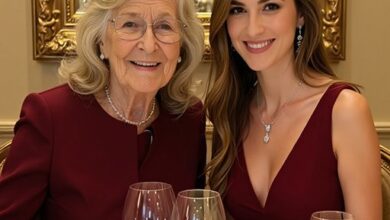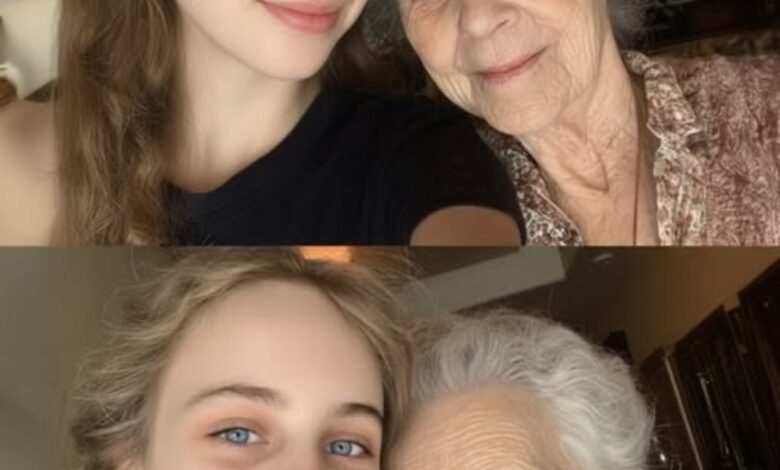
My Grandma Raised Me Alone After I Became an Orphan – Three Days After Her Death, I Learned She Lied to Me My Entire Life
I was 32 the day I found out I wasn’t really an orphan. But at that point, I’d already buried three people: my mom, my dad, and then my grandma. At least, that’s how I thought it went.
The letter showed up three days after her funeral.
Same old kitchen table. Same ugly vinyl. Same empty chair with her cardigan still hanging off the back. The house smelled like dust and faint cinnamon, like it was trying to remember her.
Kettle on. Two mugs out of habit.
The envelope had my name on it, written in her handwriting.
I stared at it for a full minute.
“Nope,” I muttered. “Absolutely not.”
Then I made tea I didn’t want, because that’s what she would’ve done. Kettle on, two mugs out of habit, even though one of us was very much dead.
Finally, I opened the envelope.
“You’ll rot your teeth, bug,” she’d always say when I put too much sugar in.
“You like it that way too,” I’d remind her.
“Doesn’t mean I’m wrong,” she’d sniff.
Her handwriting hit me harder than any of the funeral speeches.
And just like that, I was six again.
My girl, it began.
If you’re reading this, my stubborn heart finally gave up. I’m sorry to leave you alone again.
Again?
I frowned, but kept reading.
Before I tell you the hard thing, I want you to remember something: you were never unwanted. Not for a single second.
And just like that, I was six again.
When I “became an orphan.”
It was a rainy day. Adults talked in low voices. A social worker told me there’d been a “bad car crash.”
“Instant,” she said. “They didn’t feel a thing.”
I stared at the stains on the carpet instead of her face.
Then Grandma walked in.
Her house felt like a different planet.
Tiny. Gray bun. Brown coat that smelled like cold air and laundry soap.
She knelt so we were eye level.
“Hey, bug,” she said. “You ready to come home with me?”
“Where’s home?” I asked.
“With me,” she said. “That’s all that matters.”
That first night, she made pancakes for dinner.
“Pancakes are for emergencies,” she said, flipping one that came out shaped like a blob. “And this counts.”
That’s how we started.
Life with Grandma was small and busy.
She worked mornings at the laundromat, nights cleaning offices, weekends hemming jeans at the kitchen table while I did homework.
Her cardigans went shiny at the elbows. Her shoes were more duct tape than rubber. She flipped every price tag at the grocery store.
But my field trips were always paid for.
“You two are like mother and daughter,” people said.
“She’s my girl,” Grandma answered. “That’s all.”
We had rituals.
Sunday tea with too much sugar. Card games where she “forgot” the rules whenever I started losing. Library trips that always ended in the kids’ section.
At night, she read aloud even when I could read myself. Sometimes she nodded off mid-chapter. I’d tuck a blanket over her.
Then I turned fifteen and decided it wasn’t enough.
Status at school was measured in cars.
Who drove. Who rode the bus.
“She’s not exactly ‘car money’ kind of person,” I said once.
Still, the jealousy ate at me.
One night, I tried.
“Grandma, I think I need a car.”
She snorted. “You think you need a car.”
“I could get a job. I could help.”
She paused.
“You will help,” she said. “But the car can wait.”
“That’s not the point,” I snapped. “You don’t get it.”
“I know more than you think.”
“If you did, you’d help,” I said. “You’re just… cheap.”
The word landed ugly.
“That’s enough for tonight,” she said quietly.
“I’m not asking you for anything ever again,” I snapped, slamming my door.
By morning, I’d rehearsed an apology.
I never got to say it.
The house was too quiet.
No radio. No humming.
She was lying on top of the covers, work clothes still on, shoes still tied.
People said “heart attack” and “quick.”
I felt everything.
Three days later, a certified letter arrived.
In her handwriting.
Now I sat at the table, hands shaking.
Go to my closet. Top shelf. Behind the blue shoebox.
Behind it was a thick folder with my name on it.
Savings accounts.
A college fund.
A small life insurance policy.
Numbers that didn’t match the patched shoes.
A sticky note read:
For your education. And maybe a small, sensible car if I’m not there to argue with you.
Then came the part that made my skin go cold.
Your parents did not die in a car crash.
They went to prison.
Fraud. Forged signatures. Assault.
She had a choice.
She could tell me the truth—or tell me a story that let me sleep.
She chose me.
You were never an orphan.
You were mine.
Seventeen years later, I stood in a cramped dressing room.
On the counter sat a small glass award:
Best Actress – Regional Theatre.
Not huge.
But mine.
I laid her letter beside it.
“Hey, Grandma,” I whispered. “We did it.”
“You were right.”
At 6, I thought I lost everything.
At 15, I thought the worst thing was not having a car.
At 32, I know the truth.
My grandma lied to me my entire life.
And somehow, that lie was just another way she loved me hard enough to give me a life they couldn’t steal.