My Husband and I Divorced After 36 Years – at His Funeral, His Dad Had Too Much to Drink and Said, You Do Not Even Know What He Did for You, Do You?
I ended my marriage after thirty-six years because I believed my husband was living a secret life he refused to explain. I thought I had made peace with that choice. I was wrong.
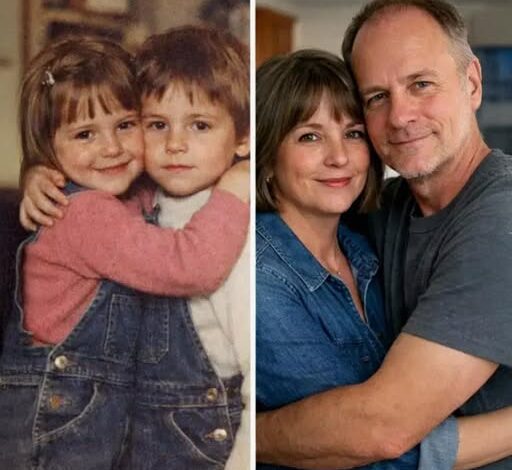
I had known Troy since we were five years old. Our families lived next door to each other, which meant our lives overlapped in every possible way. Same backyard, same school, same scraped knees and summer evenings that felt endless. We grew up assuming we would grow old together, and in a way, we did.
We married at twenty, back when that didn’t feel reckless. We didn’t have much money, but we had confidence and time. Life felt manageable then, like something that unfolded naturally if you just kept showing up. We had two kids, bought a modest house in the suburbs, and took one vacation a year—usually a long drive filled with snacks, wrong turns, and kids asking how much longer it would take.
For decades, our life looked unremarkable in the best way. Predictable. Stable. Honest. Or so I thought.
The first crack appeared during our thirty-fifth year of marriage. Our son repaid part of a loan we’d given him years earlier, and I logged into our joint account to move the money into savings. The balance stopped me cold. The deposit was there, but the total was thousands of dollars lower than it should have been.
I scrolled through the transactions, heart sinking. Multiple transfers. Over months. Large amounts. Gone.
That night, I showed Troy the screen while he watched the news.
“Did you move money out of checking?” I asked.
He barely glanced over. “I paid bills.”
“How much?”
“A couple thousand. It evens out.”
“It doesn’t,” I said, turning the laptop toward him. “Where did it go?”
He rubbed his forehead, eyes still fixed on the television. “House stuff. Expenses. I move money around sometimes. It’ll come back.”
I didn’t push harder. After a lifetime together, I knew when a conversation would turn into a wall instead of a door. So I waited.
A week later, I went looking for batteries in his desk drawer. Instead, I found hotel receipts. Neatly stacked. Tucked under old mail.
At first, I assumed work travel. Then I saw the location. Massachusetts. Not California, where he occasionally went for business. The same hotel. The same room. Over and over again.
I sat on the edge of the bed and counted them. Eleven receipts. Eleven trips he’d never mentioned.
I called the hotel, pretending to be his assistant. The concierge didn’t hesitate. He was a regular. That room was practically his.
When Troy came home the next night, I was waiting with the receipts spread out on the table.
“It’s not what you think,” he said immediately.
“Then tell me what it is.”
He stared at the papers like they’d appeared out of thin air. “I’m not doing this,” he said finally. “You’re blowing it out of proportion.”
“You’ve been moving money and staying in the same hotel for months,” I said. “You’re lying. About something. What is it?”
“You’re supposed to trust me.”
“I did trust you,” I said. “But you’re not giving me anything to trust.”
He refused to explain. That night, I slept in the guest room. The next morning, I told him I couldn’t live inside a lie.
Two weeks later, we sat across from each other in a lawyer’s office. He didn’t fight. He didn’t argue. He signed the papers like a man already resigned to the outcome.
After the divorce, nothing dramatic happened. No other woman appeared. No secret family surfaced. We saw each other at birthdays, holidays, grocery stores. Polite. Distant. Unfinished.
Two years later, he died suddenly.
Our daughter called from the hospital. Our son arrived too late.
I went to the funeral feeling like an imposter, accepting condolences for a man I no longer knew how to grieve. People called him kind. Dependable. A good man. I nodded and thanked them, unsure what was true anymore.
Then his father found me.
Frank was eighty-one and drunk enough that the truth had loosened its grip. He leaned close, whiskey heavy on his breath.
“You don’t even know what he did for you, do you?” he said.
“This isn’t the time,” I told him.
He shook his head. “You think I don’t know about the money? The hotel room? Same one every time?” He laughed, bitter and wet-eyed. “He thought he was being careful.”
My stomach dropped. “What are you saying?”
“He told me,” Frank said. “At the end. Said if you ever found out, it had to be after. After it couldn’t hurt you anymore.”
Before I could ask more, my children appeared and guided him away. But the damage was done.
Things that aren’t affairs. Lies that don’t come from wanting someone else.
Three days later, a courier envelope arrived with my name typed neatly on the front.
Inside was a letter. Troy’s handwriting.
He wrote plainly. He had been getting medical treatment. Specialized. Ongoing. Out of state. He didn’t know how to tell me without becoming someone I had to carry instead of a partner I could lean on.
So he hid. He paid for rooms. Moved money. Answered questions badly. And when I confronted him directly, he still couldn’t say it out loud.
He didn’t ask for forgiveness. He only wanted me to know that it was never about another life, or another person. It was about fear. About not knowing how to be vulnerable without losing dignity.
“You did nothing wrong,” he wrote. “You made your choice with the truth you had. I loved you the best way I knew how.”
I sat at the kitchen table for a long time, holding the paper, thinking about the man I had known since childhood. The man I had loved. The man I had lost twice.
He had lied. That part hadn’t changed. But now I understood the shape of the lie. And the cost of it.
If he had trusted me with the truth, we might still be sitting at that same table together. Or we might not. I’ll never know.
What I do know is this: silence can destroy what illness never could. And love, when filtered through fear, can still end in loss.