My Parents Demolished My Grandfathers House After I Refused to Give Them My Inheritance
My parents demolished my grandfather’s house and pushed my tenant out after I refused to turn over my $5 million inheritance. Then they called me while I was in Denver and proudly announced, “The house is gone, and your tenant is out!” Instead of panicking, I started laughing, because what they didn’t know was that the house was…
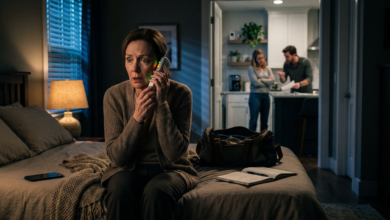
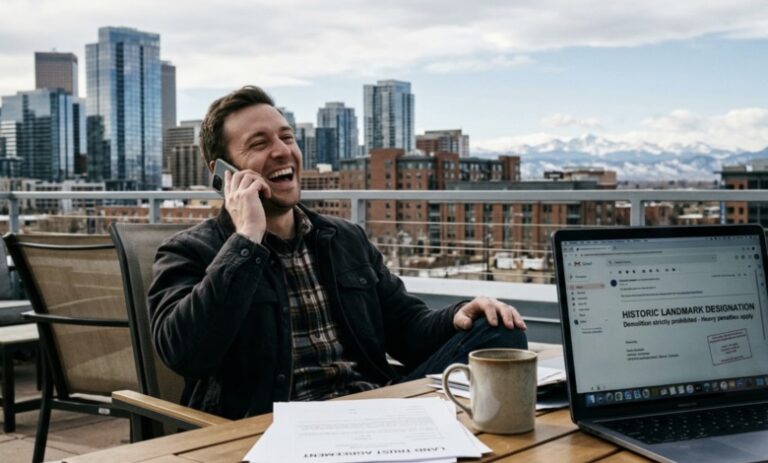
My mother’s cheerful voice came through my phone while I stood beside a rental car outside a conference hotel in Denver. She had just informed me that the house my grandfather had built with his own hands no longer existed, and somehow she sounded pleased about it.
“Your father took care of everything, Garrett,” she said. “The crew finished this morning. No more excuses. Now we can finally sell the property.”
Then Dad took the phone.
“We paid $14,000 to clear that place. You ought to be thanking us.”
I looked toward the Rocky Mountains, trying to understand how two people could sound so satisfied after making decisions they had absolutely no authority to make.
“And Clifford?” I asked. “What happened to the man who was living there?”
Mom let out a sigh.
“He went to stay with his daughter. He’s fine. Honestly, Garrett, you’re making far too much of an old house.”
I closed my eyes.
Then I laughed.
The other end of the line went completely quiet.
What my parents didn’t know was that I had spent almost two years preparing for a future they knew nothing about.
My name is Garrett Miller. I’m fifty-eight years old, and I own a regional freight company in Fort Wayne, Indiana. I’ve worked hard throughout my adult life, but the place that influenced me most wasn’t my company.
It was Grandpa Everett’s modest two-story home on Sycamore Drive in Noblesville.
Grandpa built it in 1952, when he was working as a machinist and saving every dollar he could manage. The house had green shutters, a narrow porch swing, and kitchen floors polished smooth by decades of ordinary family life.
When I was fourteen, I used to ride my bicycle six miles just to spend Saturdays in his basement workshop.
My parents always preferred my younger brother, Rodney. He got the brand-new bicycles, expensive baseball camps, and endless opportunities to start over. I was expected to be responsible and never complain.
Grandpa never compared the two of us.
He simply put a wrench in my hand and showed me how to repair things.
“A man’s word is the one thing he should never spend carelessly,” he once told me.
I carried that lesson with me into adulthood.
When Grandpa’s health began to fail, I drove nearly two hours every Friday to help him. I cooked meals, took care of repairs, organized his appointments, and stayed until Sunday evening.
Dad, his only surviving son, barely visited.
Mom complained that the house had become an expensive burden.
Rodney suggested that Grandpa sell it.
But Grandpa wanted to remain in his own home, and I made certain he could.
When he died at ninety-one, I believed losing him would be the hardest part.
Then his estate lawyer read the will.
Grandpa left my father $35,000 and his antique pocket watch.
The entire Sycamore Drive property was left to me.
Dad stared across the conference table.
“I’m his son. Why does Garrett get the house?”
The attorney calmly explained that Grandpa had been very clear about his wishes and had signed the paperwork while fully competent to make those decisions.
Mom pressed a tissue to her cheek.
Rodney stared at me as if I had personally stolen something from him.
Within a few weeks, the calls started.
“That property could sell for $600,000,” Mom told me. “Your brother needs help, and your father and I deserve to enjoy retirement.”
She had already decided how the money should be divided.
One-third for her and Dad.
One-third for Rodney.
Whatever was left could go to me.
I told her the property wasn’t for sale.
She called me selfish.
What I didn’t mention was that I had recently received a structural inspection showing the old house needed major work. The foundation had shifted, and several important supports required repairs.
I understood that the building couldn’t remain exactly as it had always been forever.
But I also wasn’t willing to simply throw away everything Grandpa had cared about.
One afternoon in February, I went down into his basement to begin sorting through his tools.
Behind the water heater was an old green filing cabinet.
The bottom drawer was jammed.
When I finally forced it open, I found a thick brown envelope tied shut with cotton string.
Inside were property surveys, county planning letters, and several older development proposals.
I sat on an overturned bucket and began reading.
Then I found a letter describing an offer worth approximately $5 million.
I read it twice.
Grandpa had quietly owned additional acreage behind the house, including a wooded section commercial developers wanted as part of a major development corridor.
He had rejected their offer because the original plan would have destroyed the old white oak trees growing along the creek.
I looked around his small workshop.
The same man who had spent years repairing his own furniture had turned down millions of dollars to save those trees.
Two weeks later, one of the neighbors called me.
“Garrett, your parents were outside the house with some man carrying a measuring tape.”
That was when I contacted Warren Abbott, the attorney who had handled my business contracts for years.
I brought him Grandpa’s brown envelope.
He reviewed the surveys, studied the updated development plans, and told me that the proposed access route had been changed.
There might now be a way to preserve the trees while finally making responsible use of the surrounding property.
Over the next several months, Warren and I worked through the details.
There were surveys, negotiations, ownership records, and agreements that I wasn’t ready to discuss with my parents.
I also arranged to have Grandpa’s furniture, photographs, and workshop tools carefully inventoried and moved into secure storage.
Then I paid for the necessary repairs to the old house while I considered what its long-term future should be.
Eventually, I rented the home to Clifford Barnes, a seventy-four-year-old retired farmer who had moved to Indiana so he could live closer to his daughter.
Clifford planted red geraniums near the porch and brought Grandpa’s neglected rose bushes back to life.
Whenever I visited, he offered me sweet tea.
“Your grandfather built a good house,” he told me one afternoon.
Those words meant more to me than he could have known.
My parents, however, hated the arrangement.
Mom called again and again, demanding that I remove the tenant and sell the property.
Then, shortly before I left for Denver, she suddenly became very interested in my travel plans.
“You’ll be out of state all week?” she asked.
“Until Thursday.”
“Good, sweetheart. You work too hard.”
I recognized the unusually pleasant tone in her voice.
Even so, I never imagined she would go that far…
PART 2: I stood beside the rental car for another few seconds, listening to the silence on the other end of the phone. My mother finally spoke. “Garrett? What’s so funny?” I wiped a tear from the corner of my eye. “Nothing, Mom. I was just thinking about something Grandpa used to tell me.” “And what was that?” “He always said that people should understand what they own before they start destroying things.” My father interrupted. “Stop playing games. The house is gone. There’s nothing you can do about it now.” I looked at my watch. “Dad, did you actually check who owned the property before hiring that demolition company?” There was a pause. “Of course we did. We’re your parents. We know what we’re doing.” “Did you check the deed?” “Garrett, don’t insult me.” “Did you check the deed?” My father raised his voice. “We had the county records checked. Your name was on the old paperwork, but that doesn’t mean you can keep everyone out of family property forever.”