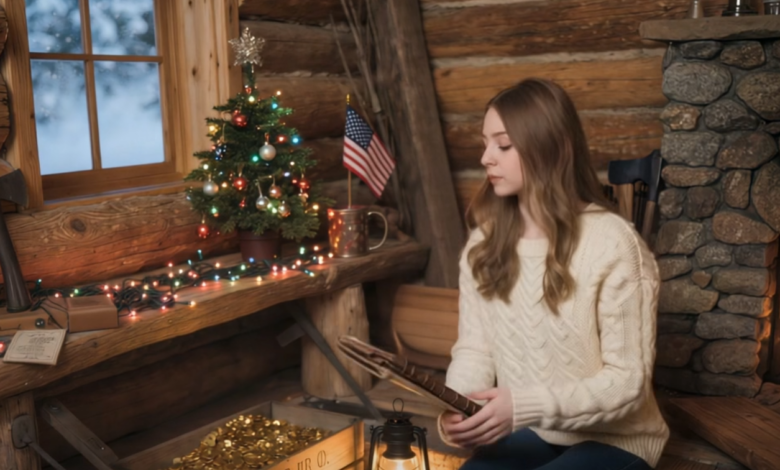
My Parents Left Me A Broken Cabin In The Middle Of Alaska As My Inheritance, While My Younger Sister Got Their $750,000 Mansion In New York
My parents’ death didn’t hit me all at once. It came in pieces—first the phone call, then the lawyer’s voice, then the cold silence afterward. I was in my cramped Brooklyn studio, lighting a cheap candle on a cheaper cake, when my phone rang. I answered expecting a condolence. Instead, I got the will.
My younger sister, Savannah, walked away with the $750,000 Westchester mansion, the bank accounts, and everything shiny enough to brag about. I was left with a rotting cabin on a forgotten patch of land in Alaska. A place I’d only known through foggy childhood memories and a few summer trips with my grandfather. The lawyer’s tone was clipped and clinical, as if reading out a traffic report instead of rearranging the fault lines of my life.
When I hung up, Derek—my fiancé, a man who polished his image like it was his job—didn’t even try to pretend. He scoffed, called me a failure, and ended our engagement so fast the ring barely made a sound when he tossed it onto the table. He walked out without looking back. The neighbors heard the door slam. I stood there staring at the rusted key inside the envelope, the strange deed with my grandfather’s name, and a small handwritten note from my mother.
You will know why it had to be you.
For years I’d watched Savannah glide through the world effortlessly. Perfect hair, perfect timing, perfect charm. My father adored her. My mother protected her. I existed somewhere on the periphery—useful, steady, never quite enough. When I won awards for writing, they ended up under pizza boxes. When Savannah posted a curated selfie, our parents practically held a parade. I learned young how to survive on what little attention I received, becoming self-reliant instead of resentful. But that didn’t make the sting any softer.
As a teenager, I spent summers with my grandfather Elias in Alaska. He was the only one in the family who treated me like something other than a shadow. We’d walk along the Susitna River as he pointed to half-broken tools, wrecked canoes, and bird-scarred driftwood, telling me quietly, “The world hides its value. People just stop looking for it.” I thought he was being poetic. I didn’t realize he was teaching me how to see.
After the will reading, after Savannah’s smug smile and Derek’s public humiliation, I realized there was nothing left to lose. So I packed a single backpack, booked a one-way flight to Anchorage, and left New York behind. No dramatic goodbye. Just a door closing on a chapter already dead.
Alaska hit me like a blunt force. Cold air that stung my lungs, endless forests swallowing the horizon, and the unsettling quiet of a place that didn’t care who I was or what I’d failed at. I rented a beat-up truck and drove north with a local guide until the road ended and the forest took over. He pointed toward the trees. “Your cabin’s a mile that way,” he said, then drove off. No ceremony, no good luck.
The hike to the cabin was brutal. Snow up to my shins, wind slicing at my face, branches cracking in the distance like warning shots. When the cabin finally appeared, it looked like it was losing a fight with gravity—roof sagging, door clawed by bears, windows shattered. It wasn’t just abandoned. It looked condemned.
Inside was worse. Mold, rot, droppings, dust thick enough to choke on. I cleaned because doing something was better than collapsing. I swept until my arms ached. I pushed open windows until my fingers went numb. I repaired what I could, knowing I was only delaying the inevitable. At night, the cold gnawed at my bones, and the old voices returned—my father’s disappointment, Savannah’s mockery, Derek’s contempt. I curled deeper into my sleeping bag and whispered into the dark, “Is this all I was worth to them?”
On the third morning, I noticed something odd. A single wooden plank in the middle of the floor didn’t match the rest. Darker grain. Heavy nails. Hollow when tapped. I pulled the rug aside and found an iron ring embedded in the wood. My pulse kicked into a sprint.
It took every ounce of strength to pry the board loose. When it finally gave way, the floor opened into a narrow staircase leading into darkness.
I climbed down with my flashlight, step by careful step.
The cellar was massive—stone walls, low ceiling, freezing air. In one corner, crates stacked high were marked with the faded stencil MERCER CO. Next to them sat metal chests with rusted locks. My breath fogged in the air as I pried open the first crate.
Gold coins spilled into view.
The next crate held silver bars. Another held jewels—old, heavy, untouched. My legs weakened. I tore open more sacks, each revealing a new shock: antique necklaces, rare stones, old tribal silver, everything my grandfather had quietly protected from the world.
But the real treasure wasn’t the metal. It was the ledgers in the large chest at the end. My grandfather’s handwriting covered page after page—maps of land across Talkeetna, signed contracts for timber rights, lease agreements for rare-earth minerals, pipeline access deals, everything notarized and legally binding. When I sat down and began adding up the values with shaky fingers, the truth hit me like an avalanche.
The cabin wasn’t worthless. It was sitting on top of a hidden fortune worth over eighty million dollars.
I sat on the cold stone floor, laughing through tears, because there was no other way to release the pressure in my chest. All those years of being overlooked suddenly twisted into something else—not neglect, but protection. Savannah would have sold it in a heartbeat. Derek would’ve leeched it dry. I was the only one who would take the time to understand it.
When I climbed back upstairs, the world felt different. The air tasted sharper. My hands were steady. I wasn’t invisible. I was trusted.
I spent the next weeks restoring the cabin, repairing the roof, replacing windows, reinforcing the trapdoor. I scanned every document, built a private trust, hired lawyers who valued silence over spectacle, and started sketching plans that honored the land instead of stripping it. I rejected full-scale logging contracts. I set limits on mineral extraction. I drafted a fund for local education in my grandfather’s name.
And when Savannah called—suddenly sweet, suddenly “sisterly”—I told her calmly that family meant more to me than money, and if she wanted a relationship, it wouldn’t be built on dollar signs.
When Derek showed up in SoHo begging for another chance, I met him, listened for exactly two minutes, then stood and walked out without a word.
Silence spoke louder than any speech I could’ve given.
By spring, the cabin was warm, alive, and finally mine—not because a will said so, but because I had fought for it piece by piece. On the shelf above the fireplace sits my grandfather’s photograph, his eyes bright even in the fading print.
Every morning, I read my mother’s last line again: We did not choose by noise. We chose by trust.
And quietly, firmly, I live up to it.