Patsy Cline’s “Walkin’ After Midnight” Opens New Doors for Country-Pop Crossover in 1957
Some songs don’t just define a career—they reshape the boundaries of an entire genre. In 1957, *Walkin’ After Midnight* by Patsy Cline became one of those rare recordings, bridging the gap between traditional country storytelling and the emerging sound of mainstream pop.
With its haunting vocal delivery, restrained instrumentation, and emotional clarity, the song helped introduce country music to a wider national audience and set the stage for the crossover success that would follow in decades to come.
A Voice That Stood Apart
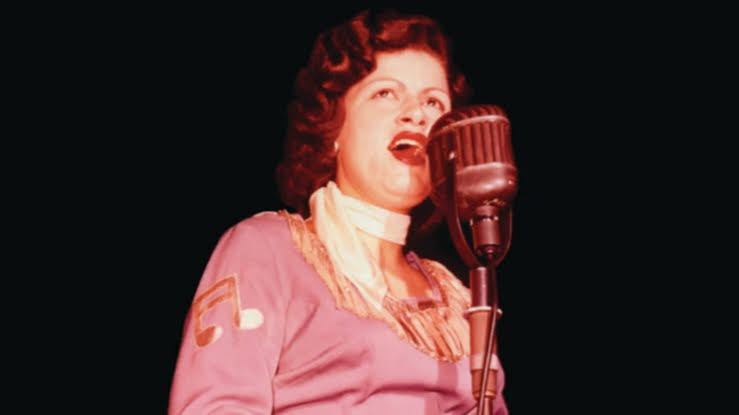
Before her rise to national fame, Patsy Cline was a young performer from Virginia with a voice that did not quite fit the expectations of early country radio. Where many female artists of the era leaned toward bright, rapid phrasing, Cline brought a deeper, more controlled emotional tone.
That difference would soon become her defining strength.
Her voice carried a quiet ache—measured, expressive, and unmistakably human. It was the kind of sound that could make a simple lyric feel like a confession.
The Song That Changed Everything
Written by Alan Block and Don Hecht, *Walkin’ After Midnight* tells a simple but emotionally resonant story of loneliness and longing. The narrator wanders the streets late at night, searching for connection and meaning in the absence of love.
When Cline recorded the song, she transformed it completely.
What could have been a straightforward country tune became something more atmospheric and emotionally layered. Her delivery added depth, suggesting not just heartbreak, but quiet endurance.
A Breakthrough on National Television
A major turning point came when Cline performed *Walkin’ After Midnight* on national television in 1957. That performance introduced her to a broader audience and helped propel the song up both country and pop charts.
The crossover success was unusual for the time. Country music and pop were still largely separate markets, with different audiences and expectations. Yet Cline’s performance blurred those lines.
The song reached the top of the country charts and also crossed into the pop Top 20—an early sign that genre boundaries were beginning to shift.
Simplicity That Carried Emotion
Musically, the arrangement of *Walkin’ After Midnight* is understated. Gentle guitar, soft rhythm, and minimal production allow the vocal performance to remain at the center.
That simplicity is key to its impact.
Rather than overwhelming the listener, the song creates space—space for emotion, reflection, and interpretation. Cline’s voice fills that space with subtle tension and vulnerability.
It is not a song that demands attention. It earns it.
A New Direction for Country Music
At the time of its release, country music was still largely rooted in regional storytelling and traditional instrumentation. *Walkin’ After Midnight* demonstrated that the genre could reach broader audiences without losing its emotional core.
It helped pave the way for future artists who would blend country with pop sensibilities while maintaining narrative authenticity.
In many ways, it marked an early step toward the modern country-pop crossover landscape.
A Legacy That Outlasted Its Era
Although Patsy Cline would go on to record many beloved classics, *Walkin’ After Midnight* remains one of her most important early achievements. It introduced her voice to the world and revealed the emotional depth she would become known for.
More than just a hit, the song became a turning point—for her career and for country music as a whole.
More Than a Midnight Walk
What makes *Walkin’ After Midnight* endure is its emotional honesty. It captures a feeling that is instantly recognizable: the quiet loneliness of moving through the world when everything feels still and distant.
Through Patsy Cline’s voice, that feeling becomes something beautiful rather than bleak.
Nearly seventy years later, the song still feels intimate, timeless, and quietly revolutionary.
It was not just a breakthrough for a singer—it was an opening of doors that country music would never close again.
The Song: