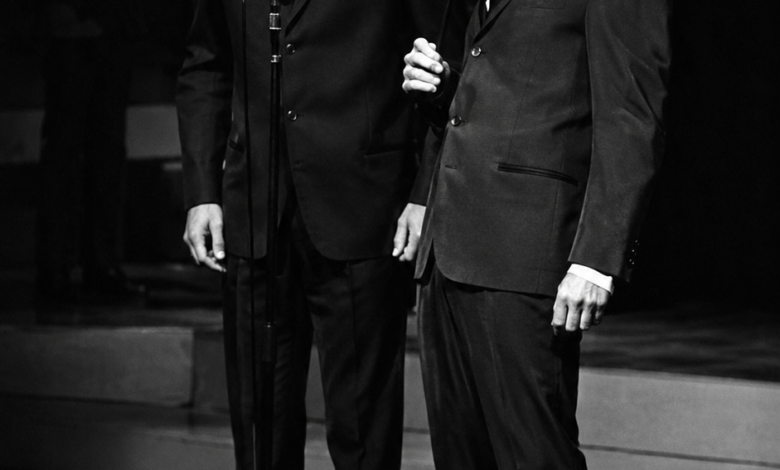
Released in 1966, this song proved they could rise from a shadow no one thought they could escape. The voices soar, the emotion swells… but the real story lies behind the studio doors.
In early 1966, just months after the monumental success of “You’ve Lost That Lovin’ Feelin’,” The Righteous Brothers stood at a crossroads that has broken many artists.
Their legendary producer, Phil Spector, had moved on. With him went the famous “Wall of Sound” that had defined their identity — that thunderous, cinematic style that made their voices feel larger than life.
Many doubted whether Bill Medley and Bobby Hatfield could ever recreate that same magic without the man who helped build it.
Then came “(You’re My) Soul and Inspiration.”
Written by Barry Mann and Cynthia Weil, the song had been started earlier but left unfinished — almost as if it was waiting for the perfect moment. With Bill Medley stepping up as producer, the duo took a bold risk: they would prove they could stand on their own.
From the very first notes, the track carries a deep sense of longing. The orchestration swells with dramatic beauty, echoing the grandeur of their past hits, but this time it feels more personal, more urgent.
Bill Medley’s rich, deep voice leads the verses with quiet strength, while Bobby Hatfield’s soaring tenor explodes in the chorus — a cry straight from the heart. When he sings “You’re my soul and inspiration,” it doesn’t feel like a lyric. It feels like a confession.
Released at a time when music was rapidly changing toward rebellion and youth culture, “Soul and Inspiration” unapologetically embraced grand, romantic emotion. It shot straight to No. 1 on the Billboard Hot 100, proving that sincerity and powerful vocals could still conquer the charts.
More than just a hit, the song mirrored the duo’s own journey. They weren’t only singing about emotional dependence — they were proving their artistic independence. By producing the record themselves, they showed the world that their sound wasn’t only built by Phil Spector. It belonged to them.
Decades later, the song still carries the same emotional power. It has appeared in films, TV shows, and countless playlists, instantly transporting listeners back to an era of big feelings and dramatic romance.
At its core, “(You’re My) Soul and Inspiration” is about realizing that one person can become your entire reason to keep going. It’s vulnerable, theatrical, and deeply human.
In a career full of timeless hits, this song stands as powerful proof: The Righteous Brothers were never just a product of one producer — they were, and still are, a force of pure soul and inspiration.