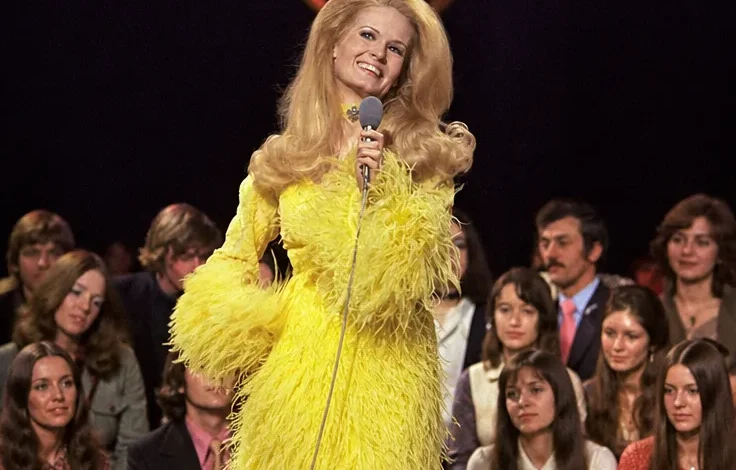
The Country Classic That Told The Truth About Life!!
When Lynn Anderson released “Rose Garden” in 1970, she probably never imagined that the song would become one of the most recognizable country recordings in music history. Yet within months, it had become a global phenomenon, turning Anderson into an international star and creating a song that continues resonating with listeners more than half a century later.
The secret behind its success was surprisingly simple.
Unlike many songs that promised perfect romance or endless happiness, “Rose Garden” delivered a message grounded in reality. It reminded people that life comes with disappointments, challenges, and heartbreaks. Yet despite those difficulties, there is still beauty worth appreciating. That balance between realism and optimism helped the song connect with audiences around the world.
Born in Grand Forks, North Dakota, and raised in California, Lynn Anderson grew up surrounded by music. Her mother, Liz Anderson, was a successful country songwriter, exposing Lynn to the music industry from an early age. By the late 1960s, she had already established herself as a talented performer with multiple country hits. However, she was still searching for the song that would elevate her from country star to household name.
That song arrived in the form of “Rose Garden.”
Interestingly, the song wasn’t originally written for Anderson. It was composed by Joe South, one of the most respected songwriters of the era. South had already earned acclaim for writing hits for numerous artists, and his talent for combining memorable melodies with meaningful lyrics was widely recognized throughout the industry.
The lyrics of “Rose Garden” stand out because of their honesty.
The narrator warns against unrealistic expectations. She reminds her partner that life isn’t always perfect and that relationships require patience, understanding, and resilience. The famous line about not promising a rose garden became instantly memorable because it expressed a truth people recognized immediately.
Everyone faces disappointments.
Everyone experiences difficult days.
And everyone eventually learns that happiness isn’t about avoiding problems entirely—it’s about finding joy despite them.
Musically, the song blended country and pop influences in a way that felt fresh and accessible. The arrangement featured a lively rhythm, bright instrumentation, and Anderson’s confident vocal performance. While the lyrics carried emotional depth, the music remained uplifting and energetic.
That combination proved irresistible.
Upon release, “Rose Garden” quickly climbed the country charts before crossing over into mainstream pop success. The song reached number one on the country charts and became a major hit internationally. It sold millions of copies and earned Anderson a Grammy Award for Best Female Country Vocal Performance.
The success transformed her career overnight.
Suddenly, Lynn Anderson wasn’t just a country singer. She was an international star appearing on television programs, performing sold-out concerts, and reaching audiences far beyond traditional country music fans.
The song also arrived during an important moment in country music history.
Throughout the late 1960s and early 1970s, country artists were increasingly crossing over into mainstream pop markets. “Rose Garden” became one of the most successful examples of this trend, helping introduce country music to listeners who might never have explored the genre otherwise.
Its influence can still be felt today.
Many modern country artists continue blending traditional country storytelling with broader pop appeal, following a path that songs like “Rose Garden” helped establish decades earlier.
As the years passed, the song became deeply associated with Lynn Anderson herself. While she recorded many successful records throughout her career, “Rose Garden” remained her signature song. Audiences requested it at concerts. Radio stations continued playing it. New generations discovered it through movies, television shows, and nostalgic playlists.
Part of the song’s enduring popularity comes from its universal message.
Every generation faces challenges.
Every generation experiences heartbreak.
And every generation eventually learns that life rarely unfolds exactly as planned.
Yet the song never feels pessimistic.
Instead, it encourages listeners to embrace life as it is rather than wishing for an impossible perfection.
That perspective feels just as relevant today as it did in 1970.
More than fifty years later, “Rose Garden” remains one of the most beloved songs ever recorded. Its message continues resonating because it reflects a simple truth that never changes:
Life may not always give us a rose garden.
But that doesn’t mean it can’t still be beautiful.
And that timeless lesson is why the song continues blooming generation after generation.
Listen to the full song here:
Credits: LiliLinks