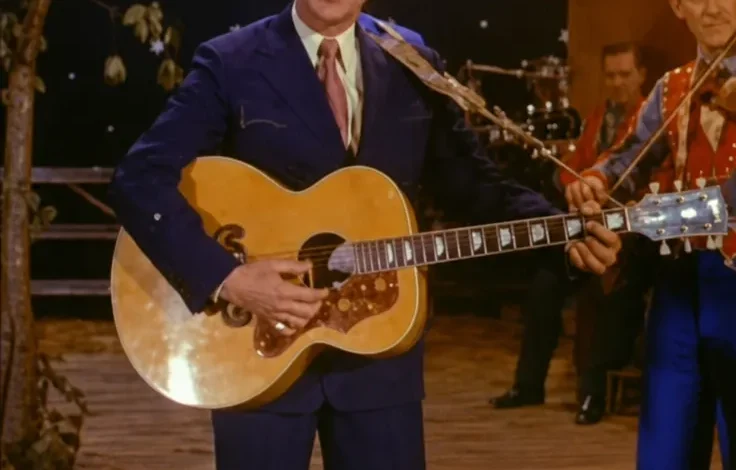
The Country Song That Taught America How To Say Goodbye With Grace
When Ray Price released “For the Good Times” in 1970, country music was changing. Audiences had grown accustomed to heartbreak songs filled with anger, regret, and desperate promises to win lost love back. But this song did something almost unheard of—it accepted the end of a relationship with quiet dignity. More than fifty years later, it remains one of the most emotionally mature songs ever recorded, reminding listeners that not every ending has to be filled with bitterness.
The song was written by Kris Kristofferson, a struggling songwriter who had not yet become the legendary figure country music fans know today. Before success found him, Kristofferson worked as a helicopter pilot, a janitor at a Nashville recording studio, and countless other jobs while chasing his dream. His songwriting stood apart because he didn’t write fantasy. He wrote about real people living through real emotions. “For the Good Times” would become one of the songs that changed his life forever.
Ray Price immediately recognized the beauty hiding inside the lyrics.
Already considered one of country music’s finest vocalists, Price possessed a smooth, elegant voice unlike anyone else in Nashville. While many country singers leaned heavily into traditional honky-tonk sounds, Price embraced richer orchestration and sophisticated arrangements without ever losing the heart of country music. His willingness to evolve helped shape what would later become known as the Nashville Sound.
Yet even among dozens of hit records, “For the Good Times” became something truly special.
Rather than telling the story of betrayal or revenge, the narrator simply asks for one final evening together. There are no accusations. No shouting. No promises that everything will somehow work out. Instead, he chooses to appreciate the love they shared before quietly letting it go. That emotional restraint made the song feel incredibly authentic. Listeners recognized themselves in its honesty because life rarely offers the dramatic endings found in movies.
The production matched the lyrics perfectly.
Soft strings floated beneath gentle piano and steel guitar, creating an atmosphere that felt warm and intimate rather than overwhelming. Every instrument seemed to leave room for Price’s voice, allowing each lyric to land with remarkable clarity. Instead of trying to impress the audience with technical complexity, the recording focused entirely on emotion.
When the single reached radio stations, audiences responded immediately.
The song climbed to the top of the country charts and crossed into mainstream popularity, becoming one of the defining recordings of the early 1970s. Critics praised both Kristofferson’s songwriting and Price’s heartfelt performance, while fellow musicians quickly recognized the song as an instant classic. It also introduced millions of listeners to Kristofferson’s extraordinary talent, opening the door for a songwriting career that would influence generations.
Over the decades, “For the Good Times” has been recorded by dozens of artists, including Elvis Presley, Al Green, Dean Martin, and Gladys Knight. Each version brought something different, but many listeners still return to Ray Price’s recording because of its unmatched sincerity. His calm delivery gives the impression that he’s speaking directly to the listener rather than performing for an audience.
Perhaps that’s why the song has never faded.
As we grow older, we begin to understand that life isn’t divided into heroes and villains. Relationships are complicated. Love doesn’t always disappear simply because people part ways. Sometimes the kindest thing we can do is appreciate what we had instead of mourning what we lost.
That message feels just as meaningful today as it did in 1970. Every generation experiences heartbreak. Every generation learns that memories can outlast relationships. And every generation discovers that some songs never stop healing old wounds. More than half a century after its release, “For the Good Times” continues proving that true greatness doesn’t always arrive with a dramatic ending. Sometimes…it arrives with a quiet goodbye.
Listen to the full song here:
Credits: RayPriceVevo