The Man I Married as a Favor Walked Free Three Years Later – Then He Showed up With a Black Box and a Truth I Never Saw Coming
I married Jonah for money.
That sounds terrible when I say it now, but at the time it felt like the only choice I had left.
I was twenty-seven years old, raising my seventeen-year-old brother after our parents were gone. Every month felt like a race against disaster. Rent was overdue more often than it was paid on time. The refrigerator was rarely full. I learned how to stretch soup, delay bills, and smile when I was terrified
The final rent notice appeared on our apartment door on a rainy Tuesday morning.
I tore it down before Owen came home from school.
Unfortunately, he saw it anyway.
“Is it bad?” he asked quietly.
I folded the paper in half.
“It’s just paper.”
“Sadie.”
I looked at him.
“It’s bad, isn’t it?”
I wanted to lie.
Instead, I sighed.
“We’ll figure it out.”
The truth was, I had no idea how.
That afternoon, I received a phone call that would change everything.
A woman named Celeste wanted to meet me.
She had gotten my name through a legal aid program where I had applied for assistance with Owen’s guardianship paperwork.
Normally, I would have refused.
But desperation has a way of making impossible conversations sound reasonable.
So I went.
Celeste’s office looked like a different universe from my life.
Everything gleamed.
The furniture was expensive.
The air smelled faintly of lemon polish and wealth.
“I only have an hour before work,” I told her.
“I’ll be brief.”
Then she offered me two thousand dollars a month.
I almost laughed.
“For what?”
“My son needs a wife.”
I stared at her.
“What?”
“My son is serving a prison sentence.”
That was somehow worse.
She folded her hands neatly on the desk.
“He needs stability. Family support. Someone who visits. Someone who writes letters. Someone who can demonstrate he still has connections outside prison.”
“You want me to marry a prisoner?”
“I want you to make a practical decision.”
I should have walked away.
Instead, I thought about rent.
I thought about Owen’s shoes with holes in the soles.
I thought about our empty refrigerator.
“Why me?” I asked.
Her eyes settled on me.
“Because you understand responsibility.”
It sounded like a compliment.
Years later, I would realize it was an evaluation.
She had studied me before I ever entered that office.
At the time, I simply nodded.
“I want the first payment before the wedding.”
Her smile widened.
“Of course.”
When I told Owen, he looked sick.
“You’re marrying a prisoner?”
“Only on paper.”
“You’re selling yourself.”
“No.”
“Yes, you are.”
His voice cracked.
“You’re doing this because of me.”
“I’m doing this because we need a roof over our heads.”
“That’s not different.”
I had no answer.
Because he was right.
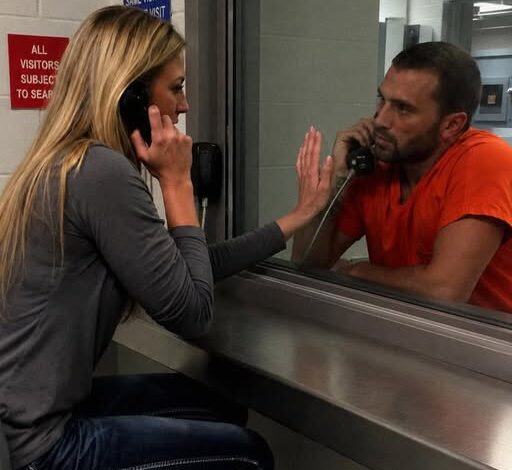
The wedding took place inside a prison visitation room.
There were no flowers.
No music.
No promises about forever.
Just signatures.
Jonah sat across from me wearing a prison uniform.
He wasn’t what I expected.
He looked exhausted.
Ashamed.
Human.
“You don’t have to pretend I’m a good man,” he said.
“Good,” I replied. “Because I wasn’t planning to.”
To my surprise, he laughed.
Not defensively.
Almost gratefully.
Then he told me about his crime.
He admitted taking eighteen thousand dollars from a foundation account.
“Borrowing from my future,” he called it.
“That’s a fancy way to say stealing.”
“Yes,” he admitted.
Then he said something strange.
“But I didn’t take the six hundred thousand.”
I frowned.
“What?”
“My cousin Dean did.”
Apparently, Jonah’s smaller theft had made him the perfect scapegoat for a much larger crime.
“What happened?”
Jonah stared toward the floor.
“I hated myself enough to believe I deserved whatever happened next.”
That answer stayed with me long after the wedding.
At first, our arrangement was exactly what I expected.
I visited twice a month.
I wrote letters.
He wrote back.
The checks arrived on time.
Everything was business.
At least that was what I told myself.
Then the letters started changing things.
Jonah remembered details.
Small details.
The kind people usually forgot.
He remembered Owen’s math test.
He remembered my double shifts.
He remembered that my favorite coffee shop closed on Sundays.
One day, after I mentioned Owen struggling with algebra, Jonah asked about it during our next visit.
“You remembered that?”
“You wrote it.”
“So?”
“So I read it.”
For some reason, that bothered me.
Cruel people are easy to dismiss.
Kind people are dangerous.
They make you care.
One night, exhausted after work, I sat on the kitchen floor reading Jonah’s case files.
The timeline bothered me.
Certain dates didn’t fit.
Documents had been signed while Jonah was already incarcerated.
Transfers had occurred while he was locked inside prison walls.
“Owen,” I called.
My brother crouched beside me.
“What?”
“Look at this date.”
His eyes widened.
“He couldn’t have signed that.”
Exactly.
That moment changed everything.
Together, we started building timelines.
Our apartment wall disappeared beneath notes, records, witness statements, and transaction histories.
Every missing piece pointed toward one person.
Dean.
The cousin.
The real thief.
For three years, we fought.
Three years of court filings.
Three years of appeals.
Three years of late nights, borrowed money, legal aid offices, and endless paperwork.
More than once, Jonah told me to stop.
“You’re wasting your life.”
“It’s my life.”
“Sadie—”
“No. I choose where I spend it.”
Somewhere during those three years, I stopped fighting because of justice.
I started fighting because of him.
That realization terrified me.
When Jonah’s conviction for the larger theft was finally overturned, he walked out of prison wearing a gray suit and an expression that looked more frightened than relieved.
I waited outside the courthouse.
“You can come home with me,” I told him.
“Are you sure?”
“It’s small. Owen leaves cereal bowls everywhere. But it’s home.”
For one week, we practiced being normal.
Then everything fell apart.
On the eighth night, Jonah placed a black box on our kitchen table.
“What’s that?”
He looked nervous.
“Now it’s my turn to tell the truth.”
Something inside me tightened.
I opened the box.
Inside was a notebook.
Celeste’s notebook.
The first page made my stomach turn.
No active parents.
Minor brother dependent.
Behind on rent.
Likely compliant if payments remain consistent.
I stared at the words.
Then I read them again.
Each sentence felt like a knife.
“She studied me.”
Jonah lowered his eyes.
“Yes.”
“She investigated my life.”
“Yes.”
“She looked at my struggles and decided I was useful.”
“Yes.”
Beneath the notebook sat another document.
A trust agreement.
My name appeared throughout it.
I read the pages repeatedly before understanding.
Co-trustee.
Jonah explained.
His father had created a safeguard.
If Jonah’s conviction was overturned while married, his spouse would automatically gain authority within the trust.
A protection mechanism.
A barrier against manipulation.
Against Celeste.
Against Dean.
And Celeste had known.
She had selected me because she believed poverty made people obedient.
The realization hurt more than I expected.
Not because of Celeste.
Because Jonah had known for six months.
“You knew?”
His silence answered.
“For six months?”
“Yes.”
I felt physically sick.
“I stood in prison lines for three years.”
“I know.”
“I fought for you.”
“I know.”
“And you never told me.”
“I thought I was protecting you.”
“No.”
My voice shook.
“Say it correctly.”
He closed his eyes.
“I was protecting myself.”
Finally.
The truth.
For the first time since opening the box, he was being honest.
I asked him to leave.
Not forever.
But he left.
Because some betrayals require space before healing.
That night, Owen read Celeste’s notebook.
“She wrote about us like inventory.”
I nodded.
“Like inventory.”
Then he pointed at the trust documents.
“She made one mistake.”
“What?”
“She assumed poor people don’t fight back.”
The next morning, Celeste called.
She offered me one hundred thousand dollars.
All I had to do was resign my trustee authority.
For one dangerous second, I imagined saying yes.
The money would solve everything.
College for Owen.
Reliable transportation.
Security.
Freedom.
Then I remembered the notebook.
Likely compliant.
I slid the check back across her desk.
“What are you doing?”
“Something you never expected.”
Her smile disappeared.
“Be careful.”
“No.”
I stood.
“I was careful for years.”
The donor luncheon was supposed to restore Celeste’s reputation.
Instead, it destroyed it.
In front of board members, donors, attorneys, and executives, I opened the black box.
I read her notes aloud.
I revealed the trust.
I exposed the manipulation.
I exposed Dean’s theft.
I exposed everything.
The room turned silent.
Then questions started.
Then investigations.
Then panic.
By the end of the year, Dean faced criminal charges.
Celeste lost control of the foundation.
The board removed her.
The empire she spent years protecting collapsed beneath its own secrets.
Months later, I sat at the kitchen table reviewing scholarship applications with Owen.
Life finally felt stable.
Jonah appeared in the doorway.
“You belong here,” he said.
I looked up.
He seemed different.
Humbler.
Lighter.
“I should have trusted you.”
“Yes.”
“I’m sorry.”
“I know.”
“I’ll spend the rest of my life proving it.”
For a moment, neither of us spoke.
Then Owen appeared carrying a plate.
“Are we having dinner, or is this another emotional accountability meeting?”
I laughed.
A real laugh.
The first time I married Jonah, I did it because I was trapped.
Because rent was due.
Because fear cornered me.
Because survival demanded sacrifices.
The second time I chose him, there was no contract.
No payment.
No obligation.
Just choice.
And that made all the difference.
Because the first marriage was about surviving poverty.
The second was about finally understanding my own worth.