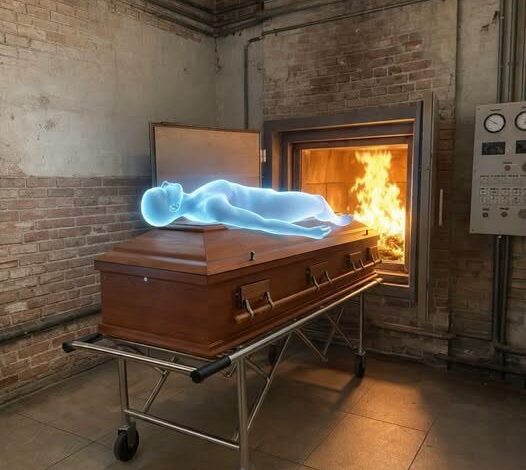
The Sin Of Cremation According To The Bible Says What Scripture Actually Teaches
Christians considering cremation often ask whether the Bible calls it a sin. The direct answer is that Scripture contains no universal command forbidding cremation. Burial is the dominant biblical pattern and carries rich symbolism, but a pattern is not automatically a law. Christians can honor the body, mourn faithfully, and hope in resurrection whether remains are placed in a grave or reduced to ashes.
Burial has strong roots in biblical history. Abraham secured a burial place for Sarah, and the patriarchal narratives repeatedly mention tombs and graves. Moses was buried, and the Gospels carefully describe the burial of Jesus in a tomb. These accounts helped make burial the ordinary Christian practice for centuries and connected care for the dead with dignity, memory, and communal mourning.
The burial of Jesus has special theological importance because it belongs to the sequence proclaimed in the Christian message: he died, was buried, and rose. Paul also uses the image of a seed being sown and raised when discussing resurrection. For many believers, placing a body in the earth expresses that hope visibly, which is a meaningful reason to prefer burial even when it is not a command imposed on every family.
The Bible also contains cases in which bodies or bones were burned, but their contexts differ. Some involve judgment, warfare, desecration, emergency, or unusual historical circumstances. They do not form a simple rule stating that every act of cremation is sinful. Sound interpretation asks what a passage is teaching rather than taking the presence of fire as a complete moral verdict on a modern funeral choice.
Another concern comes from the teaching that the body is a temple of the Holy Spirit. That passage calls living believers to honor God with their bodies. It supports respectful treatment of human remains, but it does not say that physical preservation after death is necessary for salvation or resurrection. Burial also results in bodily decay over time, so resurrection hope has never depended on keeping every earthly particle unchanged.
Christian belief describes resurrection as an act of God, not a process limited by the condition of a corpse. People have died at sea, in fires, through violence, or in places where remains could not be recovered. The promise of resurrection would be fragile if it applied only to bodies preserved in a particular manner. Cremation cannot place a person beyond the power of the Creator any more than centuries of natural decay can.
History helps explain why some churches once resisted cremation strongly. In certain cultures, cremation was associated with pagan practice or with an explicit denial of bodily resurrection. Christians used burial as a public confession that death was not the final word. Motive therefore mattered. A person choosing cremation today because of cost, limited cemetery space, transportation, or family circumstances is not necessarily making the theological statement ancient critics opposed.
Different denominations set different pastoral rules. The Catholic Church permits cremation while preferring burial and instructing that ashes be treated with respect and placed appropriately rather than handled as ordinary property. Many Protestant communities allow either choice. Eastern Orthodox practice generally maintains a much stronger preference for burial and may restrict funeral rites involving cremation. Families should consult their own church if denominational practice is important to them.
Practical considerations should not be dismissed as unspiritual. Funeral expenses can burden a family, cemetery space may be scarce, and relatives may live far apart. At the same time, convenience should not eliminate opportunities for mourning, prayer, remembrance, and respectful final disposition. A cremation can be accompanied by a full funeral, while a burial can be arranged simply. The method and the quality of care are separate decisions.
Conscience also matters. One believer may choose burial because its symbolism gives comfort and continuity with Christian tradition. Another may choose cremation without doubting resurrection or dishonoring the body. Neither should make a universal accusation where Scripture does not. Families benefit from discussing preferences before a crisis and recording them clearly, while recognizing that survivors may face circumstances the deceased could not predict.
The central Christian claim is not that a grave protects the future body or that fire destroys it forever. The hope rests in Christ’s resurrection and God’s promise to raise the dead. Burial can express that hope beautifully, and cremation can be chosen within it. The Bible’s silence on a general prohibition leaves room for reverent judgment, denominational guidance, and charity toward families who decide differently.